




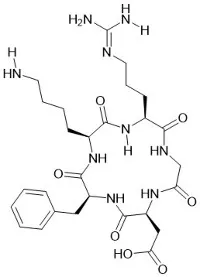
Yo, what's up, everyone! As a supplier of peptide linkers for ADCs (Antibody-Drug Conjugates), I've been deep in the world of these tiny but mighty molecules. Today, I wanna chat about a super interesting question: Can peptide linkers be engineered to respond to specific physiological conditions in ADCs?
First off, let's quickly go over what ADCs are. They're like these smart little weapons in the fight against diseases, especially cancer. An ADC is made up of three main parts: an antibody, a cytotoxic drug, and a linker. The antibody acts like a homing device, targeting specific cells in the body. The drug is the heavy hitter that actually takes out the bad guys. And the linker? Well, it's the glue that holds the whole thing together, and it's got a crucial job.
Now, the idea of engineering peptide linkers to respond to specific physiological conditions is pretty mind - blowing. Think about it. Our bodies are full of different environments, each with its own set of conditions like pH levels, enzyme concentrations, and redox states. If we can make peptide linkers that react to these specific conditions, we can control when and where the drug gets released from the ADC.
Let's start with pH. Different parts of our body have different pH values. For example, the extracellular environment usually has a pH around 7.4, while the inside of endosomes and lysosomes can be more acidic, with a pH of about 5 - 6. We could design peptide linkers that are stable at the normal extracellular pH but break down in the more acidic environment inside the target cells. This way, the drug is only released once the ADC has been taken up by the cancer cells, reducing the chances of side - effects on healthy cells.
Enzymes are another key factor. There are certain enzymes that are overexpressed in cancer cells. We can engineer peptide linkers that are recognized and cleaved by these specific enzymes. For instance, cathepsin B is an enzyme that's often found in higher levels in cancer cells. By creating a peptide linker with a sequence that cathepsin B can cut, we can ensure that the drug is released right where it's needed.
Redox conditions also play a role. The intracellular environment has a different redox state compared to the extracellular space. We can use this difference to our advantage. Some peptide linkers can be designed to break down in the reducing environment inside the cells, thanks to the presence of molecules like glutathione.
So, how do we actually engineer these peptide linkers? Well, it all starts with understanding the structure - function relationship of peptides. We need to know which amino acid sequences are more likely to be affected by different physiological conditions. Then, we can use techniques like solid - phase peptide synthesis to create custom - made peptide linkers.
At our company, we've been working hard on developing such peptide linkers. Take MC-Val-Cit-PAB-PNP for example. This is a peptide linker that's been designed with a specific sequence that can be cleaved by certain enzymes overexpressed in cancer cells. It's pretty cool because it allows for a controlled release of the drug once it reaches the target cells.
Another one of our products is Acetylene - linker - Val - Cit - PABC - MMAE. This linker is not only designed to respond to specific enzymes but also has a structure that can be modified for better conjugation with the antibody and the drug. It's a great example of how we're combining different features to create more effective peptide linkers.
And then there's DBCO - PEG4 - Acid. This linker has a unique structure that makes it useful for click chemistry, a powerful method for attaching the antibody and the drug to the linker. It also has properties that can be tuned to respond to different physiological conditions.
The potential benefits of engineering peptide linkers in this way are huge. For patients, it means more effective treatments with fewer side - effects. For doctors, it gives them more precise tools to fight diseases. And for the pharmaceutical industry, it opens up new possibilities for developing better drugs.
But, of course, there are challenges. Designing these peptide linkers is no easy task. We need to make sure that they're stable enough during circulation in the body but still able to break down at the right time and place. There are also regulatory and safety concerns that we need to address.
Despite these challenges, the future looks bright. With advancements in technology and our growing understanding of the human body, I'm confident that we'll be able to create even more sophisticated peptide linkers.
If you're in the business of developing ADCs or just interested in learning more about peptide linkers, I'd love to chat. Whether you're looking for a specific product like the ones I mentioned or want to discuss custom - made solutions, we're here to help. Reach out to us to start a conversation about your needs and how our peptide linkers can fit into your projects.
References
- Jain, R. K. (2001). Delivery of molecular and cellular medicine to solid tumors. Journal of Controlled Release, 74(1 - 3), 7 - 27.
- Ducry, L., & Stump, B. (2010). Antibody - drug conjugates: linking cytotoxic payloads to monoclonal antibodies. Bioconjugate Chemistry, 21(1), 5 - 13.
- Shen, B. Q., et al. (2012). Antibody - drug conjugates for cancer therapy. Nature Biotechnology, 30(7), 685 - 694.