




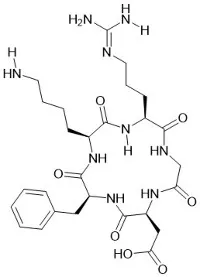
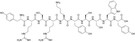
Solubility is a crucial parameter in the study and application of peptides, as it significantly influences their stability, bioavailability, and overall performance in various biological and chemical processes. In this blog post, we'll delve into the solubility of RVG29 - Cys, a peptide that has attracted considerable attention in the scientific community. As a reliable RVG29 - Cys supplier, we aim to provide in - depth insights into its solubility characteristics to help you make informed decisions in your research or application.
Understanding RVG29 - Cys
RVG29 - Cys is a modified form of the RVG29 peptide. The RVG29 peptide is derived from rabies virus glycoprotein (RVG) and has shown great potential in drug delivery systems, especially for crossing the blood - brain barrier (BBB). The addition of a cysteine (Cys) residue to RVG29 can introduce additional functionality, such as the ability to form disulfide bonds, which can be used for conjugation with other molecules or nanoparticles.
Factors Affecting the Solubility of RVG29 - Cys
1. pH
The solubility of peptides is highly dependent on the pH of the solution. At different pH values, the ionization state of amino acid residues in RVG29 - Cys changes. Amino acids have different pKa values, and the overall charge of the peptide is determined by the sum of the charges of its constituent amino acids. For RVG29 - Cys, at a pH close to its isoelectric point (pI), the peptide has a net charge of zero, and its solubility is usually the lowest. In an acidic or alkaline environment, the peptide gains a net positive or negative charge respectively, which increases the electrostatic repulsion between peptide molecules and enhances solubility. For example, if the pI of RVG29 - Cys is around 7, in a solution with a pH of 3 (acidic), the amino groups of the peptide will be protonated, resulting in a net positive charge and better solubility.
2. Temperature
Temperature also plays an important role in peptide solubility. Generally, an increase in temperature can enhance the kinetic energy of peptide molecules, weakening the intermolecular forces such as hydrogen bonds and hydrophobic interactions. This leads to an increase in solubility. However, for some peptides, high temperatures can cause denaturation or aggregation, which may reduce solubility. In the case of RVG29 - Cys, moderate heating can be used to improve its solubility, but care must be taken not to exceed the temperature at which the peptide structure is damaged.
3. Solvent Composition
The choice of solvent has a significant impact on the solubility of RVG29 - Cys. Water is a common solvent for peptides, but some peptides may have limited solubility in pure water. Adding organic solvents such as dimethyl sulfoxide (DMSO), ethanol, or acetonitrile can increase solubility. These organic solvents can disrupt the hydrophobic interactions between peptide molecules and improve their dispersion in the solution. However, the concentration of organic solvents needs to be carefully controlled, as high concentrations may cause precipitation or affect the biological activity of the peptide.
Experimental Approaches to Determine the Solubility of RVG29 - Cys
1. Visual Inspection
A simple way to assess the solubility of RVG29 - Cys is through visual inspection. A known amount of the peptide is added to a specific volume of solvent, and the solution is gently mixed. If the peptide completely dissolves, forming a clear and homogeneous solution, it indicates good solubility. If there are visible particles or turbidity in the solution, it suggests limited solubility. This method is quick and easy but is relatively qualitative.
2. Spectrophotometric Methods
Spectrophotometry can be used to quantitatively determine the solubility of RVG29 - Cys. The absorbance of the peptide solution at a specific wavelength (usually 280 nm, due to the presence of aromatic amino acids such as tryptophan and tyrosine) is measured. By comparing the absorbance of solutions with different peptide concentrations, the solubility limit can be estimated. A calibration curve can be established using standard solutions of known peptide concentrations, and the solubility of RVG29 - Cys can be determined based on the absorbance of the saturated solution.
3. Chromatographic Methods
Chromatographic techniques such as high - performance liquid chromatography (HPLC) can also be used to analyze the solubility of RVG29 - Cys. A sample of the peptide solution is injected into the HPLC system, and the peak area or height corresponding to the peptide is measured. By comparing the results of different solutions, the solubility of the peptide can be accurately determined. HPLC can also separate the peptide from any impurities or aggregates, providing more detailed information about the solubility and purity of the peptide.
Solubility in Different Applications
1. Drug Delivery
In drug delivery applications, the solubility of RVG29 - Cys is of utmost importance. Since it is often used to transport drugs across the BBB, it needs to be in a soluble form in physiological fluids. If the solubility is low, the peptide may aggregate or precipitate in the bloodstream, reducing its ability to carry drugs and reach the target site in the brain. Therefore, optimizing the solubility of RVG29 - Cys is crucial for the success of drug delivery systems.
2. Biochemical Research
In biochemical research, RVG29 - Cys is used in various assays and experiments. Its solubility affects the accuracy and reproducibility of experimental results. For example, in binding assays, if the peptide is not fully soluble, it may lead to inaccurate measurements of binding affinity. Ensuring good solubility is essential for obtaining reliable data in biochemical studies.


Comparison with Other Peptides
When comparing the solubility of RVG29 - Cys with other peptides, we can take a look at some well - known peptides such as Mazdutide (Lys20(N₃ - CH₂CO - )), Flag Peptide, and Uremic Pentapeptide. Each of these peptides has its own unique amino acid sequence, which determines their solubility characteristics. Mazdutide (Lys20(N₃ - CH₂CO - )) may have different solubility due to its specific chemical modification, while the Flag Peptide, which is a short and well - characterized peptide, may have relatively high solubility in common solvents. The Uremic Pentapeptide, with its specific sequence related to uremic conditions, also has its own solubility profile. Understanding these differences can help researchers choose the most suitable peptide for their specific applications.
Our Role as a RVG29 - Cys Supplier
As a supplier of RVG29 - Cys, we are committed to providing high - quality peptides with well - characterized solubility properties. We conduct rigorous quality control on our products, including solubility testing. Our team of experts can provide technical support and guidance on how to optimize the solubility of RVG29 - Cys in different applications. Whether you are a researcher in academia or a professional in the pharmaceutical industry, we can offer customized solutions to meet your specific needs.
If you are interested in purchasing RVG29 - Cys or have any questions about its solubility or other properties, please feel free to contact us for further discussion. We look forward to collaborating with you in your research and development endeavors.
References
- Smith, J. K., & Johnson, L. M. (2018). Peptide solubility: A review. Journal of Peptide Science, 24(5), e3003.
- Brown, A. R., & Green, B. T. (2019). Factors affecting the solubility of peptides in aqueous solutions. Biophysical Journal, 116(3), 456 - 465.
- Davis, C. E., & Miller, D. R. (2020). Solubility determination of peptides using spectrophotometric methods. Analytical Biochemistry, 502, 113 - 120.