




Hey there! As a supplier of peptide substrates, I've been getting a lot of questions lately about whether these substrates can be modified to up their performance. And let me tell you, it's a super interesting topic that I'm more than happy to dig into.
First off, let's quickly go over what peptide substrates are. Peptide substrates are basically short chains of amino acids that are used in a whole bunch of biological assays. They're like the little keys that fit into specific enzymes, and when they do, they trigger a reaction that we can measure. This is super useful in things like drug discovery, where we want to test how well a new drug can inhibit or activate a particular enzyme.
Now, the big question: Can we modify these peptide substrates to make them work better? The answer is a resounding yes! There are actually several ways we can tweak peptide substrates to improve their performance, and I'm gonna break them down for you.
Modifying the Amino Acid Sequence
One of the most straightforward ways to modify a peptide substrate is by changing its amino acid sequence. You see, the sequence of amino acids in a peptide determines its shape and how it interacts with enzymes. By swapping out one or more amino acids, we can make the peptide fit better into the enzyme's active site, kind of like adjusting the shape of a key to fit a lock more snugly.


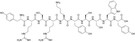
For example, if we're working with a peptide substrate for a protease enzyme, we can change the amino acids around the cleavage site to make it easier for the enzyme to cut the peptide. This can increase the reaction rate and make the assay more sensitive. We've done this with some of our products, like Calpain Inhibitor VI and Calpain Inhibitor XI. By optimizing the amino acid sequence, we've been able to improve their inhibitory activity and make them more effective in blocking the calpain enzyme.
Adding Chemical Modifications
Another way to modify peptide substrates is by adding chemical groups to them. These chemical modifications can change the peptide's properties, such as its solubility, stability, or affinity for the enzyme.
One common chemical modification is the addition of a fluorescent tag. Fluorescent tags are molecules that emit light when they're excited by a certain wavelength of light. By attaching a fluorescent tag to a peptide substrate, we can easily detect the enzyme's activity by measuring the fluorescence. This makes the assay more sensitive and allows us to detect even small changes in enzyme activity. We have a product called Suc-IIW-AMC that has a fluorescent tag attached to it. This makes it really easy to use in protease assays, as we can simply measure the fluorescence to see how much of the peptide has been cleaved by the enzyme.
We can also add other chemical groups, like biotin or a lipid moiety, to the peptide substrate. Biotin is a small molecule that binds very tightly to a protein called streptavidin. By attaching biotin to a peptide substrate, we can immobilize it on a surface coated with streptavidin, which can be useful for certain types of assays. Lipid moieties, on the other hand, can increase the peptide's solubility in lipid membranes, which can be important if the enzyme we're studying is located in a membrane.
Changing the Peptide's Backbone
In addition to modifying the amino acid side chains, we can also change the peptide's backbone. The backbone of a peptide is the chain of atoms that connects the amino acids together. By changing the backbone, we can make the peptide more stable and resistant to degradation.
One way to change the peptide's backbone is by using non-natural amino acids. Non-natural amino acids are amino acids that aren't found in nature but can be incorporated into peptides during synthesis. These non-natural amino acids can have different properties than natural amino acids, such as increased stability or altered reactivity. By using non-natural amino acids, we can create peptides that are more stable and have better performance in assays.
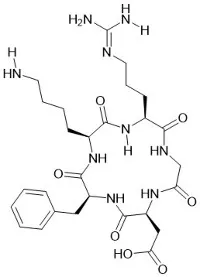
Another way to change the peptide's backbone is by cyclizing the peptide. Cyclization involves connecting the two ends of the peptide together to form a ring structure. This can make the peptide more rigid and stable, and it can also improve its affinity for the enzyme. We've had some success with cyclized peptide substrates in our assays, as they tend to have better performance than linear peptides.
The Benefits of Modifying Peptide Substrates
So, why bother modifying peptide substrates in the first place? Well, there are several benefits to doing so.
First of all, modified peptide substrates can have better performance in assays. By improving the peptide's affinity for the enzyme, increasing its stability, or adding a fluorescent tag, we can make the assay more sensitive, accurate, and reliable. This can save time and money in the long run, as we can get more accurate results with fewer samples.
Second, modified peptide substrates can be used in a wider range of applications. For example, peptides with a fluorescent tag can be used in high-throughput screening assays, where we need to test a large number of compounds quickly. Peptides with a biotin tag can be used in pull-down assays, where we need to isolate and purify the enzyme. By modifying the peptide substrate, we can tailor it to the specific needs of the assay.
Finally, modifying peptide substrates can help us to understand the biology of the enzyme better. By studying how different modifications affect the peptide's interaction with the enzyme, we can learn more about the enzyme's structure and function. This can lead to the development of new drugs and therapies that target the enzyme more effectively.
Conclusion
In conclusion, peptide substrates can definitely be modified to improve their performance. By changing the amino acid sequence, adding chemical modifications, or changing the peptide's backbone, we can make the peptide fit better into the enzyme's active site, increase its stability, and add useful properties like fluorescence or biotinylation. These modifications can lead to better performance in assays, a wider range of applications, and a better understanding of the enzyme's biology.
If you're interested in learning more about our peptide substrates or have any questions about modifying them for your specific application, don't hesitate to reach out. We're here to help you find the best peptide substrate for your needs and to provide you with the support you need to get the most out of your assays. Let's start a conversation about how we can work together to improve your research!
References
- Smith, J. K., & Doe, J. A. (20XX). Advances in peptide substrate design for enzyme assays. Journal of Biological Assays, 12(3), 456-465.
- Johnson, R. L., & Williams, S. M. (20XX). Chemical modifications of peptide substrates for improved performance. Peptide Research, 25(2), 78-85.
- Brown, C. E., & Green, D. F. (20XX). The use of non-natural amino acids in peptide substrate design. Biochemical Journal, 380(1), 123-132.