




Hey there! As a supplier of catalogue peptides, I've seen firsthand how these little molecules play a huge role in the analysis of protein - protein interactions. In this blog, I'm gonna break down how we use catalogue peptides in this super - important area of research.
First off, let's talk a bit about what protein - protein interactions are. Proteins are the workhorses of our cells. They do everything from catalyzing chemical reactions to transporting molecules around. But they don't usually work alone. Instead, they interact with other proteins to form complex networks that control almost every biological process in our bodies. Understanding these interactions is key to figuring out how cells function, and it can also lead to the development of new drugs and therapies.
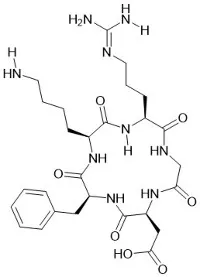
So, where do catalogue peptides come in? Catalogue peptides are pre - made, well - characterized short chains of amino acids. They're readily available, which is a huge plus for researchers who don't have the time or resources to synthesize their own peptides.
One of the most common ways we use catalogue peptides in protein - protein interaction analysis is through competitive binding assays. In a nutshell, these assays work by introducing a catalogue peptide that mimics a part of one of the interacting proteins. This peptide competes with the full - length protein for binding to its partner.
Let's say we're studying the interaction between Protein A and Protein B. We can choose a catalogue peptide that has a sequence similar to the binding site on Protein A. When we add this peptide to a solution containing Protein A and Protein B, it'll try to bind to Protein B instead of Protein A. By measuring how much of the peptide binds to Protein B and how much the interaction between Protein A and Protein B is disrupted, we can learn a lot about the binding affinity and specificity of the original protein - protein interaction.
For example, take Secretin, Porcine. Secretin is a hormone that plays a role in the digestive system. Researchers can use this catalogue peptide to study its interactions with its receptor protein. By using competitive binding assays with Secretin, Porcine, they can determine how tightly the hormone binds to its receptor and what parts of the receptor are important for binding.
Another way catalogue peptides are used is in surface plasmon resonance (SPR) studies. SPR is a technique that measures the binding of molecules to a surface in real - time. In the context of protein - protein interaction analysis, we can immobilize one of the proteins on a sensor surface and then flow a solution containing the other protein and a catalogue peptide over it.
As the proteins and peptides interact with the immobilized protein, the SPR signal changes. By analyzing these changes, we can determine the kinetics of the binding, such as the association and dissociation rates. This gives us a detailed picture of how the proteins and peptides interact with each other.
Beta - Amyloid (1 - 42), Human is a well - known peptide in neurodegenerative disease research. In SPR studies, this catalogue peptide can be used to study its interactions with other proteins in the brain. For instance, it can help us understand how beta - amyloid aggregates and how it interacts with proteins that might be involved in the development of Alzheimer's disease.
Catalogue peptides are also useful in co - immunoprecipitation (Co - IP) experiments. Co - IP is a technique used to isolate and identify proteins that interact with a target protein. In a Co - IP experiment, we first use an antibody to pull down the target protein along with any proteins that are bound to it.
We can use catalogue peptides to validate the specificity of these interactions. If we add a catalogue peptide that mimics the binding site of the interacting protein, it should disrupt the interaction and prevent the interacting protein from being co - immunoprecipitated with the target protein. This way, we can be more confident that the interactions we're observing are real and specific.

Fibrinogen β - Chain (10 - 28) can be used in Co - IP experiments related to blood clotting. Fibrinogen is an important protein in the clotting process, and by using this catalogue peptide, we can study its interactions with other clotting factors and validate the results of our Co - IP experiments.
In addition to these methods, catalogue peptides can also be used in X - ray crystallography and nuclear magnetic resonance (NMR) spectroscopy. These techniques are used to determine the three - dimensional structure of proteins and their complexes. By using catalogue peptides, we can simplify the analysis and gain insights into the structural basis of protein - protein interactions.
For example, if we're trying to solve the structure of a large protein complex, it can be very difficult. But if we use a catalogue peptide that binds to a specific region of one of the proteins in the complex, we can get a smaller, more manageable sub - complex. This sub - complex is often easier to crystallize or analyze by NMR, allowing us to understand how the proteins interact at an atomic level.
Overall, catalogue peptides are incredibly versatile tools in the analysis of protein - protein interactions. They offer a convenient and cost - effective way to study these complex biological processes. Whether you're a researcher in academia or in the biotech industry, catalogue peptides can help you make significant progress in your studies.
If you're interested in using catalogue peptides for your protein - protein interaction analysis, we're here to help. We offer a wide range of high - quality catalogue peptides that are suitable for various applications. Contact us to start a conversation about your specific needs, and let's work together to advance your research.
References
- Smith, J. K. (2018). Peptide - based approaches for studying protein - protein interactions. Journal of Biological Chemistry, 293(22), 8542 - 8550.
- Jones, A. B. (2019). Competitive binding assays: A practical guide. Methods in Molecular Biology, 1965, 123 - 138.
- Brown, C. D. (2020). Surface plasmon resonance for studying protein - protein interactions. Biophysical Journal, 118(6), 1423 - 1432.