




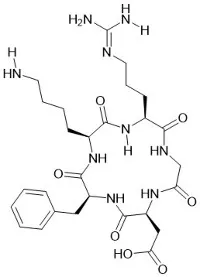

Exendin-3 is a fascinating peptide that has drawn significant attention in the scientific and medical communities due to its potential therapeutic applications. As a leading supplier of Exendin-3, I am frequently asked about how this peptide interacts with receptors in the body. In this blog post, I will delve into the mechanisms of Exendin-3's interaction with its receptors, exploring the biological processes involved and the implications for its use in various treatments.
Understanding Exendin-3
Exendin-3 is a 39-amino acid peptide that was first isolated from the saliva of the Gila monster (Heloderma suspectum). It belongs to the glucagon-like peptide-1 (GLP-1) family, which includes other important peptides such as GLP-1 itself, PACAP-38 (human, Mouse, Ovine, Porcine, Rat) [1]. This family of peptides plays crucial roles in regulating glucose metabolism, insulin secretion, and appetite control.
The Receptor for Exendin-3
The primary receptor for Exendin-3 is the GLP-1 receptor (GLP-1R), a G-protein coupled receptor (GPCR) that is widely expressed in various tissues throughout the body, including the pancreas, brain, heart, and gastrointestinal tract. When Exendin-3 binds to the GLP-1R, it initiates a series of intracellular signaling events that ultimately lead to the physiological effects associated with GLP-1R activation.

Binding Mechanism
The binding of Exendin-3 to the GLP-1R is a highly specific process that involves multiple interactions between the peptide and the receptor. The N-terminal region of Exendin-3 is particularly important for receptor binding and activation. This region contains several key amino acid residues that interact with specific domains on the GLP-1R, forming a stable complex.
The binding of Exendin-3 to the GLP-1R induces a conformational change in the receptor, which activates the associated G-protein. This activation leads to the dissociation of the G-protein into its α and βγ subunits, which then go on to activate downstream signaling pathways.
Signaling Pathways
Once the G-protein is activated, it can stimulate several different signaling pathways, depending on the tissue and cell type. One of the most well-characterized pathways is the adenylate cyclase (AC) pathway. Activation of AC leads to the production of cyclic adenosine monophosphate (cAMP), which acts as a second messenger to activate protein kinase A (PKA). PKA can then phosphorylate various target proteins, leading to changes in cellular function.
In pancreatic β-cells, activation of the GLP-1R by Exendin-3 leads to increased insulin secretion. This occurs through a combination of cAMP-dependent and cAMP-independent mechanisms. The increase in cAMP levels promotes the closure of potassium channels, leading to depolarization of the cell membrane and the opening of voltage-gated calcium channels. The influx of calcium ions triggers the exocytosis of insulin-containing vesicles, resulting in the release of insulin into the bloodstream.
In addition to its effects on insulin secretion, Exendin-3 also has other beneficial effects on glucose metabolism. It can enhance glucose uptake in peripheral tissues, such as skeletal muscle and adipose tissue, and reduce hepatic glucose production. These effects contribute to the overall improvement in glycemic control observed in patients treated with Exendin-3.
Central Nervous System Effects
The GLP-1R is also expressed in the central nervous system (CNS), where Exendin-3 can exert important effects on appetite regulation and satiety. Activation of GLP-1R in the brain can reduce food intake and body weight, making Exendin-3 a potential therapeutic agent for the treatment of obesity.
The exact mechanisms by which Exendin-3 affects appetite in the CNS are not fully understood, but it is thought to involve the activation of neural circuits in the hypothalamus and brainstem. These circuits regulate hunger and satiety signals, and activation of the GLP-1R can modulate these signals to reduce food intake.
Other Receptor Interactions
While the GLP-1R is the primary receptor for Exendin-3, there is evidence to suggest that it may also interact with other receptors. For example, Exendin-3 has been shown to bind to the PACAP type 1 receptor (PAC1R) with low affinity. The physiological significance of this interaction is not yet clear, but it may contribute to some of the off-target effects of Exendin-3.
Therapeutic Implications
The ability of Exendin-3 to interact with the GLP-1R and modulate glucose metabolism and appetite regulation has made it a promising candidate for the treatment of type 2 diabetes and obesity. Several Exendin-3-based drugs, such as exenatide, have been developed and approved for clinical use. These drugs have been shown to effectively lower blood glucose levels, reduce body weight, and improve cardiovascular outcomes in patients with type 2 diabetes.
In addition to its use in diabetes and obesity, Exendin-3 may also have potential applications in other areas of medicine. For example, its neuroprotective effects in the CNS make it a potential candidate for the treatment of neurodegenerative diseases, such as Alzheimer's and Parkinson's disease.
Our Exendin-3 Products
As a supplier of Exendin-3, we offer high-quality peptides that are suitable for a variety of research and therapeutic applications. Our Exendin-3 products are synthesized using state-of-the-art techniques and are rigorously tested to ensure purity, potency, and stability.
In addition to Exendin-3, we also offer a wide range of other peptides, including PACAP-38 (human, Mouse, Ovine, Porcine, Rat) [1], Peptide YY (3-36) (human) [2], and Eledoisin [3]. These peptides can be used in conjunction with Exendin-3 to further explore the biological functions of the GLP-1 family and develop novel therapeutic strategies.
Contact Us for Procurement
If you are interested in purchasing Exendin-3 or any of our other peptides, please do not hesitate to contact us. Our team of experts is available to answer your questions and provide you with the information you need to make an informed decision. We look forward to working with you to advance your research and develop innovative treatments for a variety of diseases.
References
[1] PACAP-38 (human, Mouse, Ovine, Porcine, Rat). /catalogue-peptides/pacap-38-human-mouse-ovine-porcine-rat.html
[2] Peptide YY (3-36) (human). /catalogue-peptides/peptide-yy-3-36-human.html
[3] Eledoisin. /catalogue-peptides/eledoisin.html