




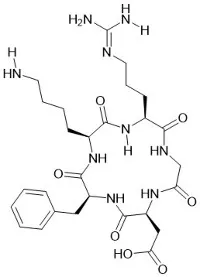
DAMGO, short for [D-Ala2,N-Me-Phe4,Gly-ol5]-enkephalin, is indeed a synthetic compound. In this blog post, I'll delve into the nature of DAMGO, its synthesis, applications, and how we, as a DAMGO supplier, can meet your needs.
What is DAMGO?
DAMGO is an opioid peptide agonist. It is a derivative of enkephalin, a naturally - occurring endogenous opioid peptide. Enkephalins are involved in the body's pain - modulation system and play a role in various physiological processes such as mood regulation, stress response, and reward mechanisms. However, DAMGO is not found in nature; it is created through chemical synthesis.
Synthesis of DAMGO
The synthesis of DAMGO involves a series of complex chemical reactions. Chemists start with basic amino acid building blocks. The key amino acids used in the synthesis of DAMGO include D - alanine (D - Ala), N - methyl - phenylalanine (N - Me - Phe), and glycine - ol (Gly - ol). These amino acids are combined step - by - step using peptide synthesis techniques.
Solid - phase peptide synthesis (SPPS) is a commonly used method for synthesizing DAMGO. In SPPS, the peptide chain is built from the C - terminus to the N - terminus while attached to a solid support. This allows for easy purification and separation of the growing peptide chain at each step of the synthesis. After the peptide chain is fully assembled, it is cleaved from the solid support and further purified to obtain pure DAMGO.
Applications of DAMGO
- Pharmacological Research
DAMGO is widely used in pharmacological research, especially in the study of the opioid system. It has a high affinity for the mu - opioid receptor, which is one of the three main types of opioid receptors in the body (mu, delta, and kappa). By binding to the mu - opioid receptor, DAMGO can mimic the effects of endogenous opioids and produce analgesia, sedation, and respiratory depression. Researchers use DAMGO to study the mechanism of action of opioids, the development of tolerance and dependence, and to screen for new opioid - related drugs. - Neuroscience
In neuroscience, DAMGO is used to investigate the neural circuits involved in pain perception, reward, and addiction. By injecting DAMGO into specific brain regions, scientists can observe how the activation of mu - opioid receptors affects neuronal activity, neurotransmitter release, and behavior. This helps in understanding the complex interplay between the opioid system and other neurotransmitter systems in the brain.
Our Role as a DAMGO Supplier
As a DAMGO supplier, we are committed to providing high - quality DAMGO to researchers and institutions around the world. Our DAMGO is synthesized using state - of - the - art peptide synthesis technology and undergoes rigorous quality control procedures.
- Quality Assurance
We ensure that our DAMGO meets the highest standards of purity and quality. Each batch of DAMGO is analyzed using advanced analytical techniques such as high - performance liquid chromatography (HPLC) and mass spectrometry (MS) to confirm its identity and purity. Our purity levels are typically above 95%, which guarantees reliable and reproducible results in your experiments. - Custom Synthesis
We also offer custom synthesis services for DAMGO. If you have specific requirements regarding the sequence, modification, or quantity of DAMGO, our experienced chemists can work with you to synthesize the peptide according to your specifications. - Related Products
In addition to DAMGO, we also supply a wide range of related peptides for your research needs. For example, you may be interested in Substance P (1 - 7), Protein Kinase C (19 - 36), and Urechistachykinin II. These peptides can be used in combination with DAMGO to study different aspects of the nervous system and cellular signaling pathways.
Why Choose Us?
- Expertise
Our team consists of experienced chemists and researchers who have in - depth knowledge of peptide synthesis and purification. We have years of experience in the field and can provide you with professional advice and support. - Reliability
We understand the importance of timely delivery and consistent quality in your research. We have a well - established supply chain and production process to ensure that you receive your DAMGO in a timely manner and with the highest quality. - Customer Service
We are dedicated to providing excellent customer service. Our customer support team is available to answer your questions, address your concerns, and assist you with your orders. Whether you are a first - time customer or a long - term partner, we will do our best to meet your needs.
Contact Us for Purchase and Negotiation
If you are interested in purchasing DAMGO or would like to discuss your research requirements, please feel free to contact us. We are eager to start a dialogue with you and look forward to the opportunity to provide you with the high - quality DAMGO and related services you need for your scientific endeavors.
References
- Fields, H. L. (2004). Pharmacology of pain. Annual Review of Pharmacology and Toxicology, 44, 35 - 57.
- Stewart, J. M., & Young, J. D. (1984). Solid phase peptide synthesis. Pierce Chemical Company.
- Pasternak, G. W. (2016). Opioid receptors: past, present and future. British Journal of Pharmacology, 173(14), 2188 - 2208.