




Combination therapies have emerged as a powerful strategy in modern medicine, offering enhanced efficacy and potentially overcoming the limitations of single - agent treatments. RVG29 - Cys, a peptide with unique properties, has shown great promise in various biomedical applications. As a leading supplier of RVG29 - Cys, we are excited to explore the potential combination therapies involving this remarkable peptide.
1. Understanding RVG29 - Cys
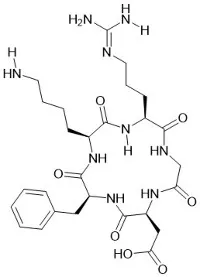
RVG29 - Cys is a modified form of the rabies virus glycoprotein (RVG) peptide. The RVG peptide has the remarkable ability to cross the blood - brain barrier (BBB), which is a major obstacle in the delivery of therapeutic agents to the central nervous system (CNS). The addition of a cysteine residue (Cys) to RVG29 can provide a reactive site for further modifications, such as conjugation with other molecules. This allows for the development of targeted drug delivery systems, where RVG29 - Cys can act as a carrier to transport therapeutic payloads into the brain.
2. Combination with Small - molecule Drugs
One of the most straightforward combination therapies involving RVG29 - Cys is its use in conjunction with small - molecule drugs. Small - molecule drugs often have low bioavailability in the CNS due to the BBB. By conjugating a small - molecule drug to RVG29 - Cys, we can enhance its delivery to the brain. For example, a neuroprotective small - molecule drug could be attached to RVG29 - Cys through a covalent linkage. Once in the bloodstream, the RVG29 - Cys - drug conjugate can bind to the acetylcholine receptor on endothelial cells of the BBB, facilitating its passage into the brain parenchyma. In pre - clinical studies, this approach has shown great potential in treating neurodegenerative diseases such as Alzheimer's and Parkinson's. The combination therapy can not only increase the concentration of the drug in the brain but also reduce systemic side effects by minimizing non - specific drug distribution in other organs.
3. Combination with Peptide Drugs
RVG29 - Cys can also be combined with other peptide drugs. Peptide drugs have several advantages, including high specificity, low toxicity, and potential for rational design. Peptides like Xenin 25 are known for their physiological functions in the body. By combining Xenin 25 with RVG29 - Cys, we can design a targeted peptide - peptide conjugate that can specifically deliver Xenin 25 to the CNS. This can be particularly useful in diseases where both the delivery across the BBB and the physiological function of Xenin 25 are required, such as certain metabolic disorders that have a neurological component.
Another example is the combination with Fibrinopeptide B (human). Fibrinopeptide B has been involved in the regulation of blood coagulation and inflammation. When combined with RVG29 - Cys, it can be targeted to the brain to study its effects on neuroinflammatory processes. This combination may open new avenues for the treatment of conditions like multiple sclerosis, which involves both inflammation and coagulation dysregulation in the CNS.
4. Combination with Antibodies
Antibodies are powerful therapeutic agents due to their high specificity for antigens. However, their large size often restricts their entry into the brain. RVG29 - Cys can overcome this limitation by acting as a vehicle for antibody delivery. By conjugating an antibody to RVG29 - Cys, we can create a targeted antibody - peptide conjugate. For instance, an antibody against a specific neurodegenerative disease - related protein could be linked to RVG29 - Cys. Once in the brain, the antibody can bind to its target, potentially inhibiting the progression of the disease. This combination therapy has the potential to revolutionize the treatment of CNS - related diseases such as glioblastoma, where targeted antibody therapy has been limited by the BBB.
5. Combination with Nucleic Acid - based Therapies
Nucleic acid - based therapies, such as small interfering RNA (siRNA) and microRNA (miRNA), have shown great potential in gene regulation. However, their delivery to the CNS is a major challenge. RVG29 - Cys can be used to deliver these nucleic acids across the BBB. By forming a complex with siRNA or miRNA, RVG29 - Cys can protect the nucleic acids from degradation in the bloodstream and facilitate their entry into the brain cells. This combination therapy can be used to target specific genes involved in neurological diseases, such as genes associated with abnormal protein aggregation in Huntington's disease.
6. Combination with VIP Antagonist
Vasoactive intestinal peptide (VIP) and its antagonists play important roles in the regulation of various physiological processes, including neuronal function and inflammation. Combining an RVG29 - Cys conjugate with a VIP Antagonist can be a novel approach for treating CNS diseases. The RVG29 - Cys can deliver the VIP antagonist to the brain, where it can modulate the VIP - mediated signaling pathways. This may be beneficial in conditions where VIP signaling is dysregulated, such as epilepsy or certain psychiatric disorders.
7. Advantages of Combination Therapies Involving RVG29 - Cys
- Enhanced Efficacy: By combining RVG29 - Cys with other therapeutic agents, we can achieve synergistic effects. For example, the targeted delivery of a drug to the brain by RVG29 - Cys can increase the local concentration of the drug, while the other agent can act on its specific target, leading to a more effective treatment.
- Reduced Side Effects: Since RVG29 - Cys can specifically deliver the therapeutic agents to the brain, the amount of the drug that reaches other organs is reduced. This can minimize systemic side effects, improving the safety profile of the treatment.
- Overcoming Resistance: In some cases, diseases can develop resistance to single - agent therapies. Combination therapies can overcome this resistance by targeting multiple pathways simultaneously.
8. Challenges and Considerations
Despite the great potential of combination therapies involving RVG29 - Cys, there are several challenges that need to be addressed. One of the main challenges is the optimization of the conjugation process. The conjugation of RVG29 - Cys with other molecules should not significantly affect its ability to cross the BBB or the biological activity of the therapeutic agent. Additionally, the stability of the conjugate in the bloodstream and its pharmacokinetic properties need to be carefully studied.
Another challenge is the potential immunogenicity of the conjugates. The body's immune system may recognize the RVG29 - Cys - based conjugates as foreign substances and mount an immune response, which can reduce the efficacy of the treatment and cause adverse reactions.
9. Conclusion and Call to Action
In conclusion, combination therapies involving RVG29 - Cys offer a wide range of possibilities for the treatment of CNS diseases. The unique properties of RVG29 - Cys, such as its ability to cross the BBB, make it an ideal candidate for targeted drug delivery. Whether it is combined with small - molecule drugs, peptide drugs, antibodies, nucleic acids, or VIP antagonists, RVG29 - Cys can enhance the therapeutic efficacy and reduce the side effects of these agents.
As a reliable supplier of RVG29 - Cys, we are committed to providing high - quality products and collaborating with researchers and pharmaceutical companies to explore the full potential of these combination therapies. If you are interested in learning more about RVG29 - Cys or other peptide - related products, or if you have any questions about combination therapies, we welcome you to contact us for further discussion and potential procurement. We look forward to working with you to advance the field of neurological therapy.
References
- Pardridge WM. "The blood - brain barrier: bottleneck in brain drug development." NeuroRx. 2005; 2(1): 3 - 14.
- Kumar R, et al. "Peptide - mediated brain drug delivery." Expert Opin Drug Deliv. 2016; 13(10): 1333 - 1349.
- Zhang Y, et al. "Antibody delivery to the central nervous system: current strategies and future directions." Drug Discov Today. 2017; 22(10): 1793 - 1802.
- Akhtar S, et al. "Delivery of nucleic acids to the CNS." J Control Release. 2018; 276: 126 - 138.