




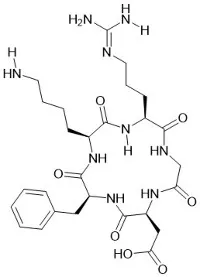
Antibody-drug conjugates (ADCs) have emerged as a promising class of targeted therapeutics, combining the specificity of monoclonal antibodies with the potent cytotoxicity of small molecule drugs. Peptide linkers play a crucial role in ADCs, as they connect the antibody and the drug, influencing the stability, pharmacokinetics, and efficacy of the conjugate. In this blog, as a peptide linkers for ADC supplier, I will explore the differences between various peptide linkers for ADCs.
1. Classification of Peptide Linkers
Peptide linkers can be broadly classified into two main types: cleavable and non - cleavable linkers. Each type has its own unique characteristics and applications.
Cleavable Linkers
Cleavable linkers are designed to be broken down under specific physiological conditions, releasing the payload at the target site. This can enhance the efficacy of the ADC while reducing off - target toxicity.
- Enzyme - sensitive linkers: These linkers contain peptide sequences that are recognized and cleaved by specific enzymes. For example, the Val - Cit dipeptide sequence is commonly used in enzyme - sensitive linkers. Enzymes such as cathepsins, which are highly expressed in tumor cells, can cleave the Val - Cit bond. Compounds like Fmoc - Val - Cit - PAB - OH and Boc - Val - Cit - PAB - OH are examples of linkers with this type of peptide sequence. The PAB (p - aminobenzylcarbamate) spacer is often used in combination with the Val - Cit dipeptide. After the Val - Cit bond is cleaved by the enzyme, the PAB spacer undergoes a self - immolative reaction, releasing the active drug.
- pH - sensitive linkers: Some peptide linkers are designed to be cleaved under acidic conditions. Tumor microenvironments are often more acidic than normal tissues. pH - sensitive linkers can take advantage of this difference to release the drug specifically at the tumor site. For instance, certain linkers with acid - labile bonds can be hydrolyzed in the low - pH environment of endosomes or lysosomes after the ADC is internalized by the target cells.
Non - cleavable Linkers
Non - cleavable linkers remain intact during circulation and are only released when the antibody is degraded inside the cell. The entire ADC complex, including the antibody, linker, and drug, is internalized by the target cell. After lysosomal degradation of the antibody, the drug - linker - amino acid adduct is released. Non - cleavable linkers are generally more stable in the bloodstream, which can reduce the risk of premature drug release and off - target toxicity. However, they may require more efficient internalization and degradation of the antibody for drug release.
2. Structural Differences
The structure of peptide linkers can vary significantly, which in turn affects their properties and performance in ADCs.
Chain Length
The length of the peptide linker can influence the flexibility and spacing between the antibody and the drug. Shorter linkers may result in a more compact ADC structure, which can potentially affect the binding affinity of the antibody to its target antigen. On the other hand, longer linkers provide more flexibility and can reduce steric hindrance between the antibody and the drug. However, longer linkers may also increase the risk of linker degradation and non - specific interactions.
Amino Acid Composition
The choice of amino acids in the peptide linker is crucial. Hydrophilic amino acids can improve the solubility of the ADC, which is important for its stability and pharmacokinetics. Hydrophobic amino acids, on the other hand, may enhance the interaction between the linker and the drug or the membrane of the target cell. Additionally, the charge of the amino acids can affect the overall charge of the ADC, which can influence its binding to plasma proteins and its ability to penetrate cell membranes.
3. Pharmacokinetic and Pharmacodynamic Differences
The type of peptide linker used in an ADC can have a significant impact on its pharmacokinetic and pharmacodynamic properties.
Pharmacokinetics
- Circulation half - life: Non - cleavable linkers generally result in ADCs with longer circulation half - lives because they are more stable in the bloodstream. Cleavable linkers, especially those that are sensitive to plasma enzymes, may be more prone to premature cleavage, leading to a shorter half - life.
- Distribution: The size and charge of the ADC, which are influenced by the peptide linker, can affect its distribution in the body. Hydrophilic linkers may promote better distribution in the extracellular fluid, while more hydrophobic linkers may enhance uptake by cells.
Pharmacodynamics
- Efficacy: Cleavable linkers can potentially increase the efficacy of the ADC by releasing the drug specifically at the target site. This targeted drug delivery can result in higher drug concentrations at the tumor site, leading to more effective killing of cancer cells. Non - cleavable linkers rely on the internalization and degradation of the antibody for drug release, which may be less efficient in some cases.
- Toxicity: The choice of linker can also affect the toxicity of the ADC. Premature release of the drug from a cleavable linker in non - target tissues can cause off - target toxicity. Non - cleavable linkers can reduce this risk by keeping the drug attached to the antibody until it reaches the target cell.
4. Compatibility with Antibodies and Drugs
Different peptide linkers may have different levels of compatibility with various antibodies and drugs.
Antibody Compatibility
The linker should not interfere with the binding of the antibody to its target antigen. Some linkers may cause steric hindrance or change the conformation of the antibody, reducing its binding affinity. For example, a bulky linker may prevent the antibody from accessing its epitope on the target cell surface. Therefore, careful selection of the linker is necessary to ensure that the antibody retains its full binding activity.
Drug Compatibility
The linker should be able to form a stable bond with the drug and also allow for efficient drug release at the target site. The chemical properties of the drug, such as its reactivity and solubility, need to be considered when choosing a linker. For instance, some drugs may require a specific type of linker to ensure proper conjugation and subsequent release.
5. Applications in Different Therapeutic Areas
The choice of peptide linker can also depend on the therapeutic area.
Oncology
In oncology, the goal is to deliver the cytotoxic drug specifically to cancer cells while minimizing damage to normal tissues. Cleavable linkers, especially those that are enzyme - or pH - sensitive, are often preferred in oncology ADCs because they can release the drug specifically at the tumor site. This targeted delivery can improve the efficacy of the treatment and reduce side effects.
Autoimmune Diseases
For autoimmune diseases, the mechanism of action of ADCs may be different. The goal may be to target immune cells that are overactive in the autoimmune response. Non - cleavable linkers may be more suitable in some cases, as they can ensure that the drug is delivered to the target immune cells in a more controlled manner.
6. Our Offerings as a Peptide Linkers for ADC Supplier
As a supplier of peptide linkers for ADCs, we offer a wide range of high - quality linkers, including DBCO - PEG4 - NHS Ester, Fmoc - Val - Cit - PAB - OH, and Boc - Val - Cit - PAB - OH. Our linkers are synthesized using state - of - the - art techniques and are carefully characterized to ensure their purity and quality. We understand the importance of choosing the right peptide linker for your ADC development, and our team of experts is available to provide technical support and guidance.
If you are interested in exploring our peptide linkers for ADCs or have any questions about linker selection, please feel free to contact us for procurement and further discussion. We are committed to helping you develop the most effective ADCs for your therapeutic needs.
References
- Ducry, L., & Stump, B. (2010). Antibody-drug conjugates: linking cytotoxic payloads to monoclonal antibodies. Bioconjugate Chemistry, 21(1), 5 - 13.
- Beck, A., Goetsch, L., Dumontet, C., & Corvaia, N. (2017). Strategies and challenges for the next generation of antibody-drug conjugates. Nature Reviews Drug Discovery, 16(5), 315 - 337.
- Senter, P. D., & Sievers, E. L. (2012). The development and use of antibody-drug conjugates for cancer therapy. Annual Review of Medicine, 63, 343 - 358.