




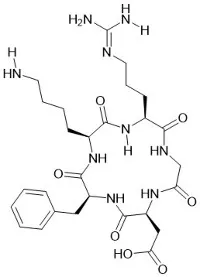
Antibody-drug conjugates (ADCs) have emerged as a promising class of targeted cancer therapies, combining the specificity of monoclonal antibodies with the potency of cytotoxic drugs. Peptide linkers play a crucial role in ADCs, connecting the antibody to the cytotoxic payload. They not only ensure the stability of the conjugate in circulation but also influence the release of the payload at the target site. One often-overlooked aspect of peptide linkers is their impact on the viscosity of ADC formulations, which can significantly affect the manufacturing, storage, and administration of these complex therapeutics.
Understanding the Basics of ADCs and Peptide Linkers
ADCs are composed of three main components: a monoclonal antibody, a cytotoxic drug, and a linker. The antibody targets specific antigens on cancer cells, delivering the cytotoxic payload directly to the tumor site. Peptide linkers are commonly used due to their biodegradability, flexibility, and ability to be cleaved by specific enzymes within the tumor microenvironment.
There are two main types of peptide linkers: cleavable and non-cleavable. Cleavable linkers, such as those containing valine-citrulline (Val-Cit) sequences, are designed to be hydrolyzed by proteases in the tumor cells, releasing the cytotoxic drug. Non-cleavable linkers, on the other hand, remain intact until the entire ADC is internalized and degraded within the cell.
The Significance of Viscosity in ADC Formulations
Viscosity is a critical physical property of ADC formulations. High viscosity can pose challenges during manufacturing processes, such as filtration, filling, and lyophilization. It can also affect the stability of the formulation over time, leading to aggregation and precipitation of the ADC. Additionally, high-viscosity formulations can be difficult to administer, causing pain and discomfort to patients.
On the other hand, low viscosity formulations are generally easier to handle and administer. They can be filtered more efficiently, reducing the risk of contamination. Moreover, low-viscosity formulations are less likely to cause injection site reactions, improving patient compliance.
Effects of Peptide Linkers on Viscosity
The structure and composition of peptide linkers can have a profound impact on the viscosity of ADC formulations. Here are some key factors to consider:
Hydrophobicity
Hydrophobic peptide linkers tend to increase the viscosity of ADC formulations. This is because hydrophobic interactions between the linker and the antibody or the payload can lead to the formation of aggregates and higher-order structures. For example, linkers containing long alkyl chains or aromatic groups are more likely to cause an increase in viscosity.
Our Acetylene-linker-Val-Cit-PABC-MMAE is a cleavable linker that contains a relatively hydrophobic acetylene group. While this linker is designed to efficiently release the cytotoxic drug MMAE in the tumor microenvironment, its hydrophobic nature may contribute to an increase in viscosity if not properly formulated.
Charge
The charge of the peptide linker can also influence the viscosity of the ADC formulation. Positively or negatively charged linkers can interact with the charged groups on the antibody or the payload, leading to changes in the electrostatic interactions within the formulation. For instance, a positively charged linker may interact with negatively charged regions on the antibody, causing the molecules to come closer together and increasing the viscosity.
DBCO-PEG4-Acid is a linker that contains a negatively charged acid group. The charge on this linker can affect the overall charge distribution of the ADC, potentially influencing its viscosity.
Length and Flexibility
The length and flexibility of the peptide linker can play a role in determining the viscosity of the ADC formulation. Longer linkers may have more freedom to move and interact with other components in the formulation, leading to increased entanglement and higher viscosity. In contrast, shorter and more rigid linkers may result in a more compact and less viscous formulation.
Fmoc-Val-Cit-PAB-OH is a relatively short peptide linker that is commonly used in ADCs. Its shorter length and specific structure may contribute to a lower viscosity compared to longer and more flexible linkers.
Strategies to Control Viscosity
To optimize the viscosity of ADC formulations, several strategies can be employed:
Linker Design
Careful design of the peptide linker is essential. By choosing linkers with appropriate hydrophobicity, charge, length, and flexibility, it is possible to minimize the impact on viscosity. For example, incorporating hydrophilic groups into the linker can reduce hydrophobic interactions and lower the viscosity.
Formulation Optimization
The choice of excipients and buffer conditions can also affect the viscosity of the ADC formulation. For instance, adding surfactants or cosolvents can help to reduce the surface tension and prevent aggregation, leading to a lower viscosity. Adjusting the pH and ionic strength of the buffer can also influence the electrostatic interactions within the formulation and optimize the viscosity.
Conjugation Conditions
The conditions under which the antibody and the payload are conjugated to the linker can impact the final viscosity of the ADC formulation. Controlling the reaction temperature, time, and stoichiometry can help to ensure a uniform and stable conjugate with optimal viscosity.
Conclusion
Peptide linkers play a crucial role in ADCs, and their impact on the viscosity of ADC formulations should not be underestimated. By understanding the factors that influence viscosity and employing appropriate strategies to control it, we can improve the manufacturability, stability, and administration of ADCs.
As a leading supplier of peptide linkers for ADC, we are committed to providing high-quality linkers that meet the specific needs of our customers. Our team of experts can work with you to design and optimize peptide linkers that minimize the impact on viscosity while ensuring the efficient delivery of the cytotoxic payload.
If you are interested in learning more about our peptide linkers or discussing your specific requirements, please feel free to contact us. We look forward to the opportunity to collaborate with you on your ADC development projects.
References
- Ducry, L., & Stump, B. (2010). Antibody-drug conjugates: linking cytotoxic payloads to monoclonal antibodies. Bioconjugate Chemistry, 21(1), 5-13.
- Shen, B. Q., Liu, X., Li, G., Raab, H., Bhakta, S., Kenanova, V., ... & Hamblett, K. J. (2012). Conjugation site modulates the in vivo stability and therapeutic activity of antibody-drug conjugates. Nature Biotechnology, 30(2), 184-189.
- Junutula, J. R., Raab, H., Clark, S., Bhakta, S., Leipold, D. D., Weir, S., ... & Raab, M. (2008). Site-specific conjugation of a cytotoxic drug to an antibody improves the therapeutic index. Nature Biotechnology, 26(8), 925-932.