





Tet - 213 is a cell line that has piqued the interest of many researchers in the field of biology and medicine. As a supplier of Tet - 213, I've had the chance to interact with numerous scientists who are keen on understanding the signaling pathways involved in this cell line. In this blog, I'll share what we know about these signaling pathways and how they play a crucial role in the behavior and functions of Tet - 213 cells.
First off, let's briefly introduce what Tet - 213 is. It's a neuroblastoma cell line, which means it's derived from nerve cells that have become cancerous. Neuroblastoma is the most common cancer in infants, and studying cell lines like Tet - 213 can provide valuable insights into the disease's mechanisms and potential treatment options.
One of the key signaling pathways involved in Tet - 213 is the MAPK/ERK pathway. The Mitogen - Activated Protein Kinase (MAPK) family, especially the Extracellular Signal - Regulated Kinase (ERK), is well - known for its role in cell proliferation, differentiation, and survival. In Tet - 213 cells, the MAPK/ERK pathway can be activated by various growth factors and cytokines. When these extracellular signals bind to their specific receptors on the cell surface, it triggers a cascade of phosphorylation events. First, the receptor tyrosine kinases get activated, which then phosphorylate adaptor proteins. These adaptor proteins recruit and activate Ras, a small G - protein. Ras then activates a series of kinases, including Raf, MEK, and finally ERK. Once ERK is phosphorylated and activated, it translocates into the nucleus and regulates the expression of genes involved in cell growth and survival.

The PI3K/Akt pathway is another important signaling pathway in Tet - 213. Phosphoinositide 3 - Kinase (PI3K) is activated by growth factor receptors on the cell membrane. Once activated, PI3K converts phosphatidylinositol 4,5 - bisphosphate (PIP2) to phosphatidylinositol 3,4,5 - trisphosphate (PIP3). PIP3 then recruits and activates Akt, also known as protein kinase B. Akt has multiple downstream targets that regulate cell survival, metabolism, and growth. For example, it can phosphorylate and inactivate Bad, a pro - apoptotic protein, thereby promoting cell survival. In Tet - 213 cells, dysregulation of the PI3K/Akt pathway can lead to uncontrolled cell growth and resistance to apoptosis, which are hallmarks of cancer.
The Wnt signaling pathway also plays a significant role in Tet - 213. There are two main branches of the Wnt pathway: the canonical and the non - canonical pathways. In the canonical Wnt pathway, when Wnt ligands bind to Frizzled receptors and LRP5/6 co - receptors, it inhibits the degradation of β - catenin. Normally, in the absence of Wnt signaling, β - catenin is phosphorylated by a destruction complex and targeted for proteasomal degradation. But when Wnt is present, the destruction complex is inactivated, and β - catenin accumulates in the cytoplasm and translocates to the nucleus. In the nucleus, β - catenin interacts with TCF/LEF transcription factors to regulate the expression of genes involved in cell proliferation, stem cell self - renewal, and differentiation. In Tet - 213 cells, abnormal activation of the Wnt pathway can contribute to the maintenance of the cancer stem - like cell population and tumorigenesis.
Now, let's talk about how understanding these signaling pathways can be useful for researchers. By targeting specific components of these pathways, scientists can develop potential therapies for neuroblastoma. For example, drugs that inhibit the MAPK/ERK pathway can be used to block cell proliferation. Similarly, PI3K/Akt pathway inhibitors can induce apoptosis in cancer cells. And modulating the Wnt pathway might help in eliminating cancer stem cells, which are often responsible for tumor recurrence.
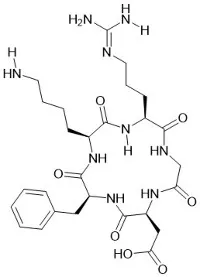
As a Tet - 213 supplier, we also offer a range of related products that can be used in the study of these signaling pathways. For instance, we have peptides that can be used to activate or inhibit specific receptors in these pathways. Check out our [HIV - Tat Protein (47 - 57)](/catalogue - peptides/hiv - tat - protein - 47 - 57.html), [FMRF - Related Peptide](/catalogue - peptides/fmrf - related - peptide.html), and [Proadrenomedullin (1 - 20) (human)](/catalogue - peptides/proadrenomedullin - 1 - 20 - human.html). These peptides can be valuable tools for researchers looking to dissect the signaling mechanisms in Tet - 213 cells.
If you're a researcher interested in working with Tet - 213 cells or exploring the signaling pathways involved, we'd love to hear from you. We can provide high - quality Tet - 213 cell lines and related products to support your research. Whether you're just starting your project or looking to expand your existing studies, we're here to assist you. Don't hesitate to reach out and start a conversation about your needs and how we can help.
In conclusion, the signaling pathways in Tet - 213, such as the MAPK/ERK, PI3K/Akt, and Wnt pathways, are complex and interconnected. Understanding these pathways is crucial for unraveling the mysteries of neuroblastoma and developing effective treatments. As a supplier, we're committed to providing the resources and support needed for researchers to make significant breakthroughs in this field.
References
- Hanahan D, Weinberg RA. The hallmarks of cancer. Cell. 2000;100(1):57 - 70.
- Blume - Jensen P, Hunter T. Oncogenic kinase signalling. Nature. 2001;411(6835):355 - 365.
- Clevers H, Nusse R. Wnt/beta - catenin signaling and disease. Cell. 2012;149(6):1192 - 1205.