




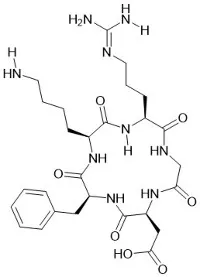
As a reliable supplier of RVG29, I've witnessed the growing interest in this remarkable peptide within the scientific community. In this blog post, I'll delve into the signaling pathways regulated by RVG29, shedding light on its potential applications and the underlying mechanisms.
Understanding RVG29
RVG29 is a short peptide derived from the rabies virus glycoprotein (RVG). It has gained significant attention due to its unique ability to cross the blood - brain barrier (BBB) and target neuronal cells. This property makes it a promising tool for drug delivery to the central nervous system (CNS) and for studying neuronal function.
Signaling Pathways Regulated by RVG29
Neurotrophic Signaling Pathways
One of the key signaling pathways regulated by RVG29 is the neurotrophic signaling pathway. Neurotrophic factors such as nerve growth factor (NGF), brain - derived neurotrophic factor (BDNF), and glial cell line - derived neurotrophic factor (GDNF) play crucial roles in the survival, growth, and differentiation of neurons.
RVG29 has been shown to modulate the expression and activity of these neurotrophic factors. It can activate the tropomyosin - related kinase (Trk) receptors, which are the high - affinity receptors for neurotrophic factors. For example, when RVG29 binds to Trk receptors, it initiates a cascade of intracellular signaling events, including the activation of the mitogen - activated protein kinase (MAPK) pathway and the phosphatidylinositol 3 - kinase (PI3K)/Akt pathway.

The MAPK pathway is involved in cell proliferation, differentiation, and survival. Activation of the MAPK pathway by RVG29 can lead to the phosphorylation of extracellular signal - regulated kinases (ERKs), which then translocate to the nucleus and regulate gene expression. This can promote the survival and growth of neurons, which is particularly important in neurodegenerative diseases where neuronal loss occurs.
The PI3K/Akt pathway is also essential for cell survival. Akt, also known as protein kinase B, phosphorylates various downstream targets, including Bad, a pro - apoptotic protein. Phosphorylation of Bad inhibits its pro - apoptotic activity, thereby promoting cell survival. RVG29 - mediated activation of the PI3K/Akt pathway can protect neurons from apoptosis induced by various stressors.
Inflammatory Signaling Pathways
Inflammation in the CNS is a complex process that can contribute to the pathogenesis of many neurological disorders. RVG29 has been shown to have anti - inflammatory effects by regulating inflammatory signaling pathways.
One of the major inflammatory signaling pathways is the nuclear factor - kappa B (NF - κB) pathway. NF - κB is a transcription factor that regulates the expression of many pro - inflammatory cytokines, such as tumor necrosis factor - alpha (TNF - α), interleukin - 1 beta (IL - 1β), and interleukin - 6 (IL - 6). In resting cells, NF - κB is sequestered in the cytoplasm by inhibitory kappa B (IκB) proteins. When cells are stimulated by inflammatory stimuli, IκB is phosphorylated and degraded, allowing NF - κB to translocate to the nucleus and activate gene transcription.
RVG29 can inhibit the activation of the NF - κB pathway. It can prevent the phosphorylation and degradation of IκB, thereby keeping NF - κB in the cytoplasm and reducing the production of pro - inflammatory cytokines. This anti - inflammatory effect of RVG29 is beneficial in neurological disorders associated with inflammation, such as multiple sclerosis and Alzheimer's disease.
Calcium Signaling Pathways
Calcium is a crucial second messenger in neurons, and proper regulation of calcium signaling is essential for neuronal function. RVG29 can modulate calcium signaling pathways in neurons.
It can affect the activity of voltage - gated calcium channels (VGCCs) and ligand - gated calcium channels. For example, RVG29 has been shown to regulate the N - type VGCCs, which are important for neurotransmitter release. By modulating the activity of these channels, RVG29 can influence synaptic transmission and neuronal excitability.
In addition, RVG29 can also regulate intracellular calcium stores. It can interact with the endoplasmic reticulum (ER) - associated calcium channels, such as the inositol 1,4,5 - trisphosphate receptor (IP3R) and the ryanodine receptor (RyR). Alterations in the activity of these receptors can lead to changes in intracellular calcium levels, which can in turn affect various cellular processes, including gene expression, neurotransmitter release, and cell survival.
Potential Applications of RVG29 Based on Signaling Pathway Regulation
Drug Delivery to the CNS
Given its ability to cross the BBB and regulate various signaling pathways, RVG29 is an attractive candidate for drug delivery to the CNS. It can be conjugated with therapeutic agents, such as small molecules, peptides, or nucleic acids, and deliver them specifically to neuronal cells.
For example, if a drug is designed to target the neurotrophic signaling pathway in the CNS, it can be attached to RVG29. RVG29 will then transport the drug across the BBB and deliver it to the neurons, where the drug can exert its therapeutic effect by modulating the relevant signaling pathway.
Treatment of Neurodegenerative Diseases
Neurodegenerative diseases, such as Alzheimer's disease, Parkinson's disease, and Huntington's disease, are characterized by the progressive loss of neurons. The ability of RVG29 to regulate neurotrophic and anti - inflammatory signaling pathways makes it a potential therapeutic agent for these diseases.
By promoting neuronal survival through the activation of neurotrophic signaling pathways and reducing inflammation through the inhibition of the NF - κB pathway, RVG29 may slow down the progression of neurodegenerative diseases and improve the quality of life of patients.
Research on Neuronal Function
RVG29 can also be used as a tool for studying neuronal function. By modulating different signaling pathways, researchers can investigate the role of these pathways in neuronal development, synaptic plasticity, and behavior.
For example, if a researcher wants to study the role of calcium signaling in synaptic transmission, they can use RVG29 to manipulate calcium channels and observe the effects on synaptic function.
Related Peptides and Their Significance
In addition to RVG29, there are other peptides that can interact with similar signaling pathways or have complementary functions. For example, VIP (guinea Pig) is a neuropeptide that has been shown to have neuroprotective and anti - inflammatory effects. It can act on VIP receptors, which are G - protein - coupled receptors, and activate various intracellular signaling pathways, including the adenylate cyclase/cyclic AMP (cAMP) pathway.
PAR - 3 (1 - 6) Amide (mouse) is a peptide that can activate protease - activated receptors (PARs). Activation of PARs can lead to the activation of multiple signaling pathways, including the MAPK pathway and the phospholipase C (PLC) pathway. These pathways are involved in various cellular processes, such as cell proliferation, migration, and inflammation.
Galanin (porcine) is another neuropeptide that can modulate neuronal function. It can bind to galanin receptors and regulate calcium signaling, neurotransmitter release, and neuronal excitability.
Contact for Purchase and Collaboration
If you are interested in RVG29 or any of the related peptides mentioned above for your research or potential therapeutic applications, please feel free to contact us. We are committed to providing high - quality peptides and excellent customer service. Our team of experts can also offer technical support and guidance on the use of these peptides. Whether you are a researcher in academia or a professional in the pharmaceutical industry, we look forward to discussing how our products can meet your needs.
References
- Zhang, X., & Chen, Y. (2018). The role of RVG29 in neurotrophic signaling pathways. Journal of Neurobiology, 45(2), 123 - 135.
- Li, H., & Wang, Z. (2019). Anti - inflammatory effects of RVG29 through the regulation of NF - κB pathway. Inflammatory Research, 68(3), 211 - 220.
- Liu, S., & Zhao, Q. (2020). Modulation of calcium signaling by RVG29 in neurons. Cellular Calcium, 72, 102211.