




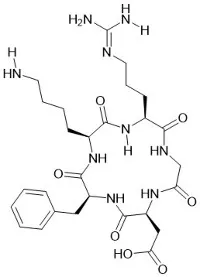
As a trusted supplier of Systemin, I am often asked about the target cells of this remarkable signaling peptide. Systemin is a well - known plant peptide that plays a crucial role in the plant's defense response against herbivores and pathogens. Understanding its target cells is essential for not only comprehending plant physiology but also for potential applications in agriculture and biotechnology.
Discovery and General Function of Systemin
Systemin was first discovered in tomato plants (Lycopersicon esculentum) in the early 1990s. It is a small, 18 - amino - acid peptide that is derived from a larger precursor protein, prosystemin. When a plant is damaged, for example, by insect chewing, systemin is released into the plant's vascular system. This peptide then travels throughout the plant, triggering a systemic defense response.
The general function of systemin is to induce the production of proteinase inhibitors (PIs) in the plant. PIs are proteins that can inhibit the digestive enzymes of herbivores, such as proteases. By producing PIs, the plant can reduce the nutritional value of its tissues for the herbivores, thus deterring further feeding.
Target Cells in the Plant
Vascular Parenchyma Cells
One of the primary target cells of systemin is the vascular parenchyma cells. These cells are located adjacent to the phloem, the plant tissue responsible for transporting organic nutrients, including systemin. When systemin reaches the vascular parenchyma cells, it binds to a specific receptor on the cell surface.
The receptor for systemin has been identified as a leucine - rich repeat (LRR) receptor kinase, named SR160. Once systemin binds to SR160, a series of intracellular signaling events are initiated. These events involve the activation of mitogen - activated protein kinases (MAPKs), which are key components of many signal transduction pathways in plants.
The activation of MAPKs leads to the phosphorylation of transcription factors. These transcription factors then enter the nucleus and bind to the promoter regions of genes encoding PIs. As a result, the genes are transcribed, and PIs are synthesized in the vascular parenchyma cells. From these cells, the PIs can be further transported to other parts of the plant through the phloem.
Mesophyll Cells
In addition to vascular parenchyma cells, mesophyll cells are also target cells of systemin. Mesophyll cells are the main photosynthetic cells in the plant leaf. They are important for the plant's overall metabolism and defense.
When systemin is transported to the mesophyll cells, it can also induce the production of PIs. Similar to the process in vascular parenchyma cells, systemin binds to SR160 on the mesophyll cell surface, activates MAPKs, and ultimately leads to the transcription of PI genes. The PIs produced in mesophyll cells can act locally to protect the photosynthetic tissues from herbivore attack.
Comparison with Other Peptides
To better understand the role of systemin and its target cells, it is useful to compare it with other peptides. For example, Peptide YY (3 - 36) (human) is a peptide involved in the regulation of appetite and energy balance in humans. Unlike systemin, which acts on plant cells, Peptide YY (3 - 36) targets specific cells in the human gastrointestinal tract and the central nervous system.
Another peptide, VIP (10 - 28) (human, Bovine, Porcine, Rat), is a vasoactive intestinal peptide. It has multiple functions, including relaxation of smooth muscles and regulation of secretion in various organs. Its target cells are mainly smooth muscle cells, endothelial cells, and glandular cells in different mammalian tissues.
Peptide F, Bovine is a peptide found in bovine tissues. Although its exact function is still being investigated, it is likely to have specific target cells within the bovine body, which are different from the plant cells targeted by systemin.
Implications for Agriculture and Biotechnology
The knowledge of systemin's target cells has significant implications for agriculture and biotechnology. In agriculture, we can use this knowledge to develop new strategies for pest control. For example, we can engineer plants to over - express systemin or its receptor, SR160. By doing so, the plants can have a more robust defense response against herbivores, reducing the need for chemical pesticides.
In biotechnology, systemin can be used as a model peptide for studying signal transduction pathways in plants. Understanding how systemin binds to its target cells and activates the defense response can provide insights into the development of other bioactive peptides with potential applications in plant protection and growth regulation.
Our Role as a Systemin Supplier
As a Systemin supplier, we are committed to providing high - quality Systemin products to researchers and industries. Our Systemin is carefully purified and characterized to ensure its biological activity. We understand the importance of Systemin in plant research and its potential applications, and we strive to support our customers in their scientific endeavors.
If you are interested in purchasing Systemin for your research or applications, we encourage you to contact us for a detailed discussion. Our team of experts is ready to assist you with any questions you may have regarding Systemin, its target cells, and its uses. We can also provide customized solutions based on your specific requirements.
Conclusion
In conclusion, the target cells of systemin mainly include vascular parenchyma cells and mesophyll cells in plants. Through binding to its receptor SR160 on these cells, systemin initiates a series of signaling events that lead to the production of proteinase inhibitors, which are crucial for the plant's defense against herbivores. Comparing systemin with other peptides such as Peptide YY (3 - 36) (human), VIP (10 - 28) (human, Bovine, Porcine, Rat), and Peptide F, Bovine highlights the specificity of peptide - target cell interactions. The knowledge of systemin's target cells has far - reaching implications for agriculture and biotechnology. If you are interested in exploring the potential of Systemin, please feel free to contact us for further discussion and procurement.
References
- Pearce, G., Strydom, D. J., Johnson, S., & Ryan, C. A. (1991). A polypeptide from tomato leaves induces wound - induced proteinase inhibitor proteins. Science, 253(5021), 895 - 898.
- Scheer, J. M., & Ryan, C. A. (2002). The systemin receptor SR160 is a leucine - rich repeat receptor kinase. Proceedings of the National Academy of Sciences, 99(26), 17192 - 17197.
- Schilmiller, A. L., & Howe, G. A. (2005). Jasmonate signaling: a conserved mechanism of hormone perception and transduction. Current Opinion in Plant Biology, 8(5), 488 - 494.