




Hey there! As a supplier of catalogue peptides, I often get asked about the solubility of these little biochemical wonders. So, I thought I'd take a deep dive into this topic and share some insights with you.
First off, let's understand what solubility means in the context of peptides. Solubility refers to the ability of a peptide to dissolve in a particular solvent. This is a crucial property because it directly impacts how the peptide can be used in various applications, like in research experiments, drug development, or even in some cosmetic formulations.
The solubility of catalogue peptides can vary widely, and it depends on several factors. One of the main factors is the peptide's amino acid composition. Peptides are made up of chains of amino acids, and different amino acids have different chemical properties. Some amino acids are hydrophilic, which means they love water and will readily dissolve in it. On the other hand, there are hydrophobic amino acids that avoid water like the plague and prefer non - polar solvents.
For example, if a peptide has a high proportion of hydrophilic amino acids such as serine, threonine, and lysine, it's likely to have good solubility in water. These amino acids have polar side chains that can interact with water molecules through hydrogen bonding, allowing the peptide to dissolve easily. Conversely, a peptide rich in hydrophobic amino acids like phenylalanine, leucine, and valine will have poor solubility in water and may require organic solvents for dissolution.

Another factor that affects solubility is the peptide's length. Generally, shorter peptides tend to be more soluble than longer ones. Longer peptides have a higher chance of forming complex three - dimensional structures, such as alpha - helices or beta - sheets. These structures can cause the peptide to aggregate, reducing its solubility. Additionally, longer peptides have more amino acid residues, which means there's a greater chance of having hydrophobic patches that can make it difficult for the peptide to dissolve in water.
The pH of the solvent also plays a significant role in peptide solubility. Peptides can exist in different charged states depending on the pH of the solution. At a certain pH, called the isoelectric point (pI), the net charge of the peptide is zero. At this point, peptides are often less soluble because there's no electrostatic repulsion between the molecules to keep them dispersed in the solution. By adjusting the pH away from the pI, we can increase the charge on the peptide, which promotes solubility. For example, if a peptide has a pI of 7, adjusting the pH to 3 or 9 can increase its solubility in water.
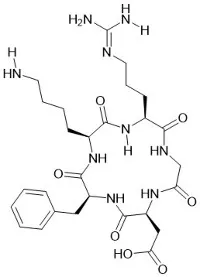
Now, let's talk about some of the catalogue peptides we offer and their solubility characteristics. Take RVG29. This peptide has a specific amino acid sequence that gives it unique solubility properties. It's important to note that the solubility of RVG29 can be influenced by the factors we've discussed earlier. If you're working with RVG29 in your research, you might need to experiment with different solvents and pH conditions to find the optimal solubility for your application.
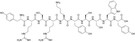
Peptide YY (canine, Mouse, Porcine, Rat) is another interesting peptide in our catalogue. This peptide is involved in various physiological processes, and its solubility is a key factor when it comes to studying its function. Depending on the specific research requirements, you may need to dissolve it in a suitable buffer or solvent. Again, the amino acid composition and the length of the peptide will determine its solubility behavior.
Urechistachykinin II is a peptide with its own set of solubility characteristics. Its solubility can be a bit tricky to predict, but by understanding the general principles of peptide solubility, you can make informed decisions about how to dissolve it. You might want to start with a small amount of the peptide and test different solvents to see which one works best.
When it comes to dissolving catalogue peptides, there are some general tips I can share. First, always start with a small amount of the peptide and a small volume of solvent. This way, you can test the solubility without wasting too much of the peptide. If the peptide doesn't dissolve in water, you can try adding a small amount of an organic solvent like dimethyl sulfoxide (DMSO) or ethanol. However, be careful with the amount of organic solvent you use, as some peptides can be sensitive to these solvents, and too much can cause the peptide to precipitate.
If you're having trouble dissolving a peptide, you can also try gentle heating or sonication. Heating can increase the kinetic energy of the molecules, making it easier for the peptide to dissolve. Sonication, on the other hand, uses high - frequency sound waves to break up peptide aggregates and promote solubility. But make sure not to over - heat or over - sonicate the peptide, as this can damage its structure and affect its activity.
In conclusion, understanding the solubility of catalogue peptides is essential for anyone working with these molecules. Whether you're a researcher, a drug developer, or someone in the cosmetics industry, knowing how to dissolve peptides properly can make your experiments and formulations more successful. At our company, we're committed to providing high - quality catalogue peptides and the information you need to use them effectively.
If you're interested in purchasing our catalogue peptides or have any questions about their solubility or other properties, don't hesitate to reach out. We're here to help you with your peptide needs and can provide you with more detailed information and support.
References
- Principles of Peptide Synthesis, M. Bodanszky and A. Bodanszky
- Peptide Chemistry: A Practical Textbook, H. D. Jakubke and H. Jescheit
- Handbook of Biologically Active Peptides, V. M.uttenthaler et al.