





Cyclo, a term that might not be as well - known to the general public as some other chemical or biological concepts, but it holds significant importance in various scientific and industrial fields. As a Cyclo supplier, I've had the privilege of delving deep into the world of Cyclo and its different types. In this blog, I'll take you on a journey to explore the diverse types of Cyclo and their unique characteristics.
Understanding Cyclo
Before we dive into the different types, it's essential to understand what Cyclo generally refers to. In the context of chemistry and biochemistry, "Cyclo" often implies a cyclic structure. A cyclic compound is one in which atoms are connected to form a ring. These rings can vary in size, composition, and the types of bonds present within them. The properties of cyclic compounds can be quite different from their linear counterparts due to the unique geometric and electronic characteristics of the ring structure.
Types of Cyclo Compounds
Cycloalkanes
Cycloalkanes are one of the most basic types of cyclic compounds. They are hydrocarbons, meaning they consist only of carbon and hydrogen atoms. The carbon atoms in cycloalkanes form a ring, and each carbon atom is bonded to two other carbon atoms and two hydrogen atoms (except in the case of substituted cycloalkanes). For example, cyclopropane, cyclobutane, cyclopentane, and cyclohexane are well - known cycloalkanes.
Cyclopropane has a three - membered ring, which is highly strained due to the bond angles being much smaller than the ideal tetrahedral angle of 109.5 degrees. This strain makes cyclopropane highly reactive compared to larger cycloalkanes. On the other hand, cyclohexane is a six - membered ring and can exist in different conformations, such as the chair and boat conformations. The chair conformation is the most stable because it minimizes steric hindrance between the hydrogen atoms on the ring.

Cycloalkanes have a wide range of applications. They are used as solvents in some industrial processes, and they can also serve as starting materials for the synthesis of more complex organic compounds. In the pharmaceutical industry, cycloalkane moieties can be found in many drug molecules, where they contribute to the overall shape and biological activity of the compound.
Cyclic Peptides
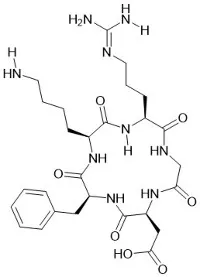
Cyclic peptides are another important type of Cyclo. Peptides are short chains of amino acids linked together by peptide bonds. When these chains form a ring, they become cyclic peptides. Cyclic peptides have several advantages over linear peptides. They are generally more stable because the cyclic structure protects them from proteolytic enzymes that would otherwise break down linear peptides.
Cyclic peptides can have diverse biological activities. Some cyclic peptides act as antibiotics, such as gramicidin S, which has antibacterial properties. Others can be used as hormones or hormone analogs. For instance, Peptide YY, PYY, Human is a cyclic peptide that plays a role in regulating appetite and energy homeostasis. The cyclic structure of PYY allows it to bind specifically to its receptors in the body, leading to its physiological effects.
In our catalogue, we also offer Cys - V5 Peptide, which is a cyclic peptide with unique properties. It can be used in research related to protein - protein interactions, as the cyclic structure can enhance its binding affinity to target proteins.
Cyclic Nucleotides
Cyclic nucleotides are a class of Cyclo compounds that are crucial in cell signaling. The most well - known cyclic nucleotides are cyclic adenosine monophosphate (cAMP) and cyclic guanosine monophosphate (cGMP). These molecules are synthesized from their corresponding nucleoside triphosphates (ATP and GTP) by the action of enzymes called adenylate cyclase and guanylate cyclase, respectively.
cAMP and cGMP act as second messengers in many signal transduction pathways. For example, when a hormone binds to a receptor on the cell surface, it can activate adenylate cyclase, which then converts ATP to cAMP. The increased levels of cAMP inside the cell can then activate protein kinases, which phosphorylate target proteins and lead to various cellular responses, such as changes in gene expression or cell metabolism.
Cyclic nucleotides are also involved in vision. In the retina, cGMP plays a key role in the process of phototransduction. When light is absorbed by photoreceptor cells, it leads to a decrease in cGMP levels, which in turn causes changes in the membrane potential of the cells and ultimately the generation of nerve impulses.
Cyclic Lipids
Cyclic lipids are a less - studied but still important type of Cyclo. Lipids are a diverse group of hydrophobic molecules that include fats, oils, phospholipids, and steroids. Some lipids can form cyclic structures. For example, hopanoids are a class of cyclic lipids found in bacteria. Hopanoids are similar in structure to steroids and are thought to play a role in maintaining the fluidity and stability of the bacterial cell membrane.
In addition, some synthetic cyclic lipids have been developed for use in drug delivery systems. The cyclic structure of these lipids can enhance their stability and their ability to encapsulate drugs. This allows for more efficient delivery of drugs to target cells and tissues.
Applications of Different Types of Cyclo
The different types of Cyclo compounds have a wide range of applications in various industries. In the pharmaceutical industry, cyclic peptides and cyclic nucleotides are used in drug development. As mentioned earlier, cyclic peptides can have antibacterial, antiviral, and anti - inflammatory properties. They can also be designed to target specific receptors in the body, making them potential candidates for the treatment of various diseases, such as cancer and neurological disorders.
Cycloalkanes and cyclic lipids are used in the chemical and materials industries. Cycloalkanes can be used as building blocks for the synthesis of polymers, and cyclic lipids can be used in the production of lubricants and surfactants. In the food industry, some cyclic compounds are used as flavoring agents. For example, some cyclic terpenes have pleasant aromas and are used to enhance the flavor of food products.
Why Choose Our Cyclo Products
As a Cyclo supplier, we offer a wide range of high - quality Cyclo products. Our products are carefully synthesized and purified to ensure their purity and quality. We have a team of experienced chemists and researchers who are dedicated to developing new and improved Cyclo compounds.
We also offer excellent customer service. Our sales team is always ready to answer your questions and provide you with detailed information about our products. Whether you are a researcher in a laboratory or a manufacturer in an industrial setting, we can provide you with the Cyclo products you need.
If you are interested in any of our Cyclo products, or if you have specific requirements for a particular type of Cyclo compound, please feel free to contact us for procurement and further discussions. We look forward to working with you to meet your Cyclo needs.
References
- Smith, J. M. (2018). Introduction to Organic Chemistry. Wiley.
- Alberts, B., Johnson, A., Lewis, J., Raff, M., Roberts, K., & Walter, P. (2019). Molecular Biology of the Cell. Garland Science.
- Voet, D., Voet, J. G., & Pratt, C. W. (2016). Fundamentals of Biochemistry: Life at the Molecular Level. Wiley.