





As a supplier of peptide APIs, I often encounter inquiries from clients about the differences between linear and cyclic peptide APIs. Understanding these differences is crucial for various applications, from pharmaceuticals to cosmetics. In this blog post, I'll delve into the characteristics, advantages, and applications of both linear and cyclic peptide APIs, providing insights to help you make informed decisions for your projects.
Structural Differences
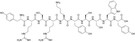
The most fundamental difference between linear and cyclic peptide APIs lies in their structure. Linear peptides consist of a straight chain of amino acids linked together by peptide bonds, similar to a string of beads. The N - terminus (amino end) and C - terminus (carboxyl end) of the peptide remain free, unless they are further modified. For example, a simple tripeptide like Gly - Ala - Ser is a linear peptide, where each amino acid is connected in a sequential manner.
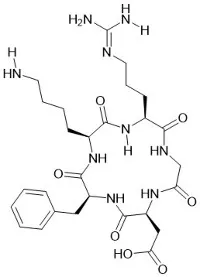
On the other hand, cyclic peptides form a closed - loop structure. This can occur through the formation of a peptide bond between the N - terminus and C - terminus, or through other types of linkages such as disulfide bonds between cysteine residues. For instance, some cyclic peptides found in nature, like gramicidin S, are formed by the head - to - tail cyclization of a linear precursor peptide, creating a circular structure.
Chemical and Physical Properties
Stability
Cyclic peptides generally exhibit greater stability compared to linear peptides. The cyclic structure restricts the conformational flexibility of the peptide, making it less susceptible to proteolytic degradation. Proteases, which are enzymes that break down peptides, often recognize specific linear sequences and cleave the peptide bonds. Since cyclic peptides lack free N - and C - termini and have a more constrained structure, proteases have a harder time binding to and cleaving these peptides. This enhanced stability is particularly beneficial in pharmaceutical applications, where peptides need to remain intact in the body for an extended period to exert their therapeutic effects.
In contrast, linear peptides are more flexible and can adopt a wider range of conformations. While this flexibility can be advantageous in some cases, it also makes them more vulnerable to enzymatic cleavage. For example, in the bloodstream, linear peptides may be rapidly degraded by proteases, reducing their bioavailability.


Solubility
The solubility of linear and cyclic peptides can also differ. Linear peptides tend to have relatively good solubility in aqueous solutions, especially if they contain a sufficient number of hydrophilic amino acids. The free N - and C - termini can participate in hydrogen bonding with water molecules, enhancing their solubility. However, if a linear peptide contains a large number of hydrophobic amino acids, it may have poor solubility in water, leading to aggregation and precipitation.
Cyclic peptides' solubility depends on their specific amino acid composition and the nature of the cyclization. Some cyclic peptides are highly soluble in water due to the presence of polar amino acids on the outer surface of the ring. Others, particularly those with a high proportion of hydrophobic residues, may have limited water solubility. In such cases, modifications such as the addition of solubilizing groups may be required to improve their solubility.
Biological Activity
Binding Affinity
The binding affinity of a peptide to its target is a critical factor in its biological activity. Cyclic peptides often have higher binding affinities for their targets compared to linear peptides. The constrained structure of cyclic peptides allows them to adopt a pre - organized conformation that is complementary to the binding site of the target molecule, such as a receptor or an enzyme. This pre - organization reduces the entropy loss upon binding, making the binding interaction more favorable.
For example, in the field of drug discovery, cyclic peptides have been shown to bind to certain receptors with much higher affinity than their linear counterparts. This high binding affinity can lead to more potent biological effects at lower concentrations, which is desirable for therapeutic applications.
Linear peptides, with their greater conformational flexibility, may need to undergo a conformational change upon binding to the target, which incurs an entropy cost. As a result, their binding affinities may be lower in some cases. However, the flexibility of linear peptides can also allow them to adapt to different binding sites, potentially enabling them to interact with a wider range of targets.
Selectivity
Cyclic peptides can also exhibit higher selectivity for their targets. The well - defined structure of cyclic peptides allows for more precise interactions with specific binding sites on the target molecule. This can reduce the likelihood of off - target effects, which is a major concern in drug development. By targeting only the desired receptor or enzyme, cyclic peptides can minimize side effects and improve the safety profile of the drug.
Linear peptides may have lower selectivity due to their conformational flexibility, which can enable them to bind to multiple targets with varying affinities. While this can be an advantage in some cases, such as in the development of broad - spectrum antibiotics, it can also lead to unwanted side effects in other applications.
Applications
Pharmaceuticals
In the pharmaceutical industry, both linear and cyclic peptide APIs have important applications. Linear peptides are commonly used in the development of drugs for a variety of indications. For example, insulin, a linear peptide hormone, is used to treat diabetes by regulating blood glucose levels. Linear peptides can be easily synthesized using solid - phase peptide synthesis (SPPS), which allows for the efficient production of peptides with defined sequences.
Cyclic peptides are also emerging as promising drug candidates. Their high stability, binding affinity, and selectivity make them attractive for the treatment of various diseases, including cancer, infectious diseases, and neurological disorders. For instance, some cyclic peptides have been developed as inhibitors of specific enzymes involved in cancer cell proliferation, blocking the growth and spread of cancer cells.
Cosmetics
In the cosmetics industry, peptides are used for their anti - aging, moisturizing, and skin - brightening properties. Linear peptides, such as palmitoyl - pentapeptide - 4, are often used in anti - aging creams. These peptides can stimulate collagen production in the skin, reducing the appearance of wrinkles. The relatively low cost and ease of synthesis of linear peptides make them a popular choice for cosmetic formulations.
Cyclic peptides are also being explored for cosmetic applications. Their stability and potential for high - affinity binding to skin receptors make them promising candidates for targeted skin treatments. For example, some cyclic peptides may be able to bind to specific receptors on skin cells, regulating cell function and improving skin health.
Our Product Offerings
As a peptide APIs supplier, we offer a wide range of both linear and cyclic peptide APIs to meet the diverse needs of our clients. Our product portfolio includes high - quality linear peptides such as Palmitoyl - Glu(OSu) - OH CAS 294855 - 91 - 7, which has potential applications in cosmetics and pharmaceuticals. This linear peptide can be used in formulations to enhance skin penetration and improve the stability of other active ingredients.
We also provide cyclic peptide APIs, including TBuO - Ste - Glu(OtBu) - OH CAS 1188328 - 39 - 3. This cyclic peptide has unique chemical and biological properties that make it suitable for various research and development projects. Additionally, our Fmoc - Leu - Aib - OH is a valuable building block for the synthesis of both linear and cyclic peptides, offering flexibility in peptide design and synthesis.
Conclusion
In summary, linear and cyclic peptide APIs have distinct differences in their structure, chemical and physical properties, and biological activity. While linear peptides are relatively easy to synthesize and have good solubility in some cases, cyclic peptides offer enhanced stability, higher binding affinities, and greater selectivity. The choice between linear and cyclic peptide APIs depends on the specific application, whether it is in pharmaceuticals, cosmetics, or other fields.
As a trusted peptide APIs supplier, we are committed to providing high - quality products and excellent customer service. If you are interested in learning more about our linear and cyclic peptide APIs or have specific requirements for your projects, we encourage you to contact us for procurement and further discussions. Our team of experts is ready to assist you in finding the right peptide solutions for your needs.
References
- Craik DJ, Fairlie DP, Liras S, Price DW. Cyclic peptides: a new generation of peptide drugs? Drug Discov Today. 2013;18(11 - 12):404 - 413.
- Nguyen H, Zhou Y, Yang Y, et al. Advances in the synthesis of cyclic peptides. Chem Soc Rev. 2014;43(19):6981 - 7004.
- Bockus TR, Gellman SH. Constrained peptides: turning the pages of nature's playbook. Chem Sci. 2018;9(12):2907 - 2916.