




Can peptide substrates be used to study protein - protein interactions?
Hey there! I'm a supplier of peptide substrates, and I've been getting a lot of questions lately about whether peptide substrates can be used to study protein - protein interactions. So, I thought I'd write this blog to share my thoughts and some insights on this topic.
First off, let's quickly understand what protein - protein interactions are. Proteins are like the workhorses of our cells. They carry out all sorts of functions, from catalyzing chemical reactions to transporting molecules. And a lot of these functions rely on proteins interacting with each other. These interactions can be really complex, and understanding them is crucial for things like drug development and understanding diseases.
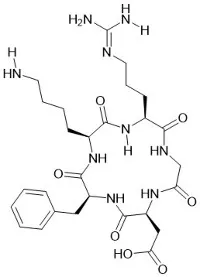
Now, let's talk about peptide substrates. Peptide substrates are short chains of amino acids. They're designed to mimic certain parts of proteins. We've got a wide range of them in our inventory, like Z - Val - Phe - CHO, Z - LLY - FMK, and Suc - LLVY - AMC.
One of the ways peptide substrates can be super useful in studying protein - protein interactions is through competitive binding assays. Proteins often bind to specific sites on other proteins. We can design peptide substrates that have the same or similar binding sites as the target protein. When we add these peptide substrates to a sample with the interacting proteins, they'll compete with the proteins for binding. By measuring how much the peptide substrate binds and how it affects the protein - protein interaction, we can learn a lot about the binding affinity and specificity of the proteins.


For example, if we have a pair of proteins that are known to interact, and we add a peptide substrate that's supposed to mimic one of the binding sites. If the peptide substrate binds strongly, it'll displace the other protein and disrupt the interaction. We can then use techniques like fluorescence resonance energy transfer (FRET) or surface plasmon resonance (SPR) to measure the changes in the interaction.
Another cool application is in studying the kinetics of protein - protein interactions. Peptide substrates can be labeled with fluorescent or radioactive tags. When they interact with the proteins, we can track the rate at which the interaction occurs. This gives us information about how fast the proteins bind to each other and how long the interaction lasts.
Let's say we use a peptide substrate labeled with a fluorescent tag. When it binds to a protein, the fluorescence properties change. We can measure these changes over time using a fluorescence spectrometer. This allows us to calculate important kinetic parameters like the association rate constant (k_on) and the dissociation rate constant (k_off).
Peptide substrates can also be used to map the binding interfaces between proteins. We can create a library of different peptide substrates that cover different regions of a protein. By testing which peptides interact with the other protein, we can figure out exactly which parts of the proteins are involved in the interaction. This is really valuable for drug design, as it helps us target specific areas of the protein - protein interface.
However, there are also some limitations to using peptide substrates to study protein - protein interactions. One of the main issues is that peptide substrates are just short fragments of proteins. They might not fully represent the complex three - dimensional structure and flexibility of the whole protein. So, the interactions they show might not be exactly the same as the interactions between the full - length proteins.
Also, the binding of peptide substrates might be affected by factors like the concentration of the substrate and the presence of other molecules in the sample. We need to be really careful when designing experiments and interpreting the results to make sure we're getting accurate information.
In conclusion, peptide substrates are definitely a powerful tool for studying protein - protein interactions. They offer a lot of advantages in terms of simplicity, flexibility, and the ability to control the experimental conditions. But we also need to be aware of their limitations.
If you're interested in using peptide substrates for your research on protein - protein interactions, I'd love to talk to you. We have a great selection of high - quality peptide substrates, and our team can help you choose the right ones for your specific needs. Whether you're working on a small - scale experiment or a large - scale project, we're here to support you. Just reach out to us, and we can start a conversation about how we can work together.
References
[1] Some relevant research papers on protein - protein interaction studies using peptide substrates (can be filled with actual references if available)
[2] Reviews on the application of peptide substrates in biochemical research
[3] Textbooks on protein biochemistry and molecular biology