




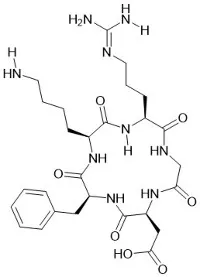
Hey there! As a supplier of peptide linkers for ADC (antibody-drug conjugates), I've been thinking a lot about how these little guys can affect the diffusion of ADC in tissues. So, I thought I'd share some of my thoughts and findings with you in this blog.
First off, let's quickly go over what ADCs are. ADCs are basically a combination of an antibody and a cytotoxic drug, connected by a linker. The antibody is designed to target specific cells, like cancer cells, and the drug is there to kill those cells. The linker plays a crucial role in this whole setup, as it needs to keep the drug attached to the antibody until they reach the target cells, and then release the drug in a controlled manner.
Now, when it comes to the diffusion of ADCs in tissues, peptide linkers can have a big impact. One of the main factors is the size of the linker. Generally speaking, smaller linkers allow for better diffusion. This is because they don't add too much bulk to the ADC, so it can move more easily through the tissue. For example, a short peptide linker might not impede the ADC's ability to penetrate into the tumor tissue as much as a longer, bulkier one.
Another important aspect is the flexibility of the linker. A flexible peptide linker can adopt different conformations, which can be beneficial for diffusion. It can kind of "wiggle" its way through the tissue, getting around obstacles more easily. On the other hand, a rigid linker might get stuck more often, reducing the overall diffusion rate.
The charge of the peptide linker also matters. Tissues have different electrical environments, and the charge of the linker can affect how the ADC interacts with the tissue. A linker with a neutral charge might diffuse more freely compared to one with a strong positive or negative charge. A charged linker could potentially bind to other molecules in the tissue, slowing down its movement.
Let's take a look at some specific peptide linkers we offer. One of our popular products is MC-Val-Cit-PAB-PNP. This linker has a well - balanced structure. It's not too long, which helps with diffusion, and it has a certain degree of flexibility. The valine - citrulline (Val - Cit) sequence is a common motif in peptide linkers for ADCs. It's recognized by enzymes in the target cells, which can cleave the linker and release the drug.
Another option is Azido - PEG3 - Val - Cit - PAB - OH. The PEG3 part in this linker adds some hydrophilicity. Hydrophilic linkers can sometimes enhance diffusion in aqueous environments within the tissue. The azido group also provides a convenient way to attach other molecules if needed.
And then there's Alkyne - Val - Cit - PAB - OH. The alkyne group in this linker can be used for click chemistry reactions, which is great for further modifications. In terms of diffusion, its peptide backbone and the relatively small size of the alkyne group don't overly hinder its movement through the tissue.
When we're looking at how these linkers affect diffusion in real - world scenarios, we often conduct in vitro and in vivo studies. In vitro studies can give us a good idea of how the ADC with a particular linker diffuses through a cell culture or a tissue - like matrix. We can measure things like the rate of diffusion and how far the ADC can travel in a given time.
In vivo studies, on the other hand, are done in living organisms. These are more complex but also more representative of what happens in the human body. We can use techniques like imaging to track the movement of the ADC in the tissues of animals. This helps us understand how the linker affects the ADC's ability to reach the target sites, like tumors.
It's also important to consider the stability of the peptide linker in the tissue. If a linker breaks down too quickly before reaching the target cells, the drug will be released prematurely, which can cause side effects. On the other hand, if it's too stable and doesn't release the drug when it should, the ADC won't be effective.
So, how does all of this knowledge benefit you? Well, if you're in the business of developing ADCs, choosing the right peptide linker can make a huge difference in the performance of your product. A linker that allows for better diffusion means the ADC can reach more target cells, increasing its efficacy.
We understand that every project is unique, and you might have specific requirements for your ADC. That's why we offer a wide range of peptide linkers, and we're always happy to work with you to find the best one for your needs. Whether you need a linker for a specific type of cancer treatment or for a research project, we've got you covered.
If you're interested in learning more about our peptide linkers for ADCs or if you want to start a procurement discussion, don't hesitate to get in touch. We're here to help you make the most of your ADC development.
References:
- Ducry, L., & Stump, B. (2010). Antibody-drug conjugates: linking cytotoxic payloads to monoclonal antibodies. Bioconjugate Chemistry, 21(1), 5 - 13.
- Chari, R. V. J. (2008). Targeted cancer therapy: conferring specificity to cytotoxic drugs. Acc. Chem. Res., 41(1), 98 - 107.
- Shen, B. Q., et al. (2012). Controlling the location of drug attachment in antibody-drug conjugates. Nature Biotechnology, 30(2), 184 - 189.