




Antibody-drug conjugates (ADCs) have emerged as a promising class of targeted cancer therapies, offering a way to deliver potent cytotoxic drugs directly to cancer cells while minimizing damage to healthy tissues. A key component of ADCs is the peptide linker, which plays a crucial role in the interaction with the payload and ultimately affects the efficacy and safety of the ADC. As a leading supplier of peptide linkers for ADCs, we are deeply involved in understanding how these linkers interact with the payload, and in this blog, we will explore this fascinating topic.
The Basics of ADCs and Peptide Linkers
ADCs are composed of three main components: an antibody, a cytotoxic payload, and a linker. The antibody is designed to specifically recognize and bind to antigens that are overexpressed on the surface of cancer cells. The payload is a highly potent cytotoxic agent that can kill the cancer cells once it is released. The linker connects the antibody to the payload and is responsible for maintaining the stability of the ADC in the bloodstream and facilitating the release of the payload at the target site.
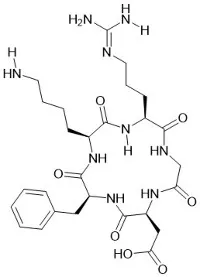
Peptide linkers are a popular choice in ADC design due to their unique properties. They are typically composed of short amino acid sequences that can be easily synthesized and modified. Peptide linkers can be designed to be either cleavable or non - cleavable. Cleavable peptide linkers are sensitive to specific enzymes or environmental conditions within the tumor microenvironment, allowing for the controlled release of the payload. Non - cleavable peptide linkers, on the other hand, remain intact until the ADC is internalized by the target cell and degraded in the lysosome.
Interaction Mechanisms between Peptide Linkers and Payloads
Chemical Bonding
The most fundamental interaction between peptide linkers and payloads is through chemical bonding. For cleavable peptide linkers, the payload is often attached to the linker via a labile bond that can be broken under specific conditions. For example, in the case of a protease - cleavable linker such as MC-Val-Cit-PAB-PNP, the Val - Cit dipeptide sequence is recognized and cleaved by cathepsin B, an enzyme that is highly expressed in many tumor cells. Once the dipeptide is cleaved, the self - immolative PAB spacer releases the payload.
Non - cleavable peptide linkers form stable covalent bonds with the payload. These bonds are typically resistant to extracellular degradation but are broken when the ADC is processed within the cell. For instance, the payload can be attached to the peptide linker through a thioether bond, which is stable in the bloodstream but can be disrupted during the lysosomal degradation of the ADC.
Hydrophobic and Hydrophilic Interactions
The hydrophobicity or hydrophilicity of the peptide linker and the payload can significantly influence their interaction. Hydrophobic payloads tend to interact with hydrophobic regions of the peptide linker. This interaction can help to shield the payload from the aqueous environment of the bloodstream, reducing non - specific binding and increasing the stability of the ADC.
Conversely, hydrophilic peptide linkers can be used to solubilize hydrophobic payloads. By incorporating hydrophilic amino acids into the peptide sequence, the overall solubility of the ADC can be improved. For example, the use of Boc-Val-Cit-PAB-OH with appropriate modifications can enhance the solubility of certain hydrophobic payloads, making the ADC more suitable for in vivo applications.
Steric Effects
Steric effects also play an important role in the interaction between peptide linkers and payloads. The size and shape of the payload can affect its ability to be attached to the peptide linker and its subsequent release. A large or bulky payload may experience steric hindrance during the conjugation process, which can lead to lower conjugation efficiency.
Moreover, steric effects can influence the cleavage of cleavable peptide linkers. If the payload is too large or has an unfavorable conformation, it may interfere with the access of the cleaving enzyme to the cleavage site on the peptide linker. Therefore, careful design of the peptide linker and selection of the payload are necessary to minimize steric effects.
Impact of Linker - Payload Interaction on ADC Performance
Efficacy
The interaction between the peptide linker and the payload has a direct impact on the efficacy of the ADC. A well - designed interaction ensures that the payload is released at the right place and at the right time. If the linker - payload interaction is too strong, the payload may not be released efficiently, leading to reduced cytotoxicity against cancer cells. On the other hand, if the interaction is too weak, the payload may be released prematurely in the bloodstream, causing off - target toxicity.
For example, in pre - clinical studies, ADCs with optimized peptide linkers that have a balanced interaction with the payload have shown higher anti - tumor activity compared to those with suboptimal linker - payload interactions. The ability of the cleavable linker to be specifically cleaved in the tumor microenvironment and release the payload in a controlled manner is crucial for achieving high efficacy.
Safety
Safety is another critical aspect affected by the linker - payload interaction. Premature release of the payload in the bloodstream can lead to systemic toxicity, as the potent cytotoxic agent can damage healthy cells. By carefully controlling the interaction between the peptide linker and the payload, the risk of off - target toxicity can be minimized.
Non - cleavable peptide linkers can also contribute to safety by ensuring that the payload is only released after the ADC is internalized by the target cell. This reduces the exposure of healthy tissues to the cytotoxic payload. Additionally, the solubility and stability of the ADC, which are influenced by the linker - payload interaction, can affect its pharmacokinetics and biodistribution, further impacting safety.
Our Role as a Peptide Linker Supplier
As a leading supplier of peptide linkers for ADCs, we are committed to providing high - quality products that are designed to optimize the interaction with various payloads. Our team of experts has in - depth knowledge of peptide chemistry and ADC technology, allowing us to develop peptide linkers with tailored properties.
We offer a wide range of peptide linkers, including cleavable and non - cleavable options, such as MC-Val-Cit-PAB-PNP, Boc-Val-Cit-PAB-OH, and DBCO-PEG4-Acid. These linkers can be customized to meet the specific requirements of different payloads and ADC designs.
We also provide comprehensive technical support to our customers. Whether you need assistance in selecting the right peptide linker for your payload or advice on the conjugation process, our team is here to help. We work closely with researchers and pharmaceutical companies to ensure that our peptide linkers contribute to the development of safe and effective ADCs.
Conclusion
The interaction between peptide linkers and payloads in ADCs is a complex and multi - faceted process that has a profound impact on the efficacy and safety of these targeted therapies. Understanding the chemical bonding, hydrophobic and hydrophilic interactions, and steric effects between the linker and the payload is essential for the rational design of ADCs.
As a peptide linker supplier, we are at the forefront of this field, providing innovative solutions to optimize the linker - payload interaction. If you are involved in ADC research or development and are looking for high - quality peptide linkers, we invite you to contact us for further discussion and potential collaboration. Our expertise and product portfolio can help you take your ADC projects to the next level.
References
- Ducry, L., & Stump, B. (2010). Antibody-drug conjugates: linking cytotoxic payloads to monoclonal antibodies. Bioconjugate Chemistry, 21(1), 5 - 13.
- Shen, B. Q., Rader, C., Liu, X., Raab, H., Bhakta, S., Kenrick, M.,... & Hamblett, K. J. (2012). Controlling the location of drug attachment in antibody-drug conjugates. Nature Biotechnology, 30(2), 184 - 189.
- Alley, S. C., Okeley, N. M., & Senter, P. D. (2010). Antibody-drug conjugates: targeted drug delivery for cancer. Current Opinion in Chemical Biology, 14(3), 529 - 537.