




How to design optimal peptide linkers for ADC?
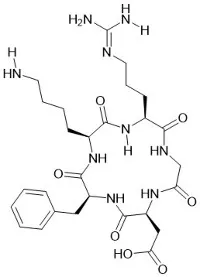
Antibody-drug conjugates (ADCs) have emerged as a promising class of targeted cancer therapies, combining the specificity of monoclonal antibodies with the potency of cytotoxic drugs. Peptide linkers play a crucial role in ADCs, as they connect the antibody to the cytotoxic payload and influence the pharmacokinetics, stability, and efficacy of the conjugate. In this blog post, I'll share some insights on how to design optimal peptide linkers for ADCs, drawing on my experience as a peptide linkers for ADC supplier.
Understanding the Role of Peptide Linkers in ADCs
Before delving into the design process, it's important to understand the key functions of peptide linkers in ADCs. Firstly, the linker must be stable in the bloodstream to prevent premature release of the cytotoxic payload, which could lead to off-target toxicity. Secondly, it should be cleavable at the target site to ensure efficient delivery of the drug to the cancer cells. Thirdly, the linker should not significantly affect the binding affinity of the antibody to its target antigen.
Factors to Consider in Peptide Linker Design
Cleavage Mechanism
One of the most critical aspects of peptide linker design is the choice of cleavage mechanism. There are several types of cleavage mechanisms available, including enzymatic cleavage, pH-dependent cleavage, and reduction-sensitive cleavage.
Enzymatic cleavage is the most commonly used mechanism in ADCs. Peptide linkers can be designed to be recognized and cleaved by specific enzymes that are overexpressed in tumor tissues, such as cathepsins. For example, the MC-Val-Cit-PAB-PNP linker is a well-known enzymatically cleavable linker. It contains a valine-citrulline dipeptide sequence that is recognized and cleaved by cathepsin B, releasing the cytotoxic payload inside the tumor cells.
pH-dependent cleavage is another option. Tumor tissues often have a lower pH compared to normal tissues. Linkers can be designed to be stable at physiological pH (around 7.4) but cleave at the slightly acidic pH (around 5-6) found in endosomes and lysosomes. This allows for selective release of the drug at the target site.
Reduction-sensitive cleavage is based on the presence of disulfide bonds in the linker. The reducing environment inside cells can break these disulfide bonds, leading to the release of the payload. However, disulfide bonds can also be reduced in the bloodstream, which may cause premature release of the drug.
Hydrophilicity and Flexibility
The hydrophilicity and flexibility of the peptide linker can also have a significant impact on the properties of the ADC. Hydrophilic linkers can improve the solubility of the conjugate and reduce aggregation, which is important for in vivo stability and pharmacokinetics. Flexible linkers can allow for better interaction between the antibody and the target antigen, as well as more efficient cleavage of the linker at the target site.
For example, the DBCO-PEG4-Acid linker contains a polyethylene glycol (PEG) spacer, which is highly hydrophilic and flexible. PEG spacers can increase the solubility and circulation half-life of the ADC, while also reducing immunogenicity.
Spacer Length
The length of the spacer between the antibody and the payload can affect the binding affinity of the antibody and the efficiency of payload release. A spacer that is too short may sterically hinder the binding of the antibody to its target antigen, while a spacer that is too long may increase the risk of premature payload release or reduce the stability of the conjugate.
Compatibility with the Antibody and Payload
The peptide linker must be compatible with both the antibody and the cytotoxic payload. It should not interfere with the binding of the antibody to its target antigen or cause any adverse reactions with the payload. Additionally, the linker should be able to form stable covalent bonds with both the antibody and the payload.
Design Strategies for Optimal Peptide Linkers
Rational Design
Rational design involves using knowledge of the target enzyme, the antibody, and the payload to design a peptide linker with the desired properties. This approach typically starts with the selection of a suitable cleavage mechanism and then involves the optimization of the linker sequence, hydrophilicity, flexibility, and spacer length.
For example, if cathepsin B is the target enzyme, the linker sequence can be designed to contain a valine-citrulline dipeptide, which is a well-known substrate for cathepsin B. The hydrophilicity and flexibility of the linker can be adjusted by incorporating appropriate amino acids or PEG spacers.
Combinatorial Library Screening
Combinatorial library screening is a high-throughput approach that involves synthesizing a large library of peptide linkers with different sequences and properties and then screening them for the optimal linker. This approach can be used to identify linkers with novel cleavage mechanisms or improved properties.
Computational Modeling
Computational modeling can be used to predict the properties of peptide linkers and optimize their design. Molecular dynamics simulations can be used to study the flexibility and conformation of the linker, as well as its interaction with the antibody and the payload. This can help in the rational design of linkers with improved stability, cleavage efficiency, and binding affinity.
Our Offerings as a Peptide Linkers for ADC Supplier
As a peptide linkers for ADC supplier, we offer a wide range of high-quality peptide linkers with different cleavage mechanisms, hydrophilicities, and spacer lengths. Our MC-Val-Cit-PAB-PNP linker is a popular choice for enzymatic cleavage, while our DBCO-PEG4-Acid linker provides excellent hydrophilicity and flexibility. We also offer Boc-Val-Cit-PAB-OH, which is a useful intermediate for the synthesis of enzymatically cleavable linkers.
We understand the importance of customizability in peptide linker design. Our team of experts can work with you to design and synthesize peptide linkers that meet your specific requirements. Whether you need a linker with a specific cleavage mechanism, hydrophilicity, or spacer length, we can provide a tailored solution.
Contact Us for Procurement and Collaboration
If you are interested in our peptide linkers for ADCs or need more information on how to design optimal peptide linkers for your ADC project, please feel free to contact us. We are always ready to discuss your needs and provide you with the best possible solutions. Our experienced team can assist you in the selection of the right linker and guide you through the procurement process. Let's work together to develop innovative and effective ADCs for the treatment of cancer.
References
- Ducry, L., & Stump, B. (2010). Antibody-drug conjugates: linking cytotoxic payloads to monoclonal antibodies. Bioconjugate Chemistry, 21(1), 5-13.
- Alley, S. C., Okeley, N. M., & Senter, P. D. (2010). Antibody-drug conjugates: targeted drug delivery for cancer. Current Opinion in Chemical Biology, 14(1), 52-60.
- Shen, B. Q., Rader, C., Liu, X., Rao, B., Bhakta, S., Kenanova, V., ... & Wu, A. M. (2012). Conjugation site modulates the in vivo stability and therapeutic activity of antibody-drug conjugates. Nature Biotechnology, 30(2), 184-189.