





Is DAMGO a synthetic opioid? This is a question that often arises in the fields of pharmacology, pain management, and drug research. As a supplier of DAMGO, I am well - versed in the nature and properties of this compound, and I'm here to provide a comprehensive answer.
Understanding DAMGO
DAMGO, which stands for [D - Ala2, N - MePhe4, Gly - ol5] enkephalin, is indeed a synthetic opioid. It is a highly selective μ - opioid receptor agonist. Opioid receptors are a class of G - protein coupled receptors that are widely distributed in the central and peripheral nervous systems. The μ - opioid receptors, in particular, play a crucial role in mediating the analgesic effects, as well as many of the side - effects associated with opioid drugs.
Synthetic opioids are artificially created compounds that mimic the effects of natural opioids, such as morphine, which are derived from the opium poppy plant. The development of synthetic opioids like DAMGO was driven by the need for more potent, selective, and safer analgesics. Scientists can modify the chemical structure of natural opioids or design entirely new molecules to target specific opioid receptors with greater precision.
Chemical Structure and Function of DAMGO
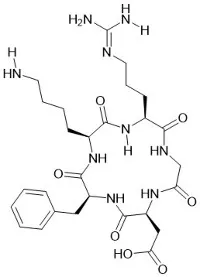
The chemical structure of DAMGO is a modified form of enkephalin, an endogenous opioid peptide. Enkephalins are naturally occurring peptides in the body that bind to opioid receptors and have analgesic properties. By making specific modifications to the enkephalin structure, such as substituting certain amino acids, DAMGO was created.
The [D - Ala2] substitution enhances the stability of the peptide by making it more resistant to enzymatic degradation. The [N - MePhe4] modification increases the affinity of the peptide for the μ - opioid receptor, and the [Gly - ol5] substitution further enhances its binding and selectivity. These structural changes result in a compound that has a high affinity and selectivity for the μ - opioid receptor, leading to potent analgesic effects.
When DAMGO binds to the μ - opioid receptor, it activates a series of intracellular signaling pathways. This activation leads to the inhibition of neurotransmitter release, such as glutamate and substance P, which are involved in the transmission of pain signals. As a result, the perception of pain is reduced.
Applications of DAMGO in Research
DAMGO is widely used in scientific research. In the field of neuroscience, it is used to study the role of μ - opioid receptors in pain perception, reward, and addiction. Researchers can use DAMGO to investigate how the activation of μ - opioid receptors affects neuronal activity, synaptic plasticity, and behavior.
For example, studies have used DAMGO to explore the mechanisms of opioid - induced analgesia and tolerance. By administering DAMGO to animal models, researchers can observe how the body responds to repeated exposure to μ - opioid agonists. This research can help in the development of new strategies to manage pain more effectively and reduce the risk of opioid - related side - effects, such as tolerance and addiction.
In addition to pain research, DAMGO is also used in studies related to other physiological functions. It has been used to investigate the role of μ - opioid receptors in the regulation of the immune system, cardiovascular function, and gastrointestinal motility.
Comparison with Other Opioids
Compared to natural opioids like morphine, DAMGO has several advantages in research. Firstly, its high selectivity for the μ - opioid receptor allows researchers to study the specific effects of μ - receptor activation without the confounding effects of other opioid receptors. Morphine, on the other hand, binds to multiple opioid receptors, including μ, δ, and κ receptors, which can make it more difficult to isolate the effects of μ - receptor activation.
Secondly, DAMGO is a peptide, which means it can be more easily modified and studied at the molecular level. Scientists can make further modifications to the DAMGO structure to create new compounds with different properties, such as increased potency or reduced side - effects.
However, like all opioids, DAMGO also has potential limitations. It can cause side - effects similar to other opioids, such as respiratory depression, sedation, and constipation. These side - effects need to be carefully considered when using DAMGO in research or potential clinical applications.
Our Offerings as a DAMGO Supplier
As a supplier of DAMGO, we are committed to providing high - quality products to the scientific community. Our DAMGO is synthesized using state - of - the - art techniques and is rigorously tested for purity and quality. We understand the importance of reliable and consistent products in scientific research, and we strive to meet the highest standards.
In addition to DAMGO, we also offer a wide range of other peptides for research purposes. For example, we supply Galanin (1 - 16) (mouse, Porcine, Rat), which is involved in the regulation of neurotransmitter release and has potential applications in the study of neurological disorders. We also have Exendin (9 - 39), which is used in diabetes research, and SAMS Peptide, which is useful in protein phosphorylation studies.
Contact Us for Procurement
If you are involved in scientific research and are in need of DAMGO or any of our other peptide products, we invite you to contact us for procurement. We have a dedicated team that can provide you with detailed information about our products, pricing, and delivery options. Our goal is to support your research by providing high - quality peptides in a timely and efficient manner. Whether you are conducting basic research in the laboratory or working on a clinical trial, we can be your reliable partner in peptide supply.
References
- Pasternak, G. W. (2001). Opioid receptor subtypes. Current Opinion in Pharmacology, 1(1), 60 - 64.
- Traynor, J. R., & Elliott, J. (1993). G protein activation by opioid receptors: agonist and antagonist properties of opioid peptides at the cloned μ, δ, and κ receptors. Journal of Pharmacology and Experimental Therapeutics, 266(3), 1413 - 1422.
- Williams, J. T., Christie, M. J., & Manzoni, O. J. (2001). Cellular and synaptic adaptations mediating opioid tolerance and dependence. Physiological Reviews, 81(1), 299 - 343.