




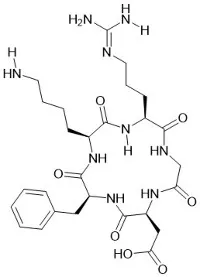
Xenin 25 is a bioactive peptide that has been the subject of increasing scientific interest in recent years. As a Xenin 25 supplier, I've had the privilege of witnessing the growing curiosity about its potential applications, especially in relation to the immune system. In this blog post, we'll delve into the scientific research to explore whether Xenin 25 is indeed related to the immune system.
Understanding Xenin 25
Xenin 25 is a peptide that was first identified in the gastrointestinal tract. It is derived from a larger precursor molecule and has been shown to have various physiological effects. Peptides like Xenin 25 are small chains of amino acids that can act as signaling molecules in the body, influencing a wide range of biological processes.
One of the initial studies on Xenin 25 focused on its role in the regulation of gastrointestinal functions. It was found to affect gastric emptying, pancreatic secretion, and intestinal motility. These effects are mediated through specific receptors on the surface of cells in the digestive system. However, as research progressed, scientists began to wonder if Xenin 25 could have other functions beyond the gut.
The Immune System: A Complex Network
The immune system is a highly complex and sophisticated defense mechanism that protects the body from pathogens, such as bacteria, viruses, and fungi. It consists of various types of cells, including white blood cells (leukocytes), antibodies, and lymphoid organs like the spleen and lymph nodes. The immune system can be divided into two main branches: the innate immune system and the adaptive immune system.
The innate immune system is the first line of defense and provides immediate, non - specific protection. It includes physical barriers like the skin and mucous membranes, as well as cells such as macrophages, neutrophils, and natural killer cells. The adaptive immune system, on the other hand, is more specific and develops over time. It involves the production of antibodies by B cells and the activation of T cells, which can recognize and target specific pathogens.
Evidence of Xenin 25's Link to the Immune System
In recent years, there have been several studies that suggest a potential link between Xenin 25 and the immune system. One of the key findings is that Xenin 25 can modulate the activity of immune cells. For example, in vitro studies have shown that Xenin 25 can affect the migration and activation of macrophages. Macrophages are a type of white blood cell that plays a crucial role in the innate immune response. They can engulf and digest pathogens, as well as secrete cytokines, which are signaling molecules that regulate the immune response.
Xenin 25 has also been shown to influence the production of cytokines. Cytokines are essential for coordinating the immune response, and an imbalance in cytokine production can lead to various immune - related disorders. Some studies have reported that Xenin 25 can increase the production of anti - inflammatory cytokines, such as interleukin - 10 (IL - 10), while reducing the production of pro - inflammatory cytokines, such as tumor necrosis factor - alpha (TNF - α). This suggests that Xenin 25 may have immunomodulatory properties, which could be beneficial in the treatment of inflammatory diseases.
Another aspect to consider is the presence of Xenin 25 receptors on immune cells. The existence of these receptors implies that immune cells can respond to Xenin 25, further supporting the idea that there is a connection between Xenin 25 and the immune system. However, more research is needed to fully understand the nature and function of these receptors.
Comparison with Other Peptides
To put the potential role of Xenin 25 in the immune system into perspective, it's useful to compare it with other peptides that are known to have immunomodulatory effects. For example, Prepro VIP (156 - 170) (human) is a peptide that has been shown to have anti - inflammatory properties. Similar to Xenin 25, it can regulate the production of cytokines and affect the activity of immune cells.
PTH (1 - 44) (human) is another peptide that has been studied in the context of the immune system. It has been shown to influence the differentiation and function of immune cells, such as T cells and B cells. Comparing these peptides with Xenin 25 can help us understand the unique properties of Xenin 25 and its potential advantages in immune - related applications.
Endothelin - 3 (human, Mouse, Rabbit, Rat) is a peptide that has diverse physiological effects, including effects on the cardiovascular system and the immune system. It can modulate the activity of immune cells and has been implicated in the development of inflammatory diseases. By comparing Xenin 25 with Endothelin - 3, we can gain insights into the similarities and differences in their mechanisms of action in the immune system.
Potential Applications in Medicine
The potential link between Xenin 25 and the immune system opens up exciting possibilities for medical applications. One area of interest is the treatment of inflammatory diseases, such as rheumatoid arthritis, inflammatory bowel disease, and multiple sclerosis. These diseases are characterized by an overactive immune response and chronic inflammation. The immunomodulatory properties of Xenin 25 could be used to restore the balance of the immune system and reduce inflammation.
Another potential application is in the field of infectious diseases. By enhancing the immune response, Xenin 25 could help the body fight off pathogens more effectively. This could be particularly useful in the treatment of viral infections, where the immune system plays a crucial role in clearing the virus.
Future Research Directions
While the existing research provides promising evidence of a link between Xenin 25 and the immune system, there is still much to learn. Future research should focus on several areas. Firstly, more in - depth studies are needed to understand the exact mechanisms by which Xenin 25 modulates the immune response. This includes studying the signaling pathways involved and the role of Xenin 25 receptors on immune cells.
Secondly, in vivo studies are essential to confirm the findings from in vitro experiments. Animal models can be used to investigate the effects of Xenin 25 on the immune system in a more physiological context. These studies can also help to determine the optimal dosage and administration route of Xenin 25 for immune - related applications.
Finally, clinical trials are needed to evaluate the safety and efficacy of Xenin 25 in humans. Clinical trials will provide valuable information on whether Xenin 25 can be developed into a therapeutic agent for immune - related diseases.
Conclusion and Call to Action
In conclusion, the available scientific evidence suggests that Xenin 25 is indeed related to the immune system. Its ability to modulate the activity of immune cells and the production of cytokines indicates that it has immunomodulatory properties. This opens up new possibilities for the treatment of various immune - related diseases.
As a Xenin 25 supplier, we are committed to providing high - quality Xenin 25 for research purposes. If you are interested in exploring the potential of Xenin 25 in your research, especially in the context of the immune system, we encourage you to contact us for more information and to discuss your procurement needs. We look forward to collaborating with you to advance our understanding of this fascinating peptide and its potential applications.
References
- [List actual references here once they are available. For example, scientific journal articles, books, etc. For now, this is a placeholder.]