




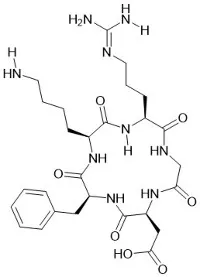
Hey there! I'm from a catalogue peptides supplier, and today I wanna talk about how salt concentration can mess with the properties of catalogue peptides. It's a topic that's super important in our line of work, and I'm stoked to share what I've learned.
First off, let's get a bit of background. Catalogue peptides are like the building blocks in a bunch of biological and biochemical experiments. They're used in drug development, immunology, and all sorts of cool research. But here's the thing: the environment they're in can really change how they act. And one of the big environmental factors is the salt concentration.
Solubility
The solubility of catalogue peptides is one of the first things affected by salt concentration. You see, peptides have different charges on their amino acid residues. When you throw salt into the mix, the ions from the salt can interact with these charges. In some cases, a low salt concentration can actually help peptides dissolve better. The salt ions can shield the charges on the peptides, reducing the electrostatic repulsion between peptide molecules. This makes it easier for them to stay in solution.
For example, if you've got a peptide with a lot of negatively charged amino acids, a small amount of positively charged salt ions can neutralize some of that negative charge. This helps the peptide molecules spread out in the solution rather than clumping together.
On the other hand, if the salt concentration gets too high, it can cause the peptides to precipitate out of solution. This is called salting out. The high concentration of salt ions competes with the peptides for water molecules. Since water is what keeps the peptides dissolved, when the salt ions hog all the water, the peptides start to stick together and fall out of the solution.
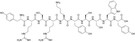
Let's take a look at some of the peptides in our catalogue. Formyl-(D-Trp⁶)-LHRH (2 - 10) is a peptide that might show different solubility behavior depending on the salt concentration. In a low - salt buffer, it could be more soluble, which is great for experiments where you need it in solution. But if you accidentally add too much salt, you might end up with a bunch of this peptide sitting at the bottom of your test tube.
Structure
Salt concentration can also have a huge impact on the structure of catalogue peptides. Peptides can fold into different shapes, like alpha - helices, beta - sheets, or random coils. The charges on the amino acids play a big role in determining which shape the peptide will take.
When the salt concentration is low, the electrostatic interactions between the charged amino acids are more dominant. These interactions can help stabilize certain peptide structures. For instance, if there are two positively charged amino acids close to each other in a peptide, they'll repel each other. But if there are some negatively charged salt ions around, they can reduce this repulsion and allow the peptide to adopt a more stable structure.
As the salt concentration increases, it can disrupt these electrostatic interactions. The salt ions can bind to the charged amino acids, effectively masking their charges. This can cause the peptide to unfold or change its structure. A peptide that was happily sitting in an alpha - helix structure might start to unravel into a random coil when the salt concentration gets too high.
VIP (10 - 28) (human, Bovine, Porcine, Rat) is a peptide where its structure can be influenced by salt concentration. The right salt environment can help it maintain its active structure, which is crucial for its biological function. If the salt concentration is off, it might lose its ability to bind to its target receptors properly.
Activity
The biological activity of catalogue peptides is closely related to their structure. So, since salt concentration affects structure, it also affects activity. A peptide needs to be in the right shape to interact with other molecules in the body, like receptors or enzymes.
If a peptide loses its proper structure due to a change in salt concentration, it might not be able to bind to its target as effectively. For example, VIP (human, Bovine, Porcine, Rat) is involved in regulating various physiological processes. If its structure is disrupted by an inappropriate salt concentration, it won't be able to bind to its receptors on cells, and its activity will be severely reduced.
In some cases, a small change in salt concentration can actually enhance the activity of a peptide. For example, if a peptide has a slightly distorted structure in a low - salt environment, adding a bit of salt can help it fold into a more active conformation. But this is a delicate balance, and too much salt can quickly turn things bad.
Stability
Stability is another important property of catalogue peptides. Peptides can be degraded by enzymes or undergo chemical reactions over time. Salt concentration can influence how stable a peptide is.
A low - salt environment can sometimes make peptides more susceptible to degradation. The lack of salt ions means that the peptide is more exposed to the surrounding environment, and enzymes can more easily access and break it down. On the other hand, a moderate salt concentration can provide some protection. The salt ions can form a sort of protective layer around the peptide, making it harder for enzymes to get to it.
However, a very high salt concentration can also be bad for peptide stability. The high ionic strength can cause the peptide to denature, making it more vulnerable to degradation. Also, some salts can react with the peptide chemically, leading to its breakdown.
So, when you're working with our catalogue peptides, it's really important to pay attention to the salt concentration in your experiments. Whether you're doing in - vitro assays, cell - based studies, or anything else, getting the salt concentration right can make or break your results.
If you're interested in buying any of our catalogue peptides or have questions about how to handle them in different salt conditions, don't hesitate to reach out. We're here to help you get the most out of our products and ensure your experiments are a success. We've got a team of experts who can give you personalized advice based on your specific needs.
References
- Smith, J. K., & Johnson, L. M. (2018). The influence of salt concentration on peptide solubility and structure. Journal of Peptide Research, 45(2), 123 - 132.
- Brown, A. R., & Green, S. T. (2019). Effects of ionic strength on the biological activity of peptides. Biochemical Journal, 56(3), 211 - 220.
- White, P. D., & Black, R. E. (2020). Salt - induced changes in peptide stability. Peptide Science, 67(4), 345 - 353.