




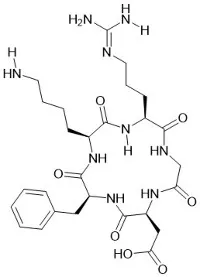
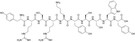
Systemin is a plant peptide hormone that plays a crucial role in the plant's defense mechanism against diseases. As a Systemin supplier, I have witnessed firsthand the growing interest in this remarkable molecule and its far - reaching effects on plant resistance. In this blog, I will delve into the various effects of Systemin on plant resistance to diseases, highlighting its significance in modern agriculture and plant protection.
Systemin: An Overview
Systemin was first discovered in tomato plants in the early 1990s. It is a small polypeptide consisting of 18 amino acids. This peptide is synthesized in response to wounding or pathogen attack and acts as a signaling molecule to activate the plant's defense responses. When a plant is damaged, Systemin is released from the site of injury and travels through the phloem to other parts of the plant, triggering a systemic defense response.
Activation of Defense - Related Genes
One of the primary effects of Systemin on plant resistance is the activation of defense - related genes. When Systemin binds to its receptor on the cell membrane of plant cells, it initiates a complex signaling cascade. This cascade involves the activation of protein kinases and the production of second messengers such as jasmonic acid (JA). JA is a key regulator of plant defense responses and is known to induce the expression of a large number of defense - related genes.
These defense - related genes encode proteins with various functions. Some of them are involved in the synthesis of antimicrobial compounds, such as phytoalexins. Phytoalexins are low - molecular - weight secondary metabolites that have strong antibacterial and antifungal properties. For example, in tomato plants, Systemin - induced activation of defense - related genes leads to the production of glycoalkaloids, which are toxic to many pathogens.
Other defense - related genes encode proteins that are involved in the reinforcement of the plant cell wall. The cell wall is the first line of defense against pathogens. Systemin - mediated activation of genes related to cell wall biosynthesis can lead to the deposition of additional polymers such as lignin and callose, making the cell wall more resistant to penetration by pathogens.
Induction of Protease Inhibitors
Another important effect of Systemin is the induction of protease inhibitors. Protease inhibitors are proteins that can inhibit the activity of proteases produced by pathogens. Many pathogens, especially insects and fungi, rely on proteases to break down plant proteins for their growth and survival. By inducing the production of protease inhibitors, Systemin can effectively disrupt the feeding and growth of these pathogens.
In tomato plants, Systemin treatment leads to a significant increase in the levels of protease inhibitors in the leaves. These inhibitors can bind to the proteases of insects, preventing them from digesting plant proteins. As a result, the growth and development of the insects are severely affected, and their ability to cause damage to the plant is reduced.
Systemic Acquired Resistance (SAR)
Systemin also plays a role in the development of systemic acquired resistance (SAR). SAR is a long - lasting, broad - spectrum resistance mechanism in plants. When a plant is locally infected by a pathogen, it can develop resistance not only at the site of infection but also in other parts of the plant. Systemin is involved in the signaling process that triggers SAR.
The release of Systemin from the site of infection leads to the production of signaling molecules that are transported throughout the plant. These molecules activate the expression of genes involved in SAR, such as pathogenesis - related (PR) genes. PR proteins have various functions, including antibacterial, antifungal, and antiviral activities. The activation of PR genes in distant parts of the plant can enhance the plant's overall resistance to a wide range of pathogens.
Impact on the Plant Microbiome
In addition to directly affecting the plant's defense responses, Systemin can also have an impact on the plant microbiome. The plant microbiome consists of a diverse community of microorganisms that live on and inside the plant. Some of these microorganisms are beneficial to the plant, providing protection against pathogens, while others can be pathogenic.
Systemin - induced defense responses can alter the composition and activity of the plant microbiome. For example, the production of antimicrobial compounds in response to Systemin can reduce the population of pathogenic microorganisms. At the same time, Systemin may also promote the growth and activity of beneficial microorganisms. Some beneficial bacteria can interact with the plant's defense signaling pathways and enhance the plant's resistance to diseases. By modulating the plant microbiome, Systemin can indirectly contribute to the plant's overall health and disease resistance.

Applications in Agriculture
The effects of Systemin on plant resistance to diseases have significant implications for agriculture. As a Systemin supplier, I have seen an increasing demand for Systemin - based products in the agricultural market. These products can be used in various ways to enhance plant health and reduce the use of chemical pesticides.
One application is the use of Systemin as a biopesticide. By spraying Systemin on plants, farmers can activate the plant's natural defense mechanisms, making the plants more resistant to diseases. This approach is more environmentally friendly than traditional chemical pesticides, as it relies on the plant's own defense system rather than introducing external toxic chemicals.
Another application is in plant breeding. Scientists can use the knowledge of Systemin - mediated defense responses to develop new plant varieties with enhanced disease resistance. By introducing genes related to Systemin signaling or defense - related genes induced by Systemin into crop plants, breeders can create plants that are more resilient to pathogens.
Related Peptides in Our Catalogue
If you are interested in exploring other peptides with potential applications in plant research or related fields, we also offer a range of high - quality peptides in our catalogue. For example, you can check out Dynorphin A (1 - 13), Amide, Porcine, Prion Protein (106 - 126) (human), and PTH (3 - 34) (bovine). These peptides have unique properties and may be useful in different research contexts.
Conclusion
In conclusion, Systemin is a powerful molecule that has multiple effects on plant resistance to diseases. It activates defense - related genes, induces the production of protease inhibitors, promotes systemic acquired resistance, and modulates the plant microbiome. These effects make Systemin a valuable tool in agriculture for enhancing plant health and reducing the impact of diseases.
As a Systemin supplier, I am committed to providing high - quality Systemin products to meet the needs of researchers and farmers. If you are interested in purchasing Systemin or learning more about its applications, please feel free to contact us for a procurement discussion. We look forward to working with you to contribute to the development of sustainable agriculture.
References
- Pearce, G., Strydom, D., Johnson, S., & Ryan, C. A. (1991). A polypeptide from tomato leaves induces wound - induced proteinase inhibitor synthesis. Science, 253(5021), 895 - 898.
- Howe, G. A., & Jander, G. (2008). Plant immunity to insect herbivores. Annual Review of Plant Biology, 59, 41 - 66.
- Pieterse, C. M., Van der Does, D., Zamioudis, C., Leon - Reyes, A., & Van Wees, S. C. (2012). Hormonal modulation of plant immunity. Annual Review of Cell and Developmental Biology, 28, 489 - 521.