





The activity of catalogue peptides is a crucial aspect that significantly impacts their effectiveness in various biological and biochemical applications. As a supplier of catalogue peptides, understanding the factors that influence their activity is essential for providing high - quality products to our customers. In this blog, we will explore the key factors affecting the activity of catalogue peptides.
1. Amino Acid Sequence
The amino acid sequence is the most fundamental factor determining the activity of a peptide. Each amino acid has unique chemical properties, such as charge, hydrophobicity, and size. These properties interact with each other to form the peptide's three - dimensional structure and determine its biological function.
For example, in the case of Protein Kinase C (19 - 36), the specific arrangement of amino acids in its sequence allows it to interact with protein kinase C, a key enzyme involved in signal transduction pathways. Altering even a single amino acid in this sequence can disrupt the peptide's binding to the enzyme, thereby reducing its activity.
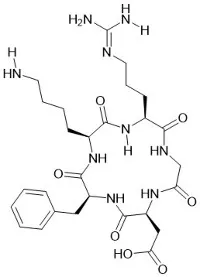
Peptides with specific motifs, such as the RGD (arginine - glycine - aspartic acid) motif, are known for their ability to bind to integrins, which are cell - surface receptors involved in cell adhesion and migration. E[c(RGDfK)]2 contains this RGD motif, and its activity is highly dependent on the correct positioning and integrity of this sequence within the peptide structure.
2. Peptide Length
The length of a peptide can have a profound impact on its activity. Generally, shorter peptides are more flexible and may have better cell - penetration capabilities. However, they may also be more susceptible to degradation by proteases in biological systems.
On the other hand, longer peptides can form more complex three - dimensional structures and may have higher binding affinities for their target molecules. But they are often more difficult to synthesize and purify, and their solubility can be a challenge.
For instance, Beta - Amyloid (25 - 35) is a relatively short peptide fragment of the larger beta - amyloid protein. Its short length allows it to penetrate cell membranes and induce neurotoxic effects, which are relevant to the study of Alzheimer's disease. However, its short length also makes it prone to rapid degradation in the body.
3. Purity
The purity of a catalogue peptide is another critical factor affecting its activity. Impurities in a peptide sample can interfere with its binding to target molecules, cause non - specific interactions, and even introduce toxic effects.
During the synthesis process, various by - products and contaminants can be generated, such as truncated peptides, deletion sequences, and chemical impurities from the reagents used. High - performance liquid chromatography (HPLC) and mass spectrometry are commonly used techniques to purify and analyze the purity of peptides.
As a supplier, we ensure that our catalogue peptides are of high purity by using advanced purification methods. We provide detailed purity analysis reports to our customers, so they can have confidence in the quality and activity of the peptides they purchase.
4. Solubility
The solubility of a peptide in the relevant biological or experimental medium is essential for its activity. If a peptide is insoluble, it cannot interact effectively with its target molecules, and its biological function will be severely compromised.
The solubility of a peptide is influenced by its amino acid composition, charge, and the pH and ionic strength of the solution. Peptides with a high proportion of hydrophobic amino acids are often less soluble in aqueous solutions. To improve solubility, various strategies can be employed, such as modifying the peptide sequence, adding solubilizing tags, or using appropriate solvents and additives.
For example, if a peptide is intended for use in cell - based assays, it needs to be soluble in the cell culture medium. We offer solubility guidance and support to our customers, helping them to choose the most suitable conditions for dissolving our catalogue peptides.
5. Post - translational Modifications
Many natural peptides undergo post - translational modifications, such as phosphorylation, acetylation, and glycosylation. These modifications can significantly alter the peptide's activity, stability, and interaction with other molecules.
Phosphorylation, for example, can change the charge and conformation of a peptide, thereby affecting its binding affinity to target proteins. Acetylation can protect the peptide from degradation and modulate its interaction with cellular receptors.
When synthesizing catalogue peptides, we can introduce specific post - translational modifications upon request. This allows our customers to obtain peptides that closely mimic the natural state and have the desired activity for their research or applications.
6. Storage Conditions
The storage conditions of catalogue peptides can also impact their activity over time. Peptides are sensitive to factors such as temperature, humidity, and light.
Peptides should be stored at low temperatures, typically at - 20°C or - 80°C, to prevent degradation. Freeze - thaw cycles should be minimized, as they can cause peptide aggregation and loss of activity. In addition, peptides should be protected from light, as some amino acids are photosensitive.
We provide clear storage instructions with our products to ensure that our customers can maintain the activity of the peptides during storage.
7. Biological Environment
The biological environment in which a peptide is used can have a significant influence on its activity. Factors such as the presence of enzymes, other proteins, and the pH and ionic strength of the biological fluid can all affect the stability and function of a peptide.
For example, proteases in the blood or tissue can degrade peptides rapidly. To overcome this issue, protease inhibitors can be used in in vitro experiments. The pH of the biological environment can also affect the charge state of the peptide and its binding to target molecules.
As a supplier, we understand the importance of the biological environment for peptide activity. We offer technical support to our customers, helping them to optimize the experimental conditions to ensure the best performance of our catalogue peptides.
In conclusion, the activity of catalogue peptides is affected by multiple factors, including amino acid sequence, length, purity, solubility, post - translational modifications, storage conditions, and the biological environment. As a professional supplier of catalogue peptides, we are committed to providing high - quality products and comprehensive technical support to our customers.
If you are interested in our catalogue peptides or have any questions about peptide activity and applications, please feel free to contact us for procurement and further discussions. We look forward to collaborating with you to meet your research and development needs.
References
- Creighton, T. E. (1993). Proteins: Structures and Molecular Principles. W. H. Freeman and Company.
- Ganesan, A. (2006). Peptide synthesis and applications. In Comprehensive Organic Synthesis II (pp. 721 - 753). Elsevier.
- Lodish, H., Berk, A., Zipursky, S. L., Matsudaira, P., Baltimore, D., & Darnell, J. (2000). Molecular Cell Biology. W. H. Freeman and Company.