




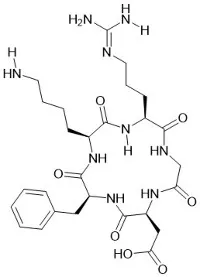
Hey there! As a supplier of peptide linkers for Antibody-Drug Conjugates (ADCs), I've seen firsthand how crucial these linkers are in the world of targeted cancer therapies. ADCs are a hot topic in the biotech industry because they offer a way to deliver potent drugs directly to cancer cells while minimizing damage to healthy tissues. And peptide linkers play a vital role in making this happen. So, let's dive into the main types of peptide linkers for ADCs.
Cleavable Peptide Linkers
Cleavable peptide linkers are designed to break down under specific conditions, releasing the drug once the ADC reaches the target cell. There are a few different types of cleavable linkers, each with its own unique properties.
Enzyme - Cleavable Linkers
Enzyme - cleavable linkers are one of the most popular types. They contain peptide sequences that are recognized and cleaved by specific enzymes. For example, cathepsin B is an enzyme that is often over - expressed in cancer cells. Peptide linkers with sequences like Val - Cit (valine - citrulline) are cleaved by cathepsin B.
One well - known example of an enzyme - cleavable linker is MC - Val - Cit - PAB - PNP. The MC part stands for maleimidocaproyl, which is used to attach the linker to the antibody. The Val - Cit sequence is recognized by cathepsin B, and the PAB (p - aminobenzyl) group is a self - immolative spacer that helps release the drug in a controlled manner. Once the linker is cleaved by cathepsin B in the tumor cell, the drug is released, and it can start doing its job of killing the cancer cells.
pH - Cleavable Linkers
pH - cleavable linkers take advantage of the difference in pH between the extracellular environment (around pH 7.4) and the intracellular environment (more acidic, around pH 5 - 6 in endosomes and lysosomes). These linkers have chemical bonds that are stable at neutral pH but break down at lower pH values.
For instance, some hydrazone - based linkers are pH - cleavable. When the ADC is internalized by the cancer cell and ends up in an acidic endosome or lysosome, the hydrazone bond is hydrolyzed, releasing the drug. This type of linker is great because it ensures that the drug is mainly released inside the target cells, reducing off - target toxicity.
Non - Cleavable Peptide Linkers
Non - cleavable peptide linkers, as the name suggests, remain intact throughout the process until the entire ADC - antibody complex is degraded inside the cell. The drug is then released along with the antibody fragments.
These linkers are usually more stable than cleavable linkers. They are often made of simple amino acid sequences or other chemical groups that are resistant to enzymatic and chemical degradation outside the cell. For example, some non - cleavable linkers use thioether bonds to attach the drug to the antibody.
The advantage of non - cleavable linkers is that they can be more predictable in terms of pharmacokinetics. Since the drug is only released when the antibody is degraded, the release is more closely tied to the natural turnover of the antibody in the body. However, one drawback is that the antibody fragments released along with the drug might cause some immune reactions.
Click Chemistry - Based Peptide Linkers
Click chemistry has revolutionized the way we can link drugs to antibodies in ADCs. Click chemistry reactions are fast, specific, and can be carried out under mild conditions.
One popular click chemistry reaction is the copper - free cycloaddition reaction between azides and dibenzocyclooctynes (DBCO). Peptide linkers with DBCO groups can react with azide - modified drugs or antibodies.
For example, DBCO - PEG4 - NHS Ester is a great example of a click chemistry - based linker. The DBCO group allows for the click reaction, the PEG4 (polyethylene glycol with four repeating units) acts as a flexible spacer, and the NHS ester group can react with amines on the antibody or drug to form a covalent bond.
Another related compound is DBCO - PEG4 - Acid. The acid group can be further modified or used to react with other molecules, providing more flexibility in the design of the ADC.
Advantages of Using Our Peptide Linkers
As a supplier of peptide linkers for ADCs, we offer high - quality products with several advantages. Firstly, our linkers are synthesized with high purity. We use state - of - the - art techniques to ensure that there are no impurities that could affect the performance of the ADC.
Secondly, we have a wide range of linkers available. Whether you need a cleavable linker for targeted drug release or a non - cleavable linker for more predictable pharmacokinetics, we've got you covered. And if you're into click chemistry, our DBCO - based linkers are top - notch.
We also provide excellent customer service. Our team of experts is always ready to answer your questions and help you choose the right linker for your specific project. We understand that every ADC project is unique, and we're committed to providing customized solutions.
Why Choose the Right Peptide Linker?
The choice of peptide linker can significantly impact the success of an ADC. A well - chosen linker can improve the efficacy of the ADC by ensuring that the drug is released at the right place and at the right time. It can also reduce off - target toxicity, which is a major concern in cancer therapy.
On the other hand, a poor choice of linker can lead to premature drug release, which can cause damage to healthy tissues, or it can prevent the drug from being released at all, rendering the ADC ineffective. So, it's really important to understand the different types of linkers and choose the one that best suits your needs.
Contact Us for Your Peptide Linker Needs
If you're working on an ADC project and need high - quality peptide linkers, we'd love to hear from you. Whether you're a research institution looking to test a new concept or a biotech company in the process of developing a new ADC drug, we can provide the linkers you need.
Just reach out to us, and we can start a discussion about your specific requirements. We're confident that our peptide linkers will meet your expectations and contribute to the success of your ADC project.
References
- Ducry, L., & Stump, B. (2010). Antibody - drug conjugates: linking cytotoxic payloads to monoclonal antibodies. Bioconjugate Chemistry, 21(1), 5 - 13.
- Shen, B. Q., et al. (2012). Conjugation site modulates the in vivo stability and therapeutic activity of antibody - drug conjugates. Nature Biotechnology, 30(2), 184 - 189.
- Junutula, J. R., et al. (2008). Site - specific conjugation of a cytotoxic drug to an antibody improves the therapeutic index. Nature Biotechnology, 26(8), 925 - 932.