




Hey there! As a supplier of catalogue peptides, I've dealt with numerous clients facing challenges related to peptide solubility. It's a common headache, but don't worry, I'm here to share some tips on how to optimize the solubility of catalogue peptides.
First off, let's understand why solubility matters. Peptides are used in a wide range of applications, from research to therapeutic development. If a peptide doesn't dissolve properly, it can mess up your experiments or treatments. For example, in cell culture studies, poorly soluble peptides might not reach the target cells effectively, leading to inaccurate results.
Factors Affecting Peptide Solubility
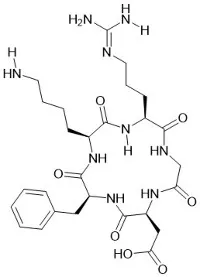
Before we dive into the solutions, let's look at the factors that influence peptide solubility. One of the main factors is the amino acid composition. Peptides rich in hydrophobic amino acids like leucine, isoleucine, and valine tend to be less soluble in water. On the other hand, peptides with a high content of hydrophilic amino acids such as lysine, arginine, and glutamic acid are more soluble.
Another factor is the peptide length. Generally, longer peptides are less soluble than shorter ones. This is because longer peptides have more hydrophobic regions and are more likely to form aggregates.
The pH of the solution also plays a crucial role. Peptides have an isoelectric point (pI), which is the pH at which they have a net charge of zero. At the pI, peptides are least soluble and tend to precipitate. So, adjusting the pH away from the pI can improve solubility.
Strategies to Optimize Peptide Solubility
1. Choose the Right Solvent
Water is often the first choice for dissolving peptides, but it may not work for all peptides. For hydrophobic peptides, organic solvents like dimethyl sulfoxide (DMSO) or acetonitrile can be used. However, be careful when using organic solvents, as they can be toxic to cells and may affect the peptide's activity. It's a good idea to start with a small amount of organic solvent and then dilute it with water.
For example, if you're working with a hydrophobic peptide like Substance P (9-11), you might try dissolving it in a small volume of DMSO first and then diluting it with water to the desired concentration.
2. Adjust the pH
As mentioned earlier, adjusting the pH can significantly improve peptide solubility. You can use buffers to control the pH. For acidic peptides, use a basic buffer like sodium hydroxide (NaOH) to increase the pH. For basic peptides, use an acidic buffer like hydrochloric acid (HCl) to decrease the pH.
When adjusting the pH, it's important to do it gradually and monitor the solubility. You can use a pH meter to ensure the pH is within the desired range.
3. Use Detergents
Detergents can help solubilize hydrophobic peptides by reducing the surface tension and preventing peptide aggregation. Common detergents used for peptide solubilization include Tween 20, Triton X-100, and SDS. However, be aware that detergents can also affect the peptide's activity and may interfere with some assays. So, use them with caution and optimize the concentration.
4. Sonication
Sonication is a technique that uses high-frequency sound waves to break up peptide aggregates and improve solubility. You can use a sonicator to sonicate the peptide solution for a short period of time. However, be careful not to over-sonicate, as this can damage the peptide.
5. Add Chaotropic Agents
Chaotropic agents like urea and guanidine hydrochloride can disrupt the non-covalent interactions between peptide molecules and improve solubility. They work by denaturing the peptide structure and preventing aggregation. However, like detergents, chaotropic agents can also affect the peptide's activity, so use them only when necessary.
Case Studies
Let's take a look at some real-world examples of optimizing peptide solubility.


Case 1: Matrix Protein M1 (58-66) (Influenza A Virus)
A client was having trouble dissolving this peptide in water. The peptide was rich in hydrophobic amino acids, so we recommended starting with a small volume of DMSO. We also adjusted the pH to 8.0 using a Tris buffer. After sonication for 5 minutes, the peptide dissolved completely.
Case 2: Dynorphin A (1-9)
This peptide was relatively soluble in water, but the client wanted to increase the solubility for a specific experiment. We suggested adding a small amount of Tween 20 (0.1%) to the solution. This helped to prevent peptide aggregation and improved the solubility.
Conclusion
Optimizing the solubility of catalogue peptides is crucial for their successful use in various applications. By understanding the factors that affect solubility and using the right strategies, you can ensure that your peptides dissolve properly and perform as expected.
If you're still having trouble with peptide solubility or have any other questions about our catalogue peptides, don't hesitate to reach out. We're here to help you find the best solutions for your research or development needs. Whether you're a researcher in a lab or a developer working on a new therapeutic, we can provide you with high-quality peptides and expert advice. So, let's start a conversation and see how we can work together to achieve your goals.
References
- Goodman, M., et al. (2003). "Biosynthesis of Peptides and Proteins." In Comprehensive Natural Products Chemistry, Vol. 2, pp. 1-37.
- Wade, J. D., & Tregear, G. W. (1993). "Peptide Synthesis and Design." In Methods in Enzymology, Vol. 221, pp. 1-61.
- Fields, G. B., & Noble, R. L. (1990). "Solid-Phase Peptide Synthesis Utilizing 9-Fluorenylmethoxycarbonyl Amino Acids." International Journal of Peptide and Protein Research, 35(3), 161-214.