




Hey there! As a supplier of peptide linkers for ADCs (Antibody-Drug Conjugates), I've seen firsthand how crucial these little guys are in the world of targeted cancer therapy. Today, I want to chat about the role of peptide linkers in reducing off-target effects of ADCs.
First off, let's quickly recap what ADCs are. ADCs are a class of biopharmaceutical drugs that combine the specificity of monoclonal antibodies with the potent cytotoxicity of small molecule drugs. The idea is to deliver the drug directly to cancer cells, minimizing damage to healthy tissues. But here's the catch: sometimes, these ADCs can end up hitting the wrong targets, leading to unwanted side effects. That's where peptide linkers come in.
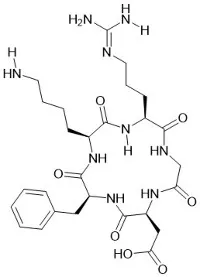
Peptide linkers act as the bridge between the antibody and the drug in an ADC. They have several important functions, one of which is to control the release of the drug. A well-designed peptide linker can ensure that the drug is only released at the target site, reducing the chances of it circulating freely in the body and causing off-target effects.
One of the key features of peptide linkers is their ability to be cleaved by specific enzymes. Many cancer cells overexpress certain enzymes, such as cathepsins. Peptide linkers can be designed to be recognized and cleaved by these enzymes. For example, the MC-Val-Cit-PAB-PNP linker is a popular choice. It contains a valine-citrulline (Val-Cit) dipeptide sequence that can be cleaved by cathepsins. When the ADC reaches the cancer cell, the cathepsins in the cell's lysosomes cleave the linker, releasing the drug and allowing it to exert its cytotoxic effects. This targeted release mechanism helps to ensure that the drug is only active where it's needed, reducing the risk of off-target toxicity.
Another important aspect of peptide linkers is their stability in the bloodstream. If a linker is too unstable, it may break down prematurely, releasing the drug before it reaches the target. On the other hand, if it's too stable, the drug may not be released at all. We need to find that sweet spot. Peptide linkers can be engineered to have the right balance of stability and cleavability. For instance, by modifying the amino acid sequence or adding chemical groups, we can fine-tune the linker's properties.
In addition to enzyme-cleavable linkers, there are also other types of peptide linkers that can be used to reduce off-target effects. For example, click chemistry linkers like DBCO-PEG4-Acid and DBCO-PEG4-NHS Ester offer a different approach. These linkers use a bioorthogonal reaction to attach the drug to the antibody. The reaction is highly specific and can be carried out under mild conditions, which helps to preserve the integrity of the antibody and the drug. Click chemistry linkers can also be designed to be stable in the bloodstream and to release the drug in a controlled manner at the target site.
Let's talk about some of the benefits of using peptide linkers in ADCs. One of the main advantages is the improved safety profile. By reducing off-target effects, we can minimize the side effects associated with ADC therapy. This is especially important for patients who may already be weakened by cancer. A safer treatment means that patients can tolerate higher doses of the ADC, which may lead to better therapeutic outcomes.
Another benefit is the potential for increased efficacy. When the drug is released specifically at the target site, it can have a more concentrated and potent effect on the cancer cells. This can lead to better tumor regression and a higher chance of long-term survival.
But it's not all smooth sailing. Developing peptide linkers for ADCs is a complex process. We need to consider many factors, such as the type of cancer, the target antigen, and the properties of the drug. There's also a lot of research and development involved in optimizing the linker design.
As a supplier of peptide linkers for ADCs, we're constantly working on improving our products. We use the latest technologies and techniques to design and synthesize high-quality peptide linkers. Our team of experts is always available to provide support and advice to our customers. Whether you're a researcher looking to develop a new ADC or a pharmaceutical company looking to improve an existing one, we can help you find the right peptide linker for your needs.
If you're interested in learning more about our peptide linkers or if you have any questions, please don't hesitate to reach out. We're here to help you take your ADC research and development to the next level. Let's work together to make cancer treatment safer and more effective.
References
- Ducry, L., & Stump, B. (2010). Antibody-drug conjugates: linking cytotoxic payloads to monoclonal antibodies. Bioconjugate Chemistry, 21(1), 5-13.
- Shen, B. Q., Rader, C., Liu, X., Raab, H., Bhakta, S., Kenanova, V., ... & Senter, P. D. (2012). The therapeutic index of antibody-drug conjugates is improved using protease-cleavable linkers. Nature Biotechnology, 30(2), 184-189.
- Polakis, P. (2010). The emerging roles of proteases in cancer. Nature Reviews Cancer, 10(1), 27-39.