






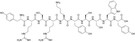
Can Cyclo be customized?
As a dedicated supplier of Cyclo products, I often encounter inquiries from customers about the possibility of customization. This topic is not only relevant but also crucial for those looking to meet specific research or industrial needs. In this blog, I will explore the concept of customizing Cyclo, its potential, and the benefits it can bring.
Cyclo, in the context of my business, refers to a range of cyclic peptides. These peptides are highly versatile molecules with unique structural and biological properties. Their cyclic nature provides them with enhanced stability, specificity, and bioactivity compared to their linear counterparts. This makes them invaluable in various fields such as drug discovery, biotechnology, and biomedical research.
One of the key factors that make Cyclo customizable is the vast array of amino acids available. There are 20 standard amino acids, each with its own chemical properties. By selecting different combinations of these amino acids, it is possible to design cyclic peptides with specific sequences. These sequences can then determine the peptide's function, such as binding to a particular receptor or inhibiting an enzyme.
For example, Exendin - 4 (3 - 39) is a peptide that has been studied for its potential in diabetes treatment. It can be customized to improve its efficacy, stability, and bioavailability. Scientists can modify its amino acid sequence to enhance its binding affinity to the GLP - 1 receptor, which plays a crucial role in regulating blood sugar levels.
Another aspect of customization is the modification of the peptide's structure. Besides the linear arrangement of amino acids, there are also different ways to form the cyclic structure. The disulfide bond is a common method for cyclization, but there are also non - disulfide cyclization strategies that can offer better stability and different biological activities. For instance, Cyclo(RGDfC) is a well - known cyclic peptide that contains an RGD (arginine - glycine - aspartic acid) motif. This motif is recognized by integrins, which are cell - surface receptors involved in cell adhesion, migration, and signaling. By customizing the RGD - containing cyclic peptide, it is possible to target specific integrin subtypes with high affinity, which has potential applications in cancer therapy and tissue engineering.
In addition to amino acid selection and cyclization methods, post - translational modifications can also be incorporated into the customization process. These modifications include phosphorylation, acetylation, and glycosylation. For example, adding a phosphate group to a specific amino acid in a cyclic peptide can change its charge and conformation, thereby altering its binding properties and biological function.
The benefits of customizing Cyclo are numerous. Firstly, it allows researchers and companies to obtain peptides that are tailored to their specific needs. In drug development, custom - made cyclic peptides can be designed to target a particular disease - related protein with high specificity, reducing off - target effects and increasing the chances of success in clinical trials.
Secondly, customization can lead to the discovery of new peptides with novel functions. By exploring different amino acid combinations and structural modifications, scientists may identify peptides with unique biological activities that were previously unknown. This can open up new avenues for research and development in various fields.
Thirdly, custom - made Cyclo products can provide a competitive edge in the market. In industries such as biotechnology and pharmaceuticals, the ability to offer customized solutions can attract more customers and differentiate a company from its competitors.
However, customizing Cyclo is not without challenges. One of the main challenges is the synthesis process. Cyclic peptides are often more difficult to synthesize than linear peptides due to the need for cyclization steps. These steps require careful control of reaction conditions to ensure high yields and purity. In addition, the quality control of custom - made cyclic peptides is crucial. Analytical techniques such as high - performance liquid chromatography (HPLC) and mass spectrometry (MS) need to be used to verify the identity, purity, and structure of the synthesized peptides.
Another challenge is the cost. Customization usually involves more complex processes and higher - level expertise, which can result in higher production costs. However, as the demand for customized Cyclo products increases and the technology advances, the cost is expected to gradually decrease.
To illustrate the potential of Cyclo customization in a real - world scenario, let's consider the field of targeted cancer therapy. Cancer cells often overexpress specific receptors on their surfaces. By custom - designing cyclic peptides that can bind to these receptors, it is possible to deliver anti - cancer drugs directly to the tumor cells. For example, Epidermal Growth Factor Receptor Peptide (985 - 996) can be used as a starting point for customization. By modifying its sequence and structure, we can create a cyclic peptide that has a higher affinity for the epidermal growth factor receptor (EGFR) on cancer cells. This peptide can then be conjugated with a chemotherapy drug, allowing for targeted delivery and minimizing damage to healthy cells.
In conclusion, the answer to the question "Can Cyclo be customized?" is a resounding yes. With the proper knowledge, technology, and expertise, it is possible to design and synthesize custom - made Cyclo products that meet the specific needs of different customers. Whether you are a researcher working on a new drug discovery project or a company looking for innovative solutions, customized Cyclo peptides can offer a wide range of benefits.
If you are interested in exploring the possibilities of customizing Cyclo for your specific applications, I invite you to reach out to me for a detailed discussion. We can work together to design the most suitable cyclic peptides for your needs.
References
- Principles of Peptide Synthesis, by Miklos Bodanszky
- Peptide Chemistry and Biology, edited by Nils Metzler - Nordhoff and Christian G. Hübner
- Handbook of Therapeutic Peptides, edited by Jean Martinez and Christiane Amblard