





As a supplier of Xenin 25, a bioactive peptide that has increasingly drawn attention in the field of medical research, I've been constantly exploring the various aspects of its biological functions and potential implications for human health. One question that arises frequently in scientific discussions is whether mutations in the gene encoding Xenin 25 can cause diseases. To address this issue, we need to delve into the properties of Xenin 25, the nature of gene mutations, and the current state of relevant research.
Understanding Xenin 25
Xenin 25 is a neuropeptide that was initially isolated from the porcine upper small intestine. It belongs to a class of peptides with diverse physiological functions. In the human body, Xenin 25 is involved in several important biological processes, including the regulation of gastrointestinal motility, satiety, and insulin secretion.
The expression of Xenin 25 is primarily found in specific cells of the digestive system. For instance, it is produced in the endocrine cells of the duodenum and jejunum. The release of Xenin 25 is often stimulated by food intake. Once released, it can act on specific receptors in the gut and other organs, triggering a series of signaling pathways that ultimately affect physiological functions.
The Role of Gene Mutations in Causing Diseases
Gene mutations are changes in the DNA sequence of a gene. These changes can occur spontaneously due to errors in DNA replication during cell division or can be induced by external factors such as radiation, chemicals, or certain viruses. Mutations can range from single - base pair changes (point mutations) to large - scale deletions, insertions, or rearrangements of DNA segments.
When a mutation occurs in a gene encoding a protein or a peptide like Xenin 25, it can potentially have several consequences. Firstly, it may alter the amino acid sequence of the resulting peptide. A single amino acid change can modify the peptide's structure, thus affecting its stability, binding affinity to receptors, and biological activity. For example, if a mutation occurs at a critical site of the Xenin 25 molecule that is responsible for receptor binding, the peptide may no longer be able to interact effectively with its receptors, leading to a disruption of normal physiological functions.
Secondly, a mutation could also affect the regulation of gene expression. It may disrupt the normal control mechanisms that determine when and how much of the peptide is produced. For instance, a mutation in the promoter region of the Xenin 25 gene could lead to over - expression or under - expression of the peptide. Over - expression might result in excessive activation of the signaling pathways associated with Xenin 25, while under - expression could lead to a deficiency in the regulatory effects of the peptide.
Evidence Regarding Xenin 25 Gene Mutations and Diseases
As of now, the research on whether mutations in the gene encoding Xenin 25 can cause diseases is relatively limited. Unlike some well - studied genes associated with genetic disorders such as cystic fibrosis or sickle - cell anemia, the role of Xenin 25 gene mutations in disease pathogenesis has not been thoroughly investigated.
However, based on the known functions of Xenin 25, we can hypothesize about the potential diseases that might be associated with its gene mutations. Since Xenin 25 is involved in the regulation of gastrointestinal motility, a mutation in its encoding gene could potentially lead to gastrointestinal disorders. For example, if the mutation causes a decrease in the activity or production of Xenin 25, it may disrupt the normal coordination of digestive movements, resulting in conditions such as constipation or diarrhea.
In addition, given its role in insulin secretion, mutations in the Xenin 25 gene might also be related to metabolic disorders. Insulin is a key hormone in regulating blood glucose levels. If a mutation affects the ability of Xenin 25 to stimulate insulin secretion, it could contribute to the development of hyperglycemia or diabetes mellitus.
Some studies have used animal models to explore the functions of Xenin 25 and its potential link to diseases. By genetically modifying animals to either over - express or under - express the Xenin 25 gene, researchers can observe the resulting physiological changes. In these models, alterations in food intake, body weight, and blood glucose levels have been noted, suggesting that changes in Xenin 25 expression can have significant impacts on metabolism and energy homeostasis.
Related Peptides and Their Clinical Significance
In the context of peptides and their roles in health and disease, it's worth mentioning some related peptides that are available in our peptide catalogue. For example, Proadrenomedullin (1 - 20) (human) is a peptide that has been studied for its potential cardiovascular and regulatory functions. It is involved in processes such as vasodilation and the regulation of blood pressure.
Another peptide, Galanin Message Associated Peptide (44 - 59) Amide, is associated with the galaninergic system. Galanin is a neuropeptide that plays roles in pain regulation, memory, and the control of food intake. The specific fragment Galanin Message Associated Peptide (44 - 59) Amide may have unique biological activities and could be relevant in the study of neurological and metabolic disorders.
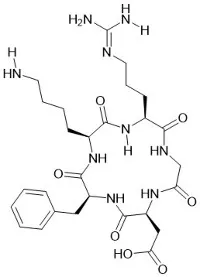
E[c(RGDyK)]2 is a cyclic peptide that contains the RGD (arginine - glycine - aspartic acid) motif. This motif is well - known for its ability to bind to integrin receptors, which are involved in cell adhesion, migration, and angiogenesis. E[c(RGDyK)]2 has potential applications in cancer therapy and tissue engineering due to its ability to target integrin - expressing cells.
Future Research Directions
To fully understand whether mutations in the gene encoding Xenin 25 can cause diseases, more comprehensive research is needed. This includes large - scale genetic studies in human populations to identify potential mutations in the Xenin 25 gene and to correlate them with disease phenotypes. Additionally, further in - depth studies using cell culture models and animal models are required to elucidate the exact molecular mechanisms by which Xenin 25 gene mutations affect physiological functions.
Moreover, the development of targeted therapies based on Xenin 25 and its related signaling pathways could also be an exciting area of research. If mutations in the Xenin 25 gene are found to be associated with specific diseases, it may be possible to design drugs or peptides that can correct the abnormal functions caused by these mutations.
Conclusion
In conclusion, while the current evidence regarding whether mutations in the gene encoding Xenin 25 can cause diseases is limited, the known functions of Xenin 25 suggest that such mutations could potentially have significant implications for human health. Given the role of Xenin 25 in gastrointestinal motility, satiety, and insulin secretion, mutations in its gene may be associated with gastrointestinal and metabolic disorders.
As a supplier of Xenin 25 and other related peptides, we are committed to providing high - quality products for scientific research. Our peptides are carefully synthesized and characterized to ensure their purity and biological activity. If you are interested in purchasing Xenin 25 or any of our other peptides for your research, we invite you to contact us for procurement discussions.
References
[1] Liebetrau, A., Reimann, F., & Gribble, F. M. (2014). The role of intestinal hormones in the regulation of food intake and body weight. Journal of Endocrinology, 223(1), T1 - T14.
[2] Adaikalakoteswari, A., Reimann, F., & Gribble, F. M. (2014). Xenin - 25 stimulates insulin secretion and inhibits gastric emptying and glucagon secretion in mice. Endocrinology, 155(6), 2137 - 2145.
[3] Lotz, J. C., & Krumlauf, R. (2000). Homeotic genes and axial patterning. Science, 288(5470), 1435 - 1439.