




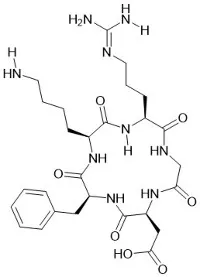

In the rapidly evolving field of gene therapy, the search for effective delivery vectors is of paramount importance. One such molecule that has caught the attention of researchers is RVG29 - Cys. As a supplier of RVG29 - Cys, I am often asked about its potential in gene therapy. In this blog post, I will delve into the science behind RVG29 - Cys and explore whether it can indeed be used for gene therapy.
Understanding RVG29 - Cys
RVG29 - Cys is a peptide derived from the rabies virus glycoprotein (RVG). The rabies virus has a unique ability to cross the blood - brain barrier (BBB) and infect neurons. Scientists have harnessed this property by isolating specific peptide sequences from the RVG, such as RVG29 - Cys. This peptide contains 29 amino acids with a cysteine residue at the end, which can be used for further chemical modifications.
The RVG29 - Cys has shown remarkable targeting capabilities. It can specifically bind to the acetylcholine receptor (nAChR) that is highly expressed on the surface of neurons. This binding interaction allows the peptide to enter the neurons, making it an attractive candidate for targeted drug and gene delivery to the central nervous system (CNS).
The Promise of RVG29 - Cys in Gene Therapy
Crossing the Blood - Brain Barrier
One of the major challenges in gene therapy for neurological disorders is the BBB. The BBB is a highly selective membrane that protects the brain from harmful substances in the bloodstream but also restricts the entry of therapeutic agents. RVG29 - Cys has the potential to overcome this barrier. Once conjugated with a gene - carrying vector, it can ferry the genetic material across the BBB and into the neurons.
For example, in pre - clinical studies, researchers have used RVG29 - Cys to deliver small interfering RNA (siRNA) to the brain. siRNA can silence specific genes, which is a promising approach for treating genetic disorders and certain types of cancers. By using RVG29 - Cys as a delivery vehicle, the siRNA was successfully delivered to the neurons in the brain, leading to the down - regulation of the target gene.
Targeted Gene Delivery
Another advantage of RVG29 - Cys in gene therapy is its ability to target specific cells. In the CNS, different types of neurons have distinct functions and express different receptors. Since RVG29 - Cys binds to nAChR, it can specifically target neurons that express this receptor. This targeted delivery reduces the off - target effects that are often associated with traditional gene therapy methods.
In addition, the cysteine residue in RVG29 - Cys can be used to conjugate the peptide with various gene - carrying vectors, such as liposomes, nanoparticles, or viral vectors. These vectors can encapsulate the genetic material, such as DNA or RNA, and protect it from degradation in the bloodstream. The conjugation of RVG29 - Cys with these vectors enhances their ability to enter the neurons and deliver the genetic cargo.


Challenges and Limitations
Immune Response
One of the potential challenges of using RVG29 - Cys in gene therapy is the immune response. The human immune system is designed to recognize and eliminate foreign substances. When RVG29 - Cys is introduced into the body, there is a possibility that the immune system will recognize it as a foreign antigen and mount an immune response. This immune response can lead to the clearance of the RVG29 - Cys - gene vector complex before it can reach the target cells, reducing the effectiveness of the gene therapy.
Stability and Pharmacokinetics
The stability of RVG29 - Cys in the bloodstream is another concern. Peptides are prone to degradation by proteases in the blood. If RVG29 - Cys is rapidly degraded, it will not be able to deliver the gene - carrying vector to the target cells. In addition, the pharmacokinetics of RVG29 - Cys, such as its half - life and distribution in the body, need to be carefully studied to optimize its use in gene therapy.
Scalability and Cost
From a commercial perspective, the scalability and cost of producing RVG29 - Cys are important factors. Peptide synthesis can be a complex and expensive process, especially when large quantities are required for clinical trials and commercial production. Developing cost - effective and scalable methods for synthesizing RVG29 - Cys is crucial for its widespread use in gene therapy.
Comparison with Other Peptides
To better understand the potential of RVG29 - Cys in gene therapy, it is useful to compare it with other peptides. For example, MOG (35 - 55), Mouse, Rat is a peptide that is often used in the study of multiple sclerosis. It is involved in the immune response in the CNS but does not have the same targeting and delivery capabilities as RVG29 - Cys. MOG (35 - 55) is mainly used as an antigen to induce experimental autoimmune encephalomyelitis (EAE), a model for multiple sclerosis, rather than a gene delivery vector.
Another peptide, Dynorphin A (1 - 10) Amide, is an endogenous opioid peptide that has analgesic and neuroprotective effects. However, it does not have the ability to cross the BBB and target neurons in the same way as RVG29 - Cys. These comparisons highlight the unique properties of RVG29 - Cys as a potential gene delivery vector for the CNS.
Future Directions
Despite the challenges, the future of RVG29 - Cys in gene therapy looks promising. Researchers are actively working on improving the stability and reducing the immunogenicity of RVG29 - Cys. For example, chemical modifications can be made to the peptide to protect it from protease degradation and to mask it from the immune system.
In addition, more pre - clinical and clinical studies are needed to fully evaluate the safety and efficacy of RVG29 - Cys in gene therapy. These studies will help to determine the optimal dosage, administration route, and combination with other therapeutic agents.
Conclusion
In conclusion, RVG29 - Cys has great potential in gene therapy, especially for neurological disorders. Its ability to cross the BBB and target neurons makes it an attractive candidate for targeted gene delivery. However, there are still challenges that need to be overcome, such as the immune response, stability, and cost. As a supplier of RVG29 - Cys, we are committed to supporting the research community in exploring the full potential of this peptide.
If you are interested in purchasing RVG29 - Cys for your research or development projects, please feel free to contact us for more information and to start a procurement discussion. We look forward to collaborating with you to advance the field of gene therapy.
References
- Kumar, P., & Kumar, A. (2018). Peptide - mediated delivery of therapeutic agents across the blood - brain barrier. International Journal of Pharmaceutics, 538(1 - 2), 28 - 40.
- Zhang, Y., & Pardridge, W. M. (2014). Receptor - mediated delivery of siRNA to the brain with an intravenously administered RVG - 9R peptide vector. Molecular Pharmaceutics, 11(10), 3448 - 3456.
- Miller, S. D., & Karpus, W. J. (2007). Experimental autoimmune encephalomyelitis (EAE) as a model for multiple sclerosis (MS). Journal of Immunological Methods, 324(1 - 2), 1 - 11.
- Goldstein, A., Tachibana, S., Lowney, L. I., Hunkapiller, M., & Hood, L. (1979). Dynorphin (1 - 13), an extraordinarily potent opioid peptide. Proceedings of the National Academy of Sciences, 76(8), 6666 - 6670.