





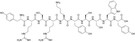
Do catalogue peptides have biological activity? This is a question that often arises in the minds of researchers, scientists, and those involved in the field of biochemistry and pharmacology. As a supplier of catalogue peptides, I am frequently asked about the biological activity of these pre - made peptides. In this blog, I will delve into this topic, exploring the nature of catalogue peptides, their potential biological activities, and how they can be valuable in various research and development endeavors.
Understanding Catalogue Peptides
Catalogue peptides are pre - synthesized peptides that are readily available for purchase from suppliers like us. These peptides are designed based on known sequences, which can be derived from natural sources such as proteins in the human body, animals, plants, or microorganisms. They are synthesized using well - established peptide synthesis techniques, ensuring high purity and quality.
The advantage of catalogue peptides is their convenience. Researchers do not have to go through the time - consuming and complex process of peptide synthesis themselves. They can simply browse through our catalogue, select the peptide they need, and have it delivered to their laboratory in a short period. This saves a significant amount of time and resources, allowing researchers to focus on their core research.
Biological Activity of Catalogue Peptides
The biological activity of a peptide refers to its ability to interact with biological molecules in a living organism and produce a specific effect. Catalogue peptides can have a wide range of biological activities, depending on their sequence and structure.
Enzyme Inhibition
Some catalogue peptides act as enzyme inhibitors. For example, the Papain Inhibitor is designed to specifically bind to papain, a protease enzyme. By binding to papain, this peptide inhibits its enzymatic activity, preventing the breakdown of proteins. This type of peptide can be used in research to study the role of papain in various biological processes, such as digestion and inflammation. In addition, it can also be explored for potential therapeutic applications, such as in the treatment of diseases where excessive protease activity is involved.
Cell Penetration
Certain catalogue peptides have the ability to penetrate cell membranes. The HIV - Tat Protein (47 - 57) is a well - known cell - penetrating peptide. It can carry other molecules, such as drugs or nucleic acids, across the cell membrane and into the cell. This property makes it extremely valuable in drug delivery research. By attaching a therapeutic agent to the HIV - Tat Protein (47 - 57), researchers can potentially improve the uptake of the drug by cells, enhancing its effectiveness.
Neurotransmission
Neuropeptides play a crucial role in neurotransmission. The FMRF - Related Peptide is an example of a catalogue peptide involved in this process. These peptides can bind to specific receptors on neurons, modulating the release of neurotransmitters and influencing neuronal activity. Studying these peptides can provide insights into the mechanisms of neurological disorders and may lead to the development of new treatments.
Factors Affecting Biological Activity
The biological activity of catalogue peptides is not guaranteed in all cases. Several factors can influence whether a peptide will exhibit its expected biological activity.
Purity
The purity of a peptide is of utmost importance. Impurities in the peptide sample can interfere with its ability to interact with biological targets. For example, if a peptide is contaminated with other peptides or chemicals, it may not bind to its target receptor correctly, resulting in reduced or no biological activity. At our company, we use advanced purification techniques to ensure that our catalogue peptides have a high level of purity, typically above 95%.
Solubility
Peptide solubility is another critical factor. If a peptide is not soluble in the appropriate biological medium, it will not be able to reach its target and exert its biological effect. We provide detailed solubility information for each of our catalogue peptides, and we also offer guidance on how to dissolve the peptides to achieve optimal results.
Storage Conditions
Proper storage of peptides is essential to maintain their biological activity. Peptides are sensitive to factors such as temperature, pH, and oxidation. We recommend storing our catalogue peptides at low temperatures, usually - 20°C or - 80°C, to prevent degradation. Additionally, we provide clear instructions on how to handle and store the peptides to ensure their long - term stability.
Applications of Catalogue Peptides with Biological Activity
The biological activity of catalogue peptides makes them valuable in a wide range of applications.
Drug Discovery
In drug discovery, catalogue peptides can serve as lead compounds. By screening a library of catalogue peptides with different biological activities, researchers can identify peptides that have potential therapeutic effects. These peptides can then be further optimized to develop more potent and selective drugs. For example, a peptide with enzyme - inhibiting activity can be modified to improve its binding affinity and specificity, making it a more effective drug candidate.
Biomedical Research
In biomedical research, catalogue peptides are used to study various biological processes. They can be used to elucidate the function of specific proteins, receptors, and enzymes. For instance, by using a peptide that binds to a particular receptor, researchers can study the signaling pathways activated by that receptor and understand how it is involved in disease development.
Biotechnology
In the field of biotechnology, catalogue peptides are used in techniques such as immunoassays. Peptides can be used as antigens to generate antibodies, which are then used in diagnostic tests. Additionally, peptides can be used in protein purification processes, where they can bind to specific proteins and help in their isolation.


Contact for Procurement and Collaboration
If you are interested in exploring the potential of catalogue peptides with biological activity for your research or development projects, we would be delighted to assist you. Our team of experts can provide you with detailed information about our products, including their biological activities, purity, and solubility. We can also offer customized peptide synthesis services if you have specific requirements.
Please feel free to reach out to us to discuss your needs. We look forward to working with you to advance your scientific endeavors.
References
- Alberts, B., Johnson, A., Lewis, J., Raff, M., Roberts, K., & Walter, P. (2002). Molecular Biology of the Cell. Garland Science.
- Creighton, T. E. (1993). Proteins: Structures and Molecular Properties. W. H. Freeman and Company.
- Nelson, D. L., & Cox, M. M. (2008). Lehninger Principles of Biochemistry. W. H. Freeman and Company.