




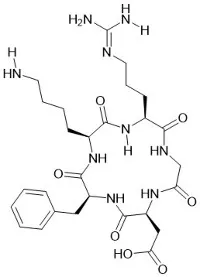
Tuftsin is a fascinating tetrapeptide with the sequence Thr-Lys-Pro-Arg, which was first discovered in the 1970s. As a Tuftsin supplier, I am often asked about the mechanism of action of this remarkable peptide. In this blog post, I will delve into the scientific details of how Tuftsin exerts its biological effects.
1. Discovery and General Properties of Tuftsin
Tuftsin was initially isolated from the Fc fragment of immunoglobulin G (IgG). It is produced through a series of enzymatic cleavages. The intact IgG molecule contains a precursor sequence for Tuftsin. Specific proteases in the body are responsible for liberating Tuftsin from its precursor.
One of the most striking features of Tuftsin is its relatively small size. Despite being only four amino acids long, it has potent immunomodulatory effects. It is stable under physiological conditions, which allows it to circulate in the bloodstream and reach its target cells effectively.
2. Cellular Targets of Tuftsin
The primary cellular targets of Tuftsin are phagocytic cells, including macrophages and neutrophils. These cells play a crucial role in the innate immune system, acting as the first line of defense against pathogens.
Macrophages are large, versatile immune cells that can engulf and digest foreign particles, such as bacteria and viruses. Neutrophils, on the other hand, are the most abundant type of white blood cells and are rapidly recruited to sites of infection. Tuftsin enhances the functions of both macrophages and neutrophils, thereby boosting the overall immune response.
3. Mechanisms of Action on Phagocytic Cells
3.1 Activation of Phagocytosis
One of the key mechanisms by which Tuftsin exerts its effects is by enhancing phagocytosis. Phagocytosis is the process by which cells engulf and internalize foreign particles. Tuftsin binds to specific receptors on the surface of macrophages and neutrophils, triggering a series of intracellular signaling events.
The binding of Tuftsin to its receptors activates a protein called Rho GTPase. Rho GTPase is involved in regulating the cytoskeleton of the cell. By activating Rho GTPase, Tuftsin promotes the rearrangement of the actin filaments in the cell membrane, leading to the formation of pseudopodia. Pseudopodia are extensions of the cell membrane that can surround and engulf foreign particles.
In addition to promoting cytoskeletal changes, Tuftsin also increases the expression of cell - surface receptors involved in phagocytosis. For example, it upregulates the expression of Fc receptors, which recognize the Fc portion of antibodies bound to pathogens. This increased expression of Fc receptors allows macrophages and neutrophils to more efficiently recognize and engulf antibody - coated pathogens.
3.2 Enhancement of Microbicidal Activity
Once a foreign particle has been engulfed by a phagocytic cell, it is enclosed within a phagosome. The phagosome then fuses with lysosomes, forming a phagolysosome. Lysosomes contain a variety of enzymes and antimicrobial substances that can kill and digest the engulfed pathogen.
Tuftsin enhances the microbicidal activity of phagocytic cells by promoting the production of reactive oxygen species (ROS) and nitric oxide (NO). ROS, such as superoxide anions and hydrogen peroxide, are highly reactive molecules that can damage the cell membranes and DNA of pathogens. NO is a signaling molecule that also has antimicrobial properties.
Tuftsin stimulates the activation of NADPH oxidase, an enzyme complex that is responsible for the production of ROS. It also upregulates the expression of inducible nitric oxide synthase (iNOS), which catalyzes the production of NO. By increasing the production of ROS and NO, Tuftsin helps phagocytic cells to more effectively kill and eliminate pathogens.

3.3 Regulation of Cytokine Production
Cytokines are small proteins that play a crucial role in cell - to - cell communication in the immune system. They can regulate the activation, proliferation, and differentiation of immune cells. Tuftsin has been shown to modulate the production of cytokines by macrophages and neutrophils.
Tuftsin stimulates the production of pro - inflammatory cytokines, such as tumor necrosis factor - alpha (TNF - α), interleukin - 1 (IL - 1), and interleukin - 6 (IL - 6). These cytokines help to recruit other immune cells to the site of infection and enhance the overall immune response. At the same time, Tuftsin also regulates the production of anti - inflammatory cytokines, such as interleukin - 10 (IL - 10), to prevent excessive inflammation.
4. Other Potential Mechanisms of Action
In addition to its effects on phagocytic cells, Tuftsin may also have other biological activities. Some studies have suggested that Tuftsin can modulate the function of lymphocytes, which are another type of immune cell involved in the adaptive immune response.
Tuftsin may enhance the proliferation and activation of T lymphocytes and B lymphocytes. It can also promote the production of antibodies by B lymphocytes, thereby strengthening the humoral immune response.
Furthermore, Tuftsin has been reported to have anti - tumor effects. It can enhance the immune surveillance against tumor cells by activating immune cells to recognize and eliminate cancer cells. It may also inhibit the growth and metastasis of tumor cells through direct or indirect mechanisms.
5. Comparison with Other Related Peptides
In the field of peptide research, there are several other peptides that have immunomodulatory properties, similar to Tuftsin. For example, the SV40 Nuclear Transport Signal Peptide Analog is involved in the nuclear transport of proteins and may also have effects on cell function and immune regulation. The Urocortin III (human) is a neuropeptide that has been shown to have immunomodulatory and anti - inflammatory effects. Another peptide, Entero - Hylambatin, has potential biological activities related to the gastrointestinal and immune systems.
However, Tuftsin is unique in its specific mechanism of action on phagocytic cells and its relatively well - characterized immunomodulatory effects. Its small size and stability make it an attractive candidate for further research and potential therapeutic applications.
6. Conclusion and Call to Action
In conclusion, Tuftsin is a powerful immunomodulatory peptide with a well - defined mechanism of action on phagocytic cells. By enhancing phagocytosis, microbicidal activity, and cytokine production, Tuftsin plays a crucial role in boosting the immune response against pathogens. Its potential anti - tumor effects also make it a promising candidate for cancer immunotherapy.
As a Tuftsin supplier, we are committed to providing high - quality Tuftsin products for research and potential therapeutic applications. If you are interested in purchasing Tuftsin for your research or have any questions about its mechanism of action, please feel free to contact us for more information and to start a procurement discussion.
References
- Najjar, V. A., & Nishioka, K. (1970). Tuftsin: A phagocytosis - promoting tetrapeptide. Proceedings of the National Academy of Sciences, 66(4), 1024 - 1031.
- Sulkowski, E., & Kaplan, M. H. (1981). Tuftsin: Structure, function, and synthesis. Annual Review of Biochemistry, 50, 577 - 602.
- Mantovani, A., Allavena, P., Sica, A., & Balkwill, F. (2008). The chemokine system in diverse forms of macrophage activation and polarization. Trends in Immunology, 29(12), 549 - 559.
- Nathan, C. (2006). Points of control in inflammation. Nature, 441(7092), 468 - 475.