




In the realm of medical research, the search for effective anti - tumor agents has been a continuous and arduous journey. Among the numerous substances under investigation, Tuftsin has emerged as a molecule of significant interest. As a leading supplier of Tuftsin, I am deeply involved in the scientific exploration of its properties and potential applications, especially its anti - tumor effects.
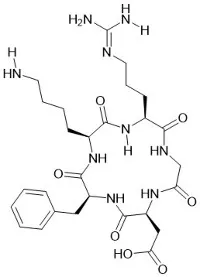
Tuftsin is a tetrapeptide with the amino acid sequence Thr - Lys - Pro - Arg. It was first discovered in the 1970s by Najjar and his colleagues. This small peptide is derived from the Fc fragment of immunoglobulin G (IgG) through enzymatic cleavage. The discovery of Tuftsin opened up a new avenue in immunology research, as it was found to have immunomodulatory properties.
One of the key aspects of Tuftsin's biological activity is its ability to stimulate the phagocytic function of macrophages. Macrophages are a type of white blood cell that plays a crucial role in the immune system. They are responsible for engulfing and destroying foreign particles, including tumor cells. Tuftsin enhances the chemotaxis, adherence, and phagocytic capacity of macrophages. By binding to specific receptors on the surface of macrophages, Tuftsin activates a series of intracellular signaling pathways that lead to an increase in the cell's ability to recognize and eliminate pathogens and abnormal cells.
In the context of tumor biology, the enhanced phagocytic activity of macrophages can have a direct impact on tumor growth and metastasis. Macrophages can recognize tumor - associated antigens and initiate an immune response against the tumor cells. When Tuftsin stimulates macrophages, it may increase the efficiency of this immune surveillance process. For example, in in vitro studies, Tuftsin - treated macrophages have been shown to have a higher rate of phagocytosis of tumor cells compared to untreated macrophages. This suggests that Tuftsin may be able to boost the body's natural anti - tumor defenses at the cellular level.
Moreover, Tuftsin may also have an effect on the production of cytokines. Cytokines are small proteins that act as signaling molecules in the immune system. They can regulate the growth, differentiation, and activity of immune cells. Some studies have reported that Tuftsin can induce the production of cytokines such as interleukin - 1 (IL - 1), interleukin - 6 (IL - 6), and tumor necrosis factor - alpha (TNF - α). These cytokines play important roles in anti - tumor immunity. IL - 1 can activate T cells and B cells, while TNF - α can induce apoptosis (programmed cell death) in tumor cells. By promoting the production of these cytokines, Tuftsin may create a more favorable immune environment for the suppression of tumor growth.
In addition to its effects on macrophages and cytokines, Tuftsin may also have a role in modulating the immune response of T cells. T cells are another important type of immune cell that can directly attack tumor cells. Some research has suggested that Tuftsin can enhance the proliferation and cytotoxic activity of T cells. This may be due to its ability to improve the antigen - presenting function of macrophages, which in turn can activate T cells more effectively.
However, the anti - tumor effects of Tuftsin are not without controversy. Some studies have reported inconsistent results. In in vivo animal models, the effectiveness of Tuftsin in inhibiting tumor growth has varied depending on the type of tumor, the route of administration, and the dosage of Tuftsin. For example, in some mouse models of melanoma, Tuftsin treatment has shown significant tumor - suppressing effects, while in other models, the results have been less conclusive.
One of the challenges in studying the anti - tumor effects of Tuftsin is the complexity of the tumor microenvironment. Tumors are not just a mass of abnormal cells; they are surrounded by a complex network of stromal cells, blood vessels, and extracellular matrix. This microenvironment can influence the behavior of immune cells and the effectiveness of anti - tumor agents. Tuftsin may face difficulties in penetrating the tumor microenvironment and reaching the tumor cells. Additionally, tumors can develop mechanisms to evade the immune system, which may limit the efficacy of Tuftsin.
Another factor to consider is the stability and bioavailability of Tuftsin. As a small peptide, Tuftsin is susceptible to degradation by proteases in the body. This can reduce its half - life and limit its therapeutic potential. To overcome this problem, researchers have been exploring various strategies, such as the use of peptide analogs and delivery systems. For example, some modified forms of Tuftsin have been developed that are more resistant to protease degradation and have improved pharmacokinetic properties.
Despite these challenges, the potential of Tuftsin as an anti - tumor agent remains promising. The immunomodulatory properties of Tuftsin offer a unique approach to cancer treatment. Unlike traditional chemotherapy and radiotherapy, which often have significant side effects, Tuftsin may be able to enhance the body's own immune system to fight against tumors with fewer systemic toxicities.
In our company, we are committed to providing high - quality Tuftsin for research purposes. We understand the importance of reliable and pure substances in scientific studies. Our Tuftsin is produced using advanced peptide synthesis techniques and undergoes strict quality control measures to ensure its purity, stability, and biological activity.
If you are interested in exploring the anti - tumor effects of Tuftsin further, we also offer a range of related peptides. For example, you may be interested in Substance P (1 - 7), [Tyr0] Bradykinin](https://www.ab.com/catalogue-peptides/tyr0-bradykinin.html), and Formyl-(D - Trp⁶)-LHRH (2 - 10). These peptides have their own unique biological activities and may be used in combination with Tuftsin in research to gain a more comprehensive understanding of anti - tumor mechanisms.
We encourage researchers and scientists to contact us for more information about our Tuftsin products and to discuss potential collaborations. Whether you are conducting in vitro studies, in vivo animal experiments, or pre - clinical trials, our team of experts is ready to provide you with the support and guidance you need. By working together, we hope to contribute to the advancement of cancer research and the development of more effective anti - tumor therapies.
In conclusion, while the anti - tumor effects of Tuftsin are still being investigated and refined, the existing evidence suggests that it has significant potential in the field of cancer immunotherapy. With further research and development, Tuftsin may become a valuable addition to the arsenal of anti - tumor agents. If you are interested in purchasing Tuftsin for your research, please feel free to reach out to us. We look forward to partnering with you in this exciting journey of scientific exploration.
References
- Najjar, V. A., & Nishioka, K. (1970). Tuftsin, a phagocytosis - promoting tetrapeptide. Isolation, structure, and synthesis. The Journal of Experimental Medicine, 132(6), 1155 - 1163.
- Sbarra, A. J., & Karnovsky, M. L. (1959). The biochemical basis of phagocytosis. I. Metabolic changes during the ingestion of particles by polymorphonuclear leukocytes. The Journal of Biological Chemistry, 234(10), 2566 - 2572.
- Old, L. J. (1985). Tumor necrosis factor. Science, 230(4732), 630 - 632.
- Fidler, I. J. (1978). The pathogenesis of cancer metastasis: the "seed and soil" hypothesis revisited. Nature, 273(5660), 345 - 349.