




How are catalogue peptides quantified?
Hey there! I'm a supplier of catalogue peptides, and today I wanna chat about how we go about quantifying these little guys. Peptides are super important in a whole bunch of fields, from research to medicine, and getting an accurate quantification is crucial.
First off, let's talk about why we even need to quantify catalogue peptides. Well, when researchers or folks in the medical field use peptides, they need to know exactly how much they're working with. Whether it's for a lab experiment, a clinical trial, or developing a new drug, precise amounts matter. If you use too little, your results might not be accurate, and if you use too much, you could mess up the whole thing.
So, how do we do it? There are a few different methods, and I'll break 'em down for you.
One of the most common ways is the UV - Vis spectroscopy. This method takes advantage of the fact that peptides absorb ultraviolet and visible light at specific wavelengths. Amino acids like tryptophan, tyrosine, and phenylalanine have certain absorption properties. When we shine light at a particular wavelength through a solution of our peptide, we can measure how much of that light is absorbed. Based on the absorption value and the known extinction coefficient of the peptide (which is related to its amino acid composition), we can calculate the concentration of the peptide in the solution. For example, if we have a peptide with a high content of tryptophan, it'll absorb more light at around 280 nm. We use a simple formula, based on the Beer - Lambert law, to figure out the concentration. It's a relatively quick and easy method, but it does have some limitations. Contaminants in the peptide solution can also absorb light at the same wavelengths, which can throw off our measurements.
Another popular method is the Bradford assay. This is a colorimetric assay that relies on a dye called Coomassie Brilliant Blue G - 250. When this dye binds to the peptide, it changes color. We can then measure the absorbance of the colored solution at a specific wavelength (usually around 595 nm). The amount of color change is proportional to the amount of peptide in the solution. We create a standard curve using known concentrations of a reference peptide, and then compare the absorbance of our unknown peptide sample to that curve to determine its concentration. The Bradford assay is pretty sensitive, but it can be affected by certain substances in the sample, like detergents or salts.
HPLC, or high - performance liquid chromatography, is also widely used for peptide quantification. In HPLC, we separate the peptide from other components in the sample based on its chemical properties, like its hydrophobicity. We inject the peptide solution into a column filled with a stationary phase, and then use a mobile phase (a liquid solvent) to push the peptide through the column. Different peptides will move through the column at different rates, and we can detect them as they come out of the column using a detector, usually a UV detector. By comparing the peak area of our peptide of interest to the peak areas of known standards, we can calculate its concentration. HPLC is great because it can separate and quantify peptides even in complex mixtures, but it's a bit more time - consuming and requires specialized equipment.
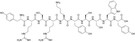
Now, let's talk a bit about some of the catalogue peptides we offer. Take Entero-Hylambatin for example. When we quantify this peptide, we use a combination of these methods to get the most accurate result. We first use UV - Vis spectroscopy to get a rough estimate of the concentration, and then double - check it with HPLC. This way, we can account for any potential contaminants or interferences in the sample.
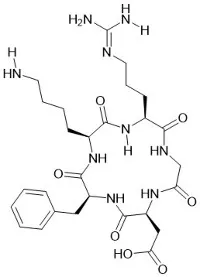
Another one is E[c(RGDyK)]2. This peptide has some unique properties, and we need to be extra careful when quantifying it. The Bradford assay might not be the best choice here because of its specific amino acid composition, so we rely more on HPLC and UV - Vis spectroscopy.
And then there's Mazdutide (Lys20(N₃-CH₂CO-)). This is a more complex peptide, and we use a multi - step approach. We start with UV - Vis to get an initial reading, then use HPLC to separate it from any impurities and get a more accurate quantification.
At our company, quality control is a big deal. We make sure to follow strict protocols when quantifying our catalogue peptides. We run multiple tests on each batch, and we compare our results with certified reference materials to ensure accuracy. We also keep detailed records of all the quantification data, so our customers can have full confidence in the peptides they're buying.

If you're in the market for high - quality catalogue peptides and need accurate quantification, we're here to help. Whether you're a researcher looking for peptides for your next big experiment or a pharmaceutical company developing a new drug, we've got the peptides you need. Our team of experts is always available to answer any questions you might have about our products or the quantification process. So, don't hesitate to reach out and start a conversation about your peptide needs. We're ready to work with you to find the best solutions for your projects.
References
- Scopes, R. K. (1994). Protein Purification: Principles and Practice. Springer.
- Skoog, D. A., West, D. M., Holler, F. J., & Crouch, S. R. (2013). Fundamentals of Analytical Chemistry. Cengage Learning.
- Bollag, D. M., Rozycki, M. D., & Edelstein, S. J. (1996). Protein Methods. Wiley - Liss.