




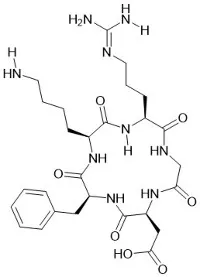
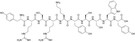
RVG29 - Cys, a remarkable peptide, has been the subject of extensive scientific research in recent years. As a leading supplier of RVG29 - Cys, I am delighted to share with you the diverse functions and potential applications of this unique compound.
1. Introduction to RVG29 - Cys
RVG29 - Cys is a modified form of the rabies virus glycoprotein (RVG) peptide. The original RVG peptide has the ability to cross the blood - brain barrier (BBB), which is a highly selective semi - permeable membrane that separates the circulating blood from the brain extracellular fluid. The addition of a cysteine residue (Cys) to the RVG29 peptide can offer several advantages, such as enabling easier conjugation with other molecules through the thiol group of cysteine.
2. Transport across the Blood - Brain Barrier
One of the most significant functions of RVG29 - Cys is its role in facilitating the delivery of various therapeutic agents across the BBB. The BBB is a major obstacle in the treatment of many neurological disorders, as it restricts the entry of most drugs into the brain. RVG29 - Cys can bind to the acetylcholine receptor on the surface of brain endothelial cells, which are the main components of the BBB. This binding triggers an endocytosis process, allowing RVG29 - Cys and any attached cargo to enter the brain parenchyma.
For example, in the treatment of neurodegenerative diseases like Alzheimer's and Parkinson's, drugs that could potentially slow down or halt the progression of these diseases often cannot reach their target sites in the brain due to the BBB. By conjugating these drugs to RVG29 - Cys, we can enhance their delivery to the brain, increasing their therapeutic efficacy. This approach has shown promising results in pre - clinical studies, where the combination of RVG29 - Cys and therapeutic agents has led to improved outcomes in animal models of neurological disorders.
3. Targeted Drug Delivery
RVG29 - Cys can also be used for targeted drug delivery within the brain. In addition to crossing the BBB, it can be engineered to specifically target certain cell types or regions in the brain. This is achieved by modifying the RVG29 - Cys structure or by attaching specific targeting moieties to it.
For instance, if we want to target neurons in a particular area of the brain, we can conjugate RVG29 - Cys with a ligand that has a high affinity for receptors expressed on these neurons. Once inside the brain, the RVG29 - Cys - ligand - drug complex will selectively bind to the target neurons, delivering the drug precisely where it is needed. This targeted approach reduces the off - target effects of drugs, minimizing side effects and improving the overall safety and effectiveness of treatment.
4. Gene Therapy
In the field of gene therapy, RVG29 - Cys has emerged as a valuable tool. Gene therapy aims to treat diseases by introducing genetic material into cells to correct defective genes or to express therapeutic proteins. However, delivering genes across the BBB and into target cells in the brain has been a major challenge.
RVG29 - Cys can be used to package and deliver gene vectors, such as plasmids or viral vectors, into the brain. The peptide can protect the genetic material from degradation in the bloodstream and facilitate its entry into brain cells. This has opened up new possibilities for the treatment of genetic neurological disorders, such as Huntington's disease and certain types of inherited epilepsy. By delivering corrective genes to the affected cells in the brain, we may be able to cure these previously untreatable diseases.
5. Imaging Applications
RVG29 - Cys also has potential applications in brain imaging. By conjugating it with imaging agents, such as fluorescent dyes or radioactive tracers, we can visualize the distribution of RVG29 - Cys in the brain. This can help us understand the mechanisms of BBB crossing and targeted delivery, as well as monitor the progression of neurological diseases.
For example, in positron emission tomography (PET) imaging, RVG29 - Cys can be labeled with a radioactive isotope. When injected into the body, the labeled RVG29 - Cys will cross the BBB and accumulate in the brain. The PET scanner can then detect the radioactive signal, providing detailed images of the brain. This imaging technique can be used to diagnose brain diseases at an early stage and to evaluate the effectiveness of treatment.
6. Comparison with Other Peptides
To better understand the unique functions of RVG29 - Cys, it is useful to compare it with other peptides. Parasin I is a well - known antimicrobial peptide. Unlike RVG29 - Cys, its main function is to kill bacteria and fungi, and it does not have the ability to cross the BBB. Ranatensin is a peptide that has effects on smooth muscle contraction and blood pressure regulation. It also lacks the BBB - crossing and targeted delivery capabilities of RVG29 - Cys. Dynorphin A (1 - 9) is an opioid peptide involved in pain modulation. While it has important physiological functions in the nervous system, it cannot be used for the same kind of drug delivery and imaging applications as RVG29 - Cys.
7. Conclusion and Call to Action
In conclusion, RVG29 - Cys is a versatile peptide with a wide range of functions, including BBB crossing, targeted drug delivery, gene therapy, and imaging applications. Its unique properties make it a valuable tool in the field of neuroscience and the treatment of neurological disorders.
As a supplier of high - quality RVG29 - Cys, we are committed to providing researchers and pharmaceutical companies with the best products and services. If you are interested in using RVG29 - Cys for your research or drug development projects, we invite you to contact us for more information and to discuss potential purchasing options. Our team of experts is ready to assist you in finding the right solutions for your specific needs.

References
- Zhang, X., et al. "RVG - mediated delivery of siRNA to the mouse brain." Molecular Therapy, 2008, 16(10): 1624 - 1629.
- Pardridge, W. M. "Drug transport across the blood - brain barrier." Journal of Cerebral Blood Flow & Metabolism, 2005, 25(10): 1773 - 1785.
- Kim, S. H., et al. "Targeted delivery of therapeutic agents to the central nervous system using rabies virus glycoprotein." Journal of Controlled Release, 2014, 185: 1 - 11.