




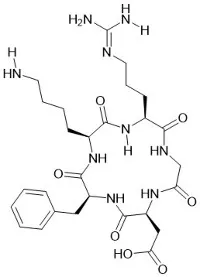
Systemin is a well - known plant peptide hormone that plays a crucial role in triggering defense responses in plants. As a Systemin supplier, I have witnessed the increasing interest in understanding the mechanisms behind Systemin - induced defense responses. In this blog, I will delve into the key mechanisms that govern these responses, highlighting the significance of Systemin in plant protection.
Systemin Discovery and General Function
Systemin was first discovered in tomato plants. It is a small, 18 - amino - acid peptide that is released in response to wounding, typically caused by herbivore attacks or mechanical damage. Once released, Systemin acts as a signal molecule, initiating a cascade of events that lead to the activation of various defense mechanisms in the plant.
Receptor Binding and Signal Initiation
The first step in Systemin - induced defense responses is the binding of Systemin to its specific receptor on the plant cell membrane. The receptor for Systemin in tomato plants has been identified as a leucine - rich repeat receptor - like kinase (LRR - RLK) called SR160. When Systemin binds to SR160, it activates the receptor's kinase activity. This phosphorylation event sets off a chain reaction within the cell, similar to how a key starts a complex machinery.
The activated receptor then recruits and phosphorylates downstream signaling molecules. These molecules are often involved in the MAPK (mitogen - activated protein kinase) cascade. The MAPK cascade is a highly conserved signaling pathway in plants and animals. In the context of Systemin signaling, the activation of MAPKs leads to the phosphorylation of transcription factors. These transcription factors are proteins that can bind to specific DNA sequences and regulate the expression of genes.
Activation of Jasmonic Acid Pathway
One of the most important downstream effects of Systemin signaling is the activation of the jasmonic acid (JA) pathway. JA is a well - known plant hormone involved in various stress responses, including defense against herbivores.
When Systemin activates the MAPK cascade, it ultimately leads to the synthesis of JA. The synthesis of JA starts with the release of linolenic acid from the cell membrane. Linolenic acid is then converted into 12 - oxo - phytodienoic acid (OPDA) through a series of enzymatic reactions. OPDA is then transported into the peroxisome, where it is further converted into JA.
Once JA is synthesized, it binds to its receptor, COI1 (coronatine - insensitive 1). The JA - COI1 complex then targets specific repressor proteins for degradation. These repressor proteins normally inhibit the activity of transcription factors involved in the expression of defense - related genes. With the degradation of the repressors, the transcription factors are free to bind to the promoter regions of defense - related genes and initiate their transcription.
Expression of Defense - Related Genes
The activation of the JA pathway leads to the up - regulation of a large number of defense - related genes. These genes encode for a variety of proteins with different functions in plant defense.
Some of the genes code for protease inhibitors. Protease inhibitors are proteins that can inhibit the activity of proteases in the gut of herbivores. When herbivores feed on plants expressing protease inhibitors, their digestion is disrupted, as proteases are essential for breaking down proteins in the food. This reduces the nutritional value of the plant for the herbivore and can ultimately lead to reduced growth and survival of the herbivore.
Other defense - related genes code for proteins involved in the synthesis of secondary metabolites. Secondary metabolites such as alkaloids, phenolics, and terpenoids have various functions in plant defense. For example, some alkaloids can be toxic to herbivores, while phenolics can act as antioxidants and also have antimicrobial properties.
Systemic Signaling
One of the remarkable features of Systemin - induced defense responses is its ability to trigger systemic responses. When a part of the plant is damaged, Systemin not only activates defense responses in the damaged tissue but also in other parts of the plant that are not directly affected.
The systemic signaling is thought to involve the movement of Systemin itself or other signaling molecules through the phloem. Once Systemin or its downstream signals reach distant parts of the plant, they initiate the same defense - signaling cascade as in the damaged tissue. This allows the plant to prepare its entire body for potential herbivore attacks, even if only a small part of the plant has been initially damaged.
Comparison with Other Peptide Signaling Systems
In the world of plant peptide signaling, Systemin is not the only player. There are other peptides, such as Dynorphin A (1 - 9), Galanin Message Associated Peptide (44 - 59) Amide, and 6×His Peptide, which also play important roles in various physiological processes.
While these peptides have different functions and signaling mechanisms compared to Systemin, they all share the common feature of being small, bioactive molecules that can trigger specific responses in plants or other organisms. For example, Dynorphin A (1 - 9) has been studied in the context of pain modulation in animals, but its potential role in plants or other non - animal systems is still an area of research.

Implications for Agriculture
Understanding the mechanisms of Systemin - induced defense responses has significant implications for agriculture. By enhancing the Systemin signaling pathway, we can potentially improve the natural defense capabilities of crops against herbivores and pests. This can reduce the reliance on chemical pesticides, which have negative environmental impacts.
For example, genetic engineering techniques can be used to overexpress Systemin or its receptor in crops. This would lead to a more robust activation of the defense - signaling cascade and better protection against herbivore attacks. Additionally, the knowledge of Systemin signaling can be used in the development of new biopesticides that mimic the action of Systemin or enhance its activity.
Conclusion
In conclusion, Systemin - induced defense responses are a complex and highly regulated process. From the initial binding of Systemin to its receptor, through the activation of the MAPK cascade and the JA pathway, to the expression of defense - related genes and systemic signaling, every step is crucial for the plant's ability to defend itself against herbivores.
As a Systemin supplier, I am excited about the potential applications of Systemin in agriculture and plant research. If you are interested in learning more about Systemin or are considering purchasing Systemin for your research or agricultural needs, I encourage you to reach out for a procurement discussion. Understanding the mechanisms of Systemin - induced defense responses is not only fascinating from a scientific perspective but also holds great promise for a more sustainable and environmentally friendly approach to plant protection.
References
- Pearce, G., Strydom, D., Johnson, S., & Ryan, C. A. (1991). A polypeptide from tomato leaves induces wound - induced proteinase inhibitor synthesis. Science, 253(5024), 895 - 898.
- Ryan, C. A., & Pearce, G. (2003). Systemin: a polypeptide signal for plant defense responses. Annual Review of Plant Biology, 54, 111 - 136.
- Wasternack, C., & Hause, B. (2013). Jasmonates: biosynthesis, perception, signal transduction and action in plant stress response, growth and development. An update to the 2007 review in Annals of Botany. Annals of Botany, 111(1), 1021 - 1058.