




Hey there! As a supplier of peptide substrates, I've spent a lot of time diving into the fascinating world of the relationship between peptide substrate sequences and enzyme specificity. It's a topic that's not only super important in the field of biochemistry but also has a direct impact on what we do here at our company.
Let's start with the basics. Enzymes are like the tiny molecular machines in our bodies. They speed up chemical reactions that are essential for life, such as digestion, energy production, and DNA repair. But here's the cool part: enzymes are really picky about what they work on. That's where enzyme specificity comes in.
Enzyme specificity means that an enzyme will only catalyze a particular reaction with a specific set of substrates. Think of it like a lock and key. The enzyme is the lock, and the substrate is the key. Only the right key (substrate) can fit into the lock (enzyme) and get the reaction going.
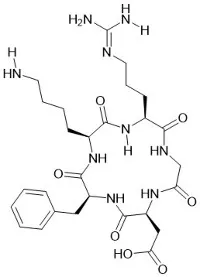
Now, peptide substrates are chains of amino acids. The sequence of these amino acids in a peptide substrate is crucial because it determines how well the substrate will interact with an enzyme. Just like how different keys have different shapes, different peptide sequences have different chemical and physical properties that can either fit well with an enzyme or not.
One of the main factors influenced by the peptide substrate sequence is the binding affinity between the substrate and the enzyme. Binding affinity is basically how strongly the substrate sticks to the enzyme. A peptide substrate with a sequence that closely matches the enzyme's active site (the part of the enzyme where the reaction takes place) will have a high binding affinity. This means it will bind tightly to the enzyme, and the reaction is more likely to occur efficiently.
For example, some enzymes are very specific about the amino acids at certain positions in the peptide substrate. Let's say an enzyme prefers a hydrophobic (water - hating) amino acid at a particular position. If the peptide substrate has a hydrophilic (water - loving) amino acid at that position instead, the binding affinity will be low, and the enzyme may not even recognize the substrate as something it can work on.
Another aspect is the catalytic efficiency. Even if a peptide substrate can bind to an enzyme, the sequence can affect how quickly the enzyme can convert the substrate into a product. The sequence can influence the orientation of the substrate in the active site, which in turn affects the reaction mechanism. If the substrate is properly oriented, the chemical bonds can be broken and formed more easily, leading to a faster reaction.
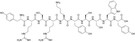
Let's take a look at some real - world examples. Calpain is a protease enzyme that plays important roles in processes like cell signaling and muscle function. Calpain Inhibitor XI is a peptide substrate that is designed to interact with calpain. Its specific sequence is carefully crafted to have a high binding affinity for calpain, allowing it to inhibit the enzyme's activity. This is useful in research where scientists want to study the role of calpain in a particular biological process.
Another example is Z - Val - Phe - CHO. This is also related to calpain inhibition. The sequence of Z - Val - Phe - CHO is optimized to fit into the active site of calpain and block its function. By understanding the relationship between the peptide substrate sequence and enzyme specificity, researchers can design these inhibitors more effectively.
Then there's Suc - LLVY - AMC. It's a peptide substrate commonly used to assay the activity of proteasomes, which are large protein complexes that break down unwanted proteins in cells. The LLVY sequence in Suc - LLVY - AMC is recognized by the proteasome, and when the proteasome cleaves the substrate, it releases a fluorescent group (AMC). This fluorescence can be measured, allowing researchers to quantify the proteasome activity.
So, why is all of this important for us as a peptide substrate supplier? Well, our customers, who are mainly researchers in the biotech and pharmaceutical industries, rely on us to provide high - quality peptide substrates with the right sequences. They need substrates that will specifically interact with the enzymes they are studying. If the sequence is off, the substrate won't work as expected, and the research results will be inaccurate.


We work closely with our customers to understand their needs. Whether they are studying a new enzyme or trying to develop a new drug, we can custom - synthesize peptide substrates with the exact sequences they require. Our team of experts uses the latest knowledge in biochemistry and molecular biology to ensure that the peptide sequences we produce are optimized for enzyme specificity.
If you're a researcher in need of peptide substrates, you know how crucial it is to have the right ones. We're here to help. Our peptide substrates are made with high - quality materials and strict quality control measures. We offer a wide range of pre - made substrates, as well as the option for custom synthesis. Whether you're working on a small - scale experiment or a large - scale drug development project, we can provide the peptide substrates that will meet your specific requirements.
If you're interested in learning more about our products or have any questions about peptide substrate sequences and enzyme specificity, don't hesitate to reach out. We're always happy to have a chat and discuss how we can assist you in your research.
In conclusion, the relationship between peptide substrate sequence and enzyme specificity is a complex but fascinating area of study. It has far - reaching implications in biochemistry, medicine, and biotechnology. As a peptide substrate supplier, we're at the forefront of this field, providing the tools that researchers need to make new discoveries and develop life - changing therapies.
References
- Stryer, L., Berg, J. M., & Tymoczko, J. L. (2002). Biochemistry (5th ed.). W. H. Freeman.
- Creighton, T. E. (1993). Proteins: Structures and Molecular Properties (2nd ed.). W. H. Freeman.
- Fersht, A. R. (1999). Structure and Mechanism in Protein Science: A Guide to Enzyme Catalysis and Protein Folding. W. H. Freeman.