




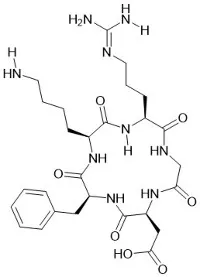
Designing peptide linkers to enhance the tumor - to - normal tissue ratio of Antibody - Drug Conjugate (ADC) uptake is a hot topic in the biopharmaceutical industry. As a peptide linkers for ADC supplier, I've seen firsthand the importance of getting this right. In this blog, I'll share some insights into how we can approach this design challenge.
Understanding the Basics of ADCs and Peptide Linkers
First off, let's quickly go over what ADCs and peptide linkers are. ADCs are a type of targeted cancer therapy. They combine the specificity of monoclonal antibodies with the cytotoxicity of small - molecule drugs. The antibody part of the ADC helps to deliver the drug directly to cancer cells, while the drug does the job of killing those cells.
Peptide linkers play a crucial role in this process. They connect the antibody and the drug. The ideal linker should be stable in the bloodstream to prevent premature drug release but should be cleavable specifically in the tumor environment. This way, the drug is released exactly where it's needed, maximizing its effect on cancer cells and minimizing harm to normal tissues.
Key Factors to Consider in Peptide Linker Design
1. Cleavability
The ability of the peptide linker to be cleaved is super important. We want it to remain intact as the ADC circulates in the body but to break down once it reaches the tumor. One common way to achieve this is by using linkers that are sensitive to the unique conditions found in tumors. For example, many tumors have a more acidic environment compared to normal tissues. We can design peptide linkers that are pH - sensitive, so they break down when they encounter the lower pH in the tumor.
Another approach is to use linkers that are cleaved by enzymes that are overexpressed in tumors. Cathepsin B is one such enzyme. It's found at higher levels in many cancer cells. We can design peptide sequences that are recognized and cleaved by Cathepsin B. For instance, the Val - Cit dipeptide sequence is a well - known substrate for Cathepsin B. You can find some of our peptide linkers containing this sequence, like Boc - Val - Cit - PAB - OH, MC - Val - Cit - PAB - PNP, and Fmoc - Val - Cit - PAB - OH on our website. These linkers are engineered to be cleaved by Cathepsin B, ensuring the release of the drug in the tumor.
2. Hydrophobicity
The hydrophobicity of the peptide linker can also impact the tumor - to - normal tissue ratio of ADC uptake. If the linker is too hydrophobic, the ADC may be more likely to bind to non - target cells or accumulate in non - tumor tissues. On the other hand, if it's too hydrophilic, it may affect the stability of the ADC or its ability to cross cell membranes.
We need to find the right balance. By carefully selecting amino acids with different hydrophobic or hydrophilic properties, we can fine - tune the hydrophobicity of the linker. For example, adding polar amino acids like serine or threonine can increase the hydrophilicity, while adding non - polar amino acids like leucine or isoleucine can increase the hydrophobicity.
3. Length and Flexibility
The length and flexibility of the peptide linker matter as well. A linker that is too short may restrict the movement of the drug and antibody, affecting the binding of the antibody to its target on the cancer cell. A linker that is too long, however, may increase the chance of the linker being cleaved prematurely in the bloodstream.
We aim to design linkers with an optimal length and flexibility. This allows the antibody to bind effectively to the cancer cell and the drug to be released efficiently once the ADC is internalized. Some linkers are designed with a certain degree of flexibility, which can help the ADC adapt to different conformations and interact better with the target.
Strategies for Improving Tumor - to - Normal Tissue Ratio
1. Targeted Delivery
One of the main strategies is to enhance the targeted delivery of the ADC. We can design peptide linkers that are specific to receptors or antigens that are overexpressed on cancer cells. By attaching the ADC to these specific targets, we can increase the uptake of the ADC in tumor tissues.
For example, if a certain cancer cell type overexpresses a particular receptor, we can design a peptide linker that has an affinity for that receptor. This way, the ADC will preferentially bind to and be taken up by the cancer cells, rather than normal cells.
2. Tumor - Specific Activation
In addition to targeted delivery, we can also focus on tumor - specific activation of the ADC. As mentioned earlier, using linkers that are cleaved by tumor - specific enzymes or in the unique tumor microenvironment can ensure that the drug is released only in the tumor.
This not only increases the concentration of the drug in the tumor but also reduces its exposure to normal tissues. By minimizing off - target effects, we can improve the overall safety and efficacy of the ADC.
3. Optimization through Screening
We also use screening techniques to optimize the design of peptide linkers. We can synthesize a library of different peptide linkers with varying sequences, lengths, and properties. Then, we test these linkers in in vitro and in vivo models to see which ones perform the best in terms of improving the tumor - to - normal tissue ratio of ADC uptake.
This iterative process of design and testing allows us to identify the most promising linkers and further refine their properties.
Our Role as a Peptide Linkers for ADC Supplier
As a supplier of peptide linkers for ADCs, we're committed to providing high - quality products that meet the needs of our customers. We have a team of experts who are constantly working on developing new and improved peptide linkers.
We offer a wide range of linkers, including those with different cleavable sequences, hydrophobicities, and lengths. Our goal is to help our customers design more effective ADCs with better tumor - to - normal tissue ratios.
If you're interested in learning more about our peptide linkers or have any questions about designing linkers for your ADC projects, feel free to contact us. We're here to assist you in your research and development efforts, and we'd love to start a conversation about how we can work together to improve the treatment of cancer.
References
[1] Ducry, L., & Stump, B. (2010). Antibody - drug conjugates: linking cytotoxic payloads to monoclonal antibodies. Bioconjugate Chemistry, 21(1), 5 - 13.
[2] Alley, S. C., Okeley, N. M., & Senter, P. D. (2010). Antibody - drug conjugates: targeted drug delivery for cancer. Current Opinion in Chemical Biology, 14(1), 52 - 60.
[3] Shen, B. Q., Xu, X., Liu, X., Raab, H., Bhakta, S., Kenrick, M.,... & Hamblett, K. J. (2012). Conjugation site modulates the in vivo stability and therapeutic activity of antibody - drug conjugates. Nature Biotechnology, 30(2), 184 - 189.