




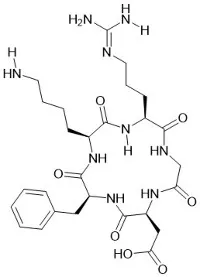

Tuftsin is a fascinating little peptide that has been making waves in the world of immunology. As a Tuftsin supplier, I've had the privilege of seeing firsthand the growing interest in this peptide and its potential impact on cytokine production. In this blog post, I'm going to dive into how Tuftsin affects the production of cytokines, sharing some of the latest research and insights.
What is Tuftsin?
First things first, let's talk about what Tuftsin is. Tuftsin is a tetrapeptide with the amino acid sequence Thr-Lys-Pro-Arg. It was first discovered in the 1970s and is derived from the Fc fragment of immunoglobulin G (IgG). This peptide is mainly produced in the spleen and has been shown to have a variety of immunomodulatory effects.
The Role of Cytokines
Cytokines are small proteins that play a crucial role in cell signaling. They are involved in a wide range of physiological processes, including immune response, inflammation, and cell growth and differentiation. There are different types of cytokines, such as interleukins, interferons, and tumor necrosis factors, each with its own specific functions.
How Tuftsin Affects Cytokine Production
One of the key ways Tuftsin affects cytokine production is by activating macrophages. Macrophages are a type of white blood cell that plays a central role in the immune system. They are responsible for engulfing and digesting foreign particles, as well as presenting antigens to other immune cells.
When Tuftsin binds to its receptor on macrophages, it triggers a series of intracellular signaling pathways. This activation leads to an increase in the production of various cytokines, such as interleukin-1 (IL-1), interleukin-6 (IL-6), and tumor necrosis factor-alpha (TNF-α). These cytokines are important for initiating and regulating the immune response.
For example, IL-1 is a pro-inflammatory cytokine that helps to activate other immune cells and promote inflammation. IL-6 is involved in the acute-phase response and can stimulate the production of antibodies. TNF-α is a potent pro-inflammatory cytokine that can induce cell death in infected or cancerous cells.
In addition to activating macrophages, Tuftsin can also enhance the function of other immune cells, such as T cells and natural killer (NK) cells. These cells are also important for cytokine production and immune defense.
Research Findings
Numerous studies have investigated the effects of Tuftsin on cytokine production. One study found that Tuftsin treatment increased the production of IL-1 and TNF-α in macrophages. Another study showed that Tuftsin could enhance the production of interferon-gamma (IFN-γ) by T cells.
These findings suggest that Tuftsin has the potential to modulate the immune system by regulating cytokine production. This could have important implications for the treatment of various diseases, such as infections, autoimmune disorders, and cancer.
Other Related Peptides
In the world of peptides, there are several other interesting molecules that are related to Tuftsin in terms of their immunomodulatory effects. For example, Substance P (1-7) is a peptide that has been shown to have immunomodulatory properties and can also affect cytokine production.
Another peptide is Enterostatin (human, Mouse, Rat). It has been implicated in the regulation of food intake and energy balance, but it also has some immunomodulatory effects.
Galanin Message Associated Peptide (44-59) Amide is yet another peptide that has been studied for its potential immunomodulatory activities.
Potential Applications
The ability of Tuftsin to modulate cytokine production makes it a promising candidate for various applications. In the field of medicine, it could be used as an immunotherapeutic agent to enhance the immune response in patients with infections or cancer.
It could also be used in the development of vaccines to improve the efficacy of the immune response. By promoting cytokine production, Tuftsin could help to activate the immune system and generate a stronger and more specific immune response against pathogens.
Conclusion
In conclusion, Tuftsin is a remarkable peptide that has a significant impact on cytokine production. Its ability to activate macrophages and other immune cells and regulate the production of cytokines makes it a valuable tool in the field of immunology.
As a Tuftsin supplier, I'm excited about the potential of this peptide and its applications in medicine. If you're interested in learning more about Tuftsin or are considering using it in your research or product development, I encourage you to get in touch. We can discuss your specific needs and how Tuftsin might be able to help you achieve your goals.
References
- Najjar, V. A. (1979). Tuftsin: a natural immunopotentiating tetrapeptide. Advances in Immunology, 27, 285-322.
- Soszynski, T., & Sroka, E. (2000). Tuftsin: an immunomodulatory tetrapeptide. Peptides, 21(9), 1391-1397.
- Zimecki, M., & Kruzel, M. L. (2007). Tuftsin: a versatile immunomodulatory peptide. Peptides, 28(3), 453-464.