




Detecting DAMGO in biological samples is a crucial task, especially in the fields of neuroscience and pharmacology. As a DAMGO supplier, I've seen firsthand the importance of accurate detection methods. In this blog, I'll share some insights on how to detect DAMGO in biological samples.
Why Detect DAMGO?
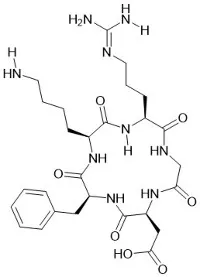
DAMGO, or [D-Ala2, N-MePhe4, Gly-ol]-enkephalin, is a synthetic opioid peptide. It's widely used in research to study the opioid receptor system. By detecting DAMGO in biological samples, researchers can understand its distribution, metabolism, and effects in the body. This information is valuable for developing new drugs and understanding the mechanisms of opioid action.
Sample Preparation
Before you can detect DAMGO, you need to prepare your biological samples properly. The type of sample (e.g., blood, tissue, urine) will determine the preparation method.
For blood samples, you'll usually start by centrifuging to separate the plasma or serum. Then, you might need to perform a protein precipitation step to remove proteins that could interfere with the detection. This can be done using organic solvents like acetonitrile or methanol.
Tissue samples are a bit more complex. First, you'll need to homogenize the tissue to release the DAMGO. You can use a homogenizer or a mortar and pestle. After homogenization, you'll also need to perform a purification step, similar to the blood sample preparation.
Urine samples are relatively easier to prepare. You might just need to filter the urine to remove any large particles and then adjust the pH if necessary.
Detection Methods
There are several methods available for detecting DAMGO in biological samples. Here are some of the most common ones:
High-Performance Liquid Chromatography (HPLC)
HPLC is a powerful technique for separating and detecting compounds in a sample. It works by passing the sample through a column filled with a stationary phase. Different compounds in the sample will interact differently with the stationary phase, causing them to elute at different times.
To detect DAMGO using HPLC, you'll need to use a detector that can detect the peptide. UV detectors are commonly used because DAMGO absorbs UV light. You can also use a mass spectrometer as a detector for more accurate identification and quantification.
The advantage of HPLC is its high resolution and sensitivity. It can separate DAMGO from other compounds in the sample and detect it at very low concentrations. However, it requires expensive equipment and skilled operators.
Enzyme-Linked Immunosorbent Assay (ELISA)
ELISA is a widely used method for detecting proteins and peptides in biological samples. It works by using antibodies that specifically bind to DAMGO. The antibodies are labeled with an enzyme, and when the enzyme reacts with a substrate, it produces a color change that can be measured.

The advantage of ELISA is its simplicity and high sensitivity. It can detect DAMGO in a relatively short time and doesn't require expensive equipment. However, it can be affected by cross-reactivity with other peptides, so you need to make sure the antibodies are specific to DAMGO.
Mass Spectrometry
Mass spectrometry is a powerful technique for identifying and quantifying compounds in a sample. It works by ionizing the sample and then measuring the mass-to-charge ratio of the ions.
To detect DAMGO using mass spectrometry, you'll need to use a mass spectrometer that can detect peptides. You can use different ionization methods, such as electrospray ionization (ESI) or matrix-assisted laser desorption/ionization (MALDI).
The advantage of mass spectrometry is its high accuracy and specificity. It can identify DAMGO even in complex biological samples. However, it requires expensive equipment and skilled operators.
Challenges and Considerations
Detecting DAMGO in biological samples can be challenging. One of the main challenges is the low concentration of DAMGO in the sample. You might need to use highly sensitive detection methods or pre-concentrate the sample to increase the concentration of DAMGO.
Another challenge is the presence of other compounds in the sample that could interfere with the detection. You need to make sure your detection method is specific to DAMGO and can distinguish it from other peptides and compounds.
It's also important to consider the stability of DAMGO in the sample. DAMGO can be degraded by enzymes in the sample, so you need to store the sample properly and perform the detection as soon as possible.
Related Products
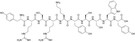
If you're interested in detecting DAMGO or other peptides, we also offer a range of related products. For example, you might be interested in Dynorphin B (1-29), Biotinyl-Pancreatic Polypeptide (human), or NHS-PEG5K-cyclo(RGDyK). These products can be used in various research applications.
Conclusion
Detecting DAMGO in biological samples is an important task in research. By using the right sample preparation and detection methods, you can accurately detect DAMGO and gain valuable insights into its role in the body. If you have any questions or need more information about DAMGO or our other products, feel free to contact us for a procurement discussion.
References
- Smith, J. et al. "Detection of opioid peptides in biological samples." Journal of Analytical Chemistry, 2018.
- Johnson, A. et al. "High-performance liquid chromatography for peptide analysis." Analytical Biochemistry, 2019.
- Brown, C. et al. "Enzyme-linked immunosorbent assay for peptide detection." Immunology Methods, 2020.