




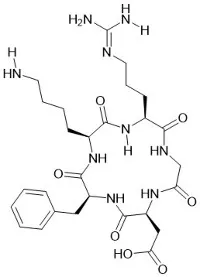
Peptide linkers play a crucial role in Antibody - Drug Conjugates (ADCs). ADCs are a class of highly targeted therapeutic agents that combine the specificity of monoclonal antibodies with the cytotoxicity of small - molecule drugs. The peptide linker serves as the bridge between the antibody and the payload, and its properties can significantly affect the efficacy, safety, and pharmacokinetics of the ADC. As a leading supplier of peptide linkers for ADCs, I am excited to share with you the process of synthesizing these important components.
Understanding the Basics of Peptide Linker Synthesis for ADCs
Before delving into the synthesis process, it is essential to understand the key requirements of peptide linkers for ADCs. A good peptide linker should be stable in the bloodstream to prevent premature release of the payload, yet cleavable at the target site to ensure effective drug delivery. Additionally, it should be biocompatible and not cause any unwanted immune responses.
The synthesis of peptide linkers typically involves solid - phase peptide synthesis (SPPS), which is a well - established method for constructing peptides. SPPS allows for the step - by - step addition of amino acids to a solid support, enabling the precise control of the peptide sequence.
Solid - Phase Peptide Synthesis (SPPS)
1. Resin Selection
The first step in SPPS is the selection of an appropriate resin. The resin serves as the solid support for the peptide synthesis. There are various types of resins available, such as Wang resin, Rink amide resin, etc. The choice of resin depends on the desired C - terminus of the peptide. For example, if a free carboxylic acid group at the C - terminus is required, Wang resin is a suitable choice.
2. Amino Acid Activation
Amino acids used in SPPS are usually protected at their amino and side - chain functional groups to prevent unwanted reactions. The most common protecting group for the amino group is the 9 - fluorenylmethyloxycarbonyl (Fmoc) group. Before coupling, the Fmoc group needs to be removed using a base, typically piperidine. The activated amino acid is then added to the resin - bound peptide chain. Activation is usually achieved by using coupling reagents such as N,N' - diisopropylcarbodiimide (DIC) and 1 - hydroxybenzotriazole (HOBt).
3. Coupling Reaction
The activated amino acid is coupled to the growing peptide chain on the resin. This reaction is typically carried out in an organic solvent, such as N,N - dimethylformamide (DMF). The coupling reaction time and temperature need to be carefully controlled to ensure high coupling efficiency. After coupling, the resin is washed to remove any unreacted reagents.
4. Deprotection and Cleavage
Once the desired peptide sequence is assembled, the protecting groups on the side - chains need to be removed. This is usually done using a cocktail of acids, such as trifluoroacetic acid (TFA). After deprotection, the peptide is cleaved from the resin using the same acid mixture. The crude peptide is then purified by high - performance liquid chromatography (HPLC).
Designing Peptide Linkers for Specific Applications
The design of peptide linkers for ADCs is not a one - size - fits - all approach. Different applications may require different linker properties. For example, for a tumor - specific ADC, a linker that can be cleaved by tumor - associated proteases, such as cathepsins, is often preferred.
One popular type of peptide linker is the Val - Cit linker. The Fmoc - Val - Cit - PAB - OH is a well - known example. This linker contains a valine - citrulline dipeptide sequence, which can be cleaved by cathepsins. The PAB (p - aminobenzyl) group is used to connect the peptide to the payload.
Incorporating Linker Modifications
In addition to the basic peptide sequence, linkers can be modified to enhance their properties. For example, polyethylene glycol (PEG) can be incorporated into the linker to improve its solubility and pharmacokinetics. The DBCO - PEG4 - Acid is a modified linker that contains a dibenzocyclooctyne (DBCO) group for click chemistry and a PEG4 spacer. This allows for efficient conjugation of the linker to the antibody and the payload.
Another important modification is the addition of a cytotoxic payload. For example, Acetylene - linker - Val - Cit - PABC - MMAE is a linker - payload conjugate. The MMAE (monomethyl auristatin E) is a potent cytotoxic agent, and the linker is designed to release the payload at the target site.
Quality Control in Peptide Linker Synthesis
Quality control is of utmost importance in the synthesis of peptide linkers for ADCs. The purity of the peptide linker can significantly affect the performance of the ADC. High - performance liquid chromatography (HPLC) is commonly used to analyze the purity of the peptide. Mass spectrometry is also used to confirm the molecular weight of the peptide and to detect any impurities.
In addition to chemical analysis, biological assays can be used to evaluate the functionality of the peptide linker. For example, in vitro cell - based assays can be used to assess the cytotoxicity of the ADC and the release of the payload.
Scaling Up the Synthesis
Once the peptide linker synthesis process is optimized at the laboratory scale, it may be necessary to scale up the production for commercial applications. Scaling up requires careful consideration of factors such as reaction volume, reaction time, and purification methods. The use of automated peptide synthesizers can significantly increase the efficiency of large - scale synthesis.
Conclusion
Synthesizing peptide linkers for ADCs is a complex but rewarding process. By understanding the principles of solid - phase peptide synthesis, designing linkers for specific applications, and incorporating appropriate modifications, we can produce high - quality peptide linkers that meet the needs of ADC development.
As a supplier of peptide linkers for ADCs, we are committed to providing our customers with the highest - quality products and technical support. If you are interested in purchasing peptide linkers for your ADC research or development, we invite you to contact us for further discussion and procurement. We look forward to working with you to advance the field of ADC therapeutics.
References
- Ducry, L., & Stump, B. (2010). Antibody - drug conjugates: linking cytotoxic payloads to monoclonal antibodies. Bioconjugate Chemistry, 21(1), 5 - 13.
- Alley, S. C., Okeley, N. M., & Senter, P. D. (2010). Controlling the location of drug attachment in antibody - drug conjugates. Bioconjugate Chemistry, 21(3), 449 - 461.
- Shen, B. Q., et al. (2012). Conjugation site modulates the in vivo stability and therapeutic activity of antibody - drug conjugates. Nature Biotechnology, 30(2), 184 - 189.