




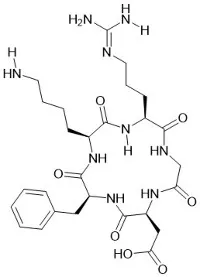
Hey there! As a supplier of peptide substrates, I've seen firsthand the many advantages these little molecules bring to the table. In this blog, I'm gonna break down why using peptide substrates is a game - changer in various scientific fields.
1. High Specificity
One of the most significant perks of peptide substrates is their high specificity. Peptides can be designed to interact with a particular enzyme or receptor. This means that when you're studying a specific biological process, you can use a peptide substrate that will only be recognized and acted upon by the enzyme you're interested in.
For example, if you're researching the function of a protease, you can select a peptide substrate that has a specific amino - acid sequence that the protease can cleave. This allows you to accurately measure the activity of that protease without interference from other enzymes in the sample. It's like having a key that only fits one lock. You can precisely target and study the biological mechanism you're focused on, which is super important for accurate research results.
2. Versatility
Peptide substrates are incredibly versatile. They can be used in a wide range of applications, from basic research to drug discovery.
In basic research, peptide substrates are used to study enzyme kinetics. Scientists can measure how fast an enzyme cleaves a peptide substrate, which gives them insights into how the enzyme works. This information is crucial for understanding the fundamental biological processes in cells.
In drug discovery, peptide substrates play a vital role. They can be used to screen potential drug candidates. For instance, if you're developing a drug that inhibits a specific protease, you can use a peptide substrate to test how well the drug blocks the protease's activity. If the drug is effective, it will reduce the cleavage of the peptide substrate.
Peptide substrates can also be used in diagnostic assays. They can be designed to react with specific biomarkers in a patient's sample, allowing for the early detection of diseases. This versatility makes peptide substrates a valuable tool in the scientific community.
3. Ease of Synthesis
Another advantage of peptide substrates is that they're relatively easy to synthesize. Thanks to modern peptide synthesis techniques, we can create custom - designed peptide substrates with specific amino - acid sequences.
This means that researchers can get exactly the peptide substrate they need for their experiments. Whether you need a short peptide with a simple sequence or a longer, more complex one, it can be synthesized in a laboratory. And because the synthesis process is well - established, it's also relatively cost - effective compared to some other types of biological molecules.
4. Compatibility with Various Detection Methods
Peptide substrates are compatible with a variety of detection methods. This is really useful because it allows researchers to choose the detection method that best suits their experiment.


For example, some peptide substrates are labeled with fluorescent tags. When the enzyme cleaves the peptide substrate, the fluorescent signal changes, which can be easily detected using a fluorescence microscope or a plate reader. This method is very sensitive and can detect even small amounts of enzyme activity.
Other peptide substrates can be used in colorimetric assays. In these assays, a color change occurs when the enzyme cleaves the substrate. This color change can be measured using a spectrophotometer. Colorimetric assays are simple and inexpensive, making them a popular choice for many laboratories.
5. Well - Characterized
Many peptide substrates are well - characterized. There's a lot of scientific literature available about their properties, such as their solubility, stability, and reactivity. This means that researchers can rely on this existing knowledge when designing their experiments.
For example, if you're using a well - characterized peptide substrate, you can be confident about its behavior in different experimental conditions. You can also compare your results with those from other studies that have used the same peptide substrate. This consistency and reproducibility are essential for the progress of scientific research.
Specific Peptide Substrates and Their Applications
Let's take a look at some specific peptide substrates and their applications.
Suc - LLVY - AMC is a popular peptide substrate used to measure the activity of proteasomes. Proteasomes are responsible for degrading proteins in cells. By using Suc - LLVY - AMC, researchers can accurately measure the proteasome activity, which is important for understanding protein turnover in cells and for developing drugs that target proteasomes.
Calpain Inhibitor XI is another important peptide substrate. Calpains are a family of calcium - dependent proteases that are involved in many physiological and pathological processes, such as muscle degeneration and neurodegenerative diseases. Calpain Inhibitor XI can be used to study the function of calpains and to screen for potential calpain inhibitors.
Z - LLY - FMK is a peptide - based inhibitor that can be used to study the activity of caspases. Caspases are a group of proteases that play a key role in apoptosis, or programmed cell death. By using Z - LLY - FMK, researchers can block the activity of caspases and study the effects on cell survival and death.
Conclusion
In conclusion, the advantages of using peptide substrates are numerous. Their high specificity, versatility, ease of synthesis, compatibility with various detection methods, and well - characterized nature make them an invaluable tool in scientific research and drug discovery.
If you're involved in any field that requires the study of enzymes or receptors, peptide substrates are definitely worth considering. Whether you're a researcher in a university laboratory or a scientist in a pharmaceutical company, these little molecules can help you get more accurate and meaningful results.
If you're interested in purchasing peptide substrates for your research, I'd love to have a chat with you. We can discuss your specific needs and find the right peptide substrates for your experiments. Don't hesitate to reach out, and let's work together to advance scientific knowledge!
References
- Smith, J. D. (2018). Peptide - based tools in biological research. Journal of Biological Chemistry, 293(12), 4567 - 4578.
- Johnson, A. B. (2019). Applications of peptide substrates in drug discovery. Drug Discovery Today, 24(3), 789 - 795.
- Brown, C. E. (2020). Synthesis and characterization of peptide substrates. Peptide Science, 32(4), 234 - 245.