




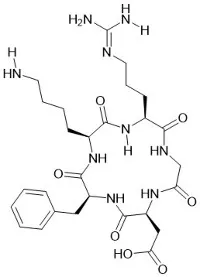
Antibody-drug conjugates (ADCs) have emerged as a powerful class of therapeutic agents that combine the specificity of monoclonal antibodies with the cytotoxicity of small molecule drugs. Peptide linkers play a crucial role in ADCs, as they connect the antibody to the payload and influence the pharmacokinetics, stability, and efficacy of the conjugate. Different antibody subtypes have unique structural and functional characteristics, which may require specific peptide linkers to optimize the performance of ADCs. In this blog, we will explore the differences in peptide linkers for different antibody subtypes in ADCs, and how our company, as a peptide linkers for ADC supplier, can provide tailored solutions to meet your needs.
Understanding Antibody Subtypes and Their Implications for ADCs
Antibodies are classified into different subtypes based on their heavy chain constant regions, including IgG, IgM, IgA, IgD, and IgE. Among these, IgG is the most commonly used antibody subtype in ADC development due to its long half-life, high stability, and ability to mediate effector functions. However, other antibody subtypes may also have unique advantages for specific applications. For example, IgM antibodies have a pentameric structure that can bind multiple antigens simultaneously, making them suitable for targeting highly expressed antigens. IgA antibodies are mainly found in mucosal tissues and can provide local immunity, which may be beneficial for treating diseases in the respiratory or gastrointestinal tracts.
The choice of antibody subtype can affect the design and performance of ADCs in several ways. First, different antibody subtypes have different glycosylation patterns, which can influence the stability, solubility, and immunogenicity of the ADC. Second, the size and shape of the antibody can affect the accessibility of the peptide linker and the payload, as well as the pharmacokinetics of the conjugate. Third, the effector functions of the antibody, such as antibody-dependent cellular cytotoxicity (ADCC) and complement-dependent cytotoxicity (CDC), can be modulated by the choice of antibody subtype and the design of the peptide linker.
Peptide Linkers for Different Antibody Subtypes
Peptide linkers can be classified into different types based on their chemical properties, including cleavable and non-cleavable linkers. Cleavable linkers can be further divided into acid-labile, protease-labile, and disulfide linkers, which are designed to release the payload in the target cells or tissues. Non-cleavable linkers, on the other hand, remain intact throughout the circulation and release the payload only after the internalization of the ADC by the target cells.
The choice of peptide linker for a specific antibody subtype depends on several factors, including the stability of the linker, the release mechanism of the payload, and the compatibility with the antibody and the payload. For example, acid-labile linkers are suitable for IgG antibodies, as they can be cleaved in the acidic environment of the endosomes and lysosomes after internalization of the ADC. Protease-labile linkers, on the other hand, are more specific and can be designed to be cleaved by enzymes that are overexpressed in the target cells or tissues. Disulfide linkers are commonly used for IgG antibodies, as they can be cleaved by the reducing environment in the cytoplasm of the target cells.
In addition to the type of linker, the length and composition of the peptide linker can also affect the performance of the ADC. A shorter linker may result in a more compact conjugate, which can improve the stability and pharmacokinetics of the ADC. However, a shorter linker may also limit the accessibility of the payload to the target cells. A longer linker, on the other hand, can provide more flexibility and allow the payload to be released more efficiently. However, a longer linker may also increase the immunogenicity of the ADC.
Our Solutions as a Peptide Linkers for ADC Supplier
As a peptide linkers for ADC supplier, we offer a wide range of peptide linkers that are specifically designed for different antibody subtypes and applications. Our linkers are synthesized using high-quality materials and advanced techniques to ensure their purity, stability, and performance. We also offer custom synthesis services to meet your specific requirements.
One of our popular peptide linkers is DBCO-PEG4-NHS Ester, which is a non-cleavable linker that can be used to conjugate antibodies to payloads via a click chemistry reaction. This linker is suitable for IgG antibodies and can provide a stable and efficient conjugation method. Another popular linker is Azido-PEG3-Val-Cit-PAB-OH, which is a protease-labile linker that can be cleaved by cathepsin B, a protease that is overexpressed in many cancer cells. This linker is suitable for IgG antibodies and can provide a targeted release of the payload in the tumor cells. We also offer MC-Val-Cit-PAB-PNP, which is a protease-labile linker that can be cleaved by cathepsin B and other proteases. This linker is suitable for IgG antibodies and can provide a high payload-to-antibody ratio and a targeted release of the payload in the tumor cells.
In addition to our standard peptide linkers, we also offer custom synthesis services to meet your specific requirements. Our experienced team of scientists can work with you to design and synthesize peptide linkers that are tailored to your antibody subtype, payload, and application. We can also provide technical support and guidance to help you optimize the performance of your ADCs.
Conclusion
Peptide linkers play a crucial role in the design and performance of ADCs. The choice of peptide linker for a specific antibody subtype depends on several factors, including the stability of the linker, the release mechanism of the payload, and the compatibility with the antibody and the payload. As a peptide linkers for ADC supplier, we offer a wide range of peptide linkers that are specifically designed for different antibody subtypes and applications. Our linkers are synthesized using high-quality materials and advanced techniques to ensure their purity, stability, and performance. We also offer custom synthesis services to meet your specific requirements. If you are interested in learning more about our peptide linkers or would like to discuss your ADC development project, please contact us to start a procurement discussion.
References
- Carter, P. J. (2006). Potent antibody therapeutics by design. Nature Reviews Immunology, 6(5), 343-357.
- Senter, P. D., & Sievers, E. L. (2012). Antibody-drug conjugates for cancer therapy. Annual Review of Medicine, 63, 21-37.
- Ducry, L., & Stump, B. (2010). Antibody-drug conjugates: linking cytotoxic payloads to monoclonal antibodies. Bioconjugate Chemistry, 21(1), 5-13.